Mobile:
+86 177 2975 3706
E-mail:
info@pursysmachine.com
News · Oct. 16, 2026 · Turmeric Grinder Guide
Turmeric is widely used in food processing, spice manufacturing, nutraceutical production, and other industries that require powdered ingredients. For industrial producers, choosing the right turmeric grinding machine is essential for achieving the required powder fineness, maintaining consistent product quality, and building an efficient production process.
However, not every grinding machine is suitable for every turmeric application. The appropriate equipment depends on the condition of the raw material, its moisture content, the target particle size, the required throughput, and the downstream screening and packaging processes.
This guide explains how industrial turmeric grinding machines work, how to compare different grinding technologies, and what to consider before investing in turmeric grinding equipment.
An industrial turmeric grinding machine is equipment designed to reduce dried turmeric rhizomes, turmeric pieces, or pre-crushed turmeric into powder for commercial production.
Depending on the raw material and the required powder characteristics, a turmeric grinding system may use a hammer mill, pin mill, or another suitable grinding technology. Additional equipment may be needed for feeding, pre-crushing, screening, conveying, dust collection, and packaging.
For example, a producer processing large dried turmeric pieces may need a pre-crushing stage before fine grinding. Another producer working with smaller, consistently prepared material may be able to feed it directly into the selected grinder.
The right solution should be based on the complete application rather than the machine name alone.
Industrial turmeric grinding equipment may be used for:
For broader spice-processing requirements, see the PURSYS spice powder processing solution.
The working principle depends on the grinding technology.
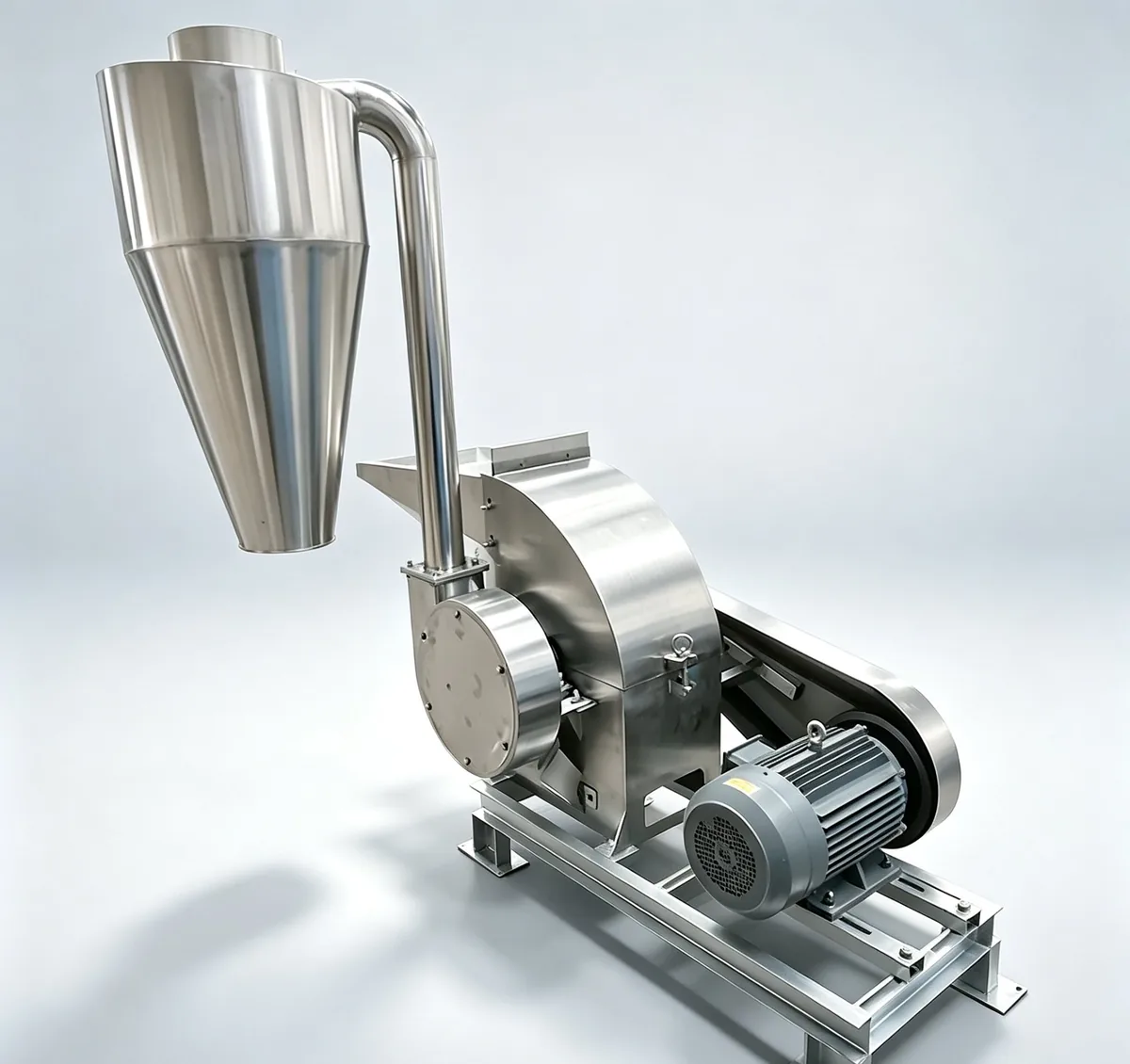
In a hammer mill, rotating hammers impact the material against internal surfaces and a screen. The material continues to be reduced until it can pass through the selected screen openings.
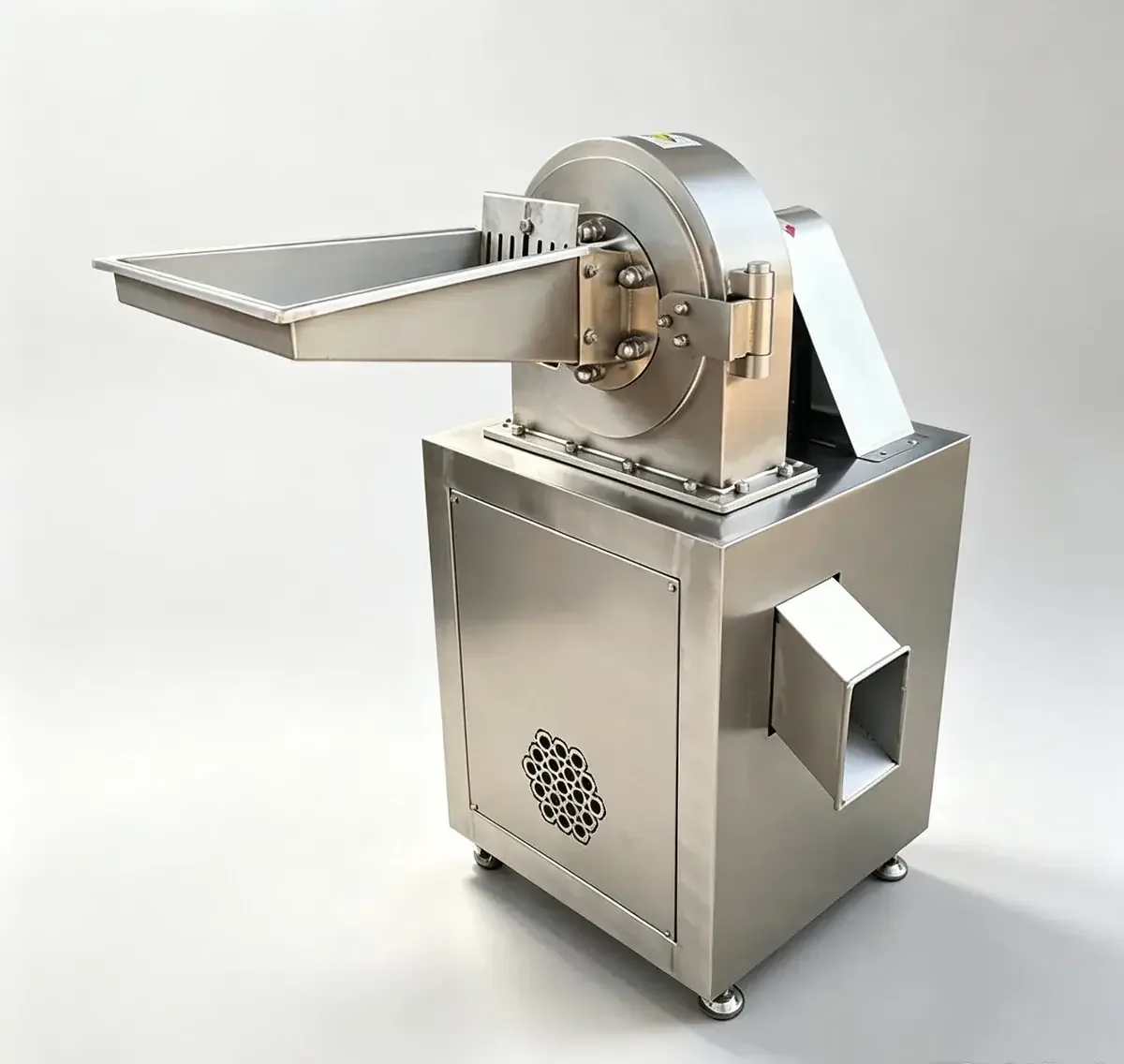
A pin mill uses rotating pins to create impact and particle interaction. Depending on the material and configuration, it may be suitable for applications requiring a different particle-size distribution or finer grinding.
Neither machine is automatically the best choice for every turmeric application. The correct selection should be confirmed through material testing and evaluation of the required final powder.
Dried Turmeric ↓ Raw Material Inspection ↓ Cleaning and Preparation ↓ Pre-Crushing (if required) ↓ Industrial Grinding Machine ↓ Powder Screening (if required) ↓ Conveying and Collection ↓ Packaging
The actual process may be simpler or more complex depending on the raw material, product specification, and production requirements.
The main decision is whether a hammer mill, pin mill, or a combination of equipment best matches your application.
A hammer mill reduces material through impact from rotating hammers. A screen helps control the size of material discharged from the grinding chamber.
It may be suitable for dried turmeric pieces and applications where impact grinding provides the required result.
Potential advantages include:
Important considerations include feed size, material hardness, moisture content, screen selection, and the heat generated during grinding.
Explore the PURSYS hammer mill for more information about the equipment.
A pin mill uses pins mounted on rotating components to produce impact and particle interaction. It can be considered when the application calls for a particular powder fineness or particle-size distribution.
Its suitability depends on the properties of the turmeric, feed preparation, desired output, and machine design.
Before selecting a pin mill, evaluate:
Learn more about the PURSYS pin mill.
| Selection factor | Hammer mill | Pin mill |
|---|---|---|
| Grinding mechanism | Impact from rotating hammers | Impact and interaction between pins |
| Feed preparation | Depends on machine inlet and feed size | Depends on machine design and feed characteristics |
| Particle-size control | Often uses a screen | Depends on rotor design, operating conditions, and configuration |
| Fine powder applications | Suitable for selected applications | May be suitable for selected finer-grinding applications |
| Heat considerations | Must be evaluated under actual operating conditions | Must be evaluated under actual operating conditions |
| Final selection | Confirm with application testing | Confirm with application testing |
| There is no universal winner. The best machine is the one that achieves the required product specification at an acceptable throughput and operating cost. |
For a more detailed comparison, read Hammer Mill vs. Pin Mill.
Start by identifying exactly what will enter the machine.
Turmeric may arrive as whole dried rhizomes, broken pieces, coarse chips, or partially processed material. These forms can require different feeding and grinding arrangements.
Confirm:
Moisture is especially important. Material that is too moist may behave differently during grinding and can contribute to screen blockage or inconsistent discharge. The acceptable moisture range should be determined for the specific material and process.
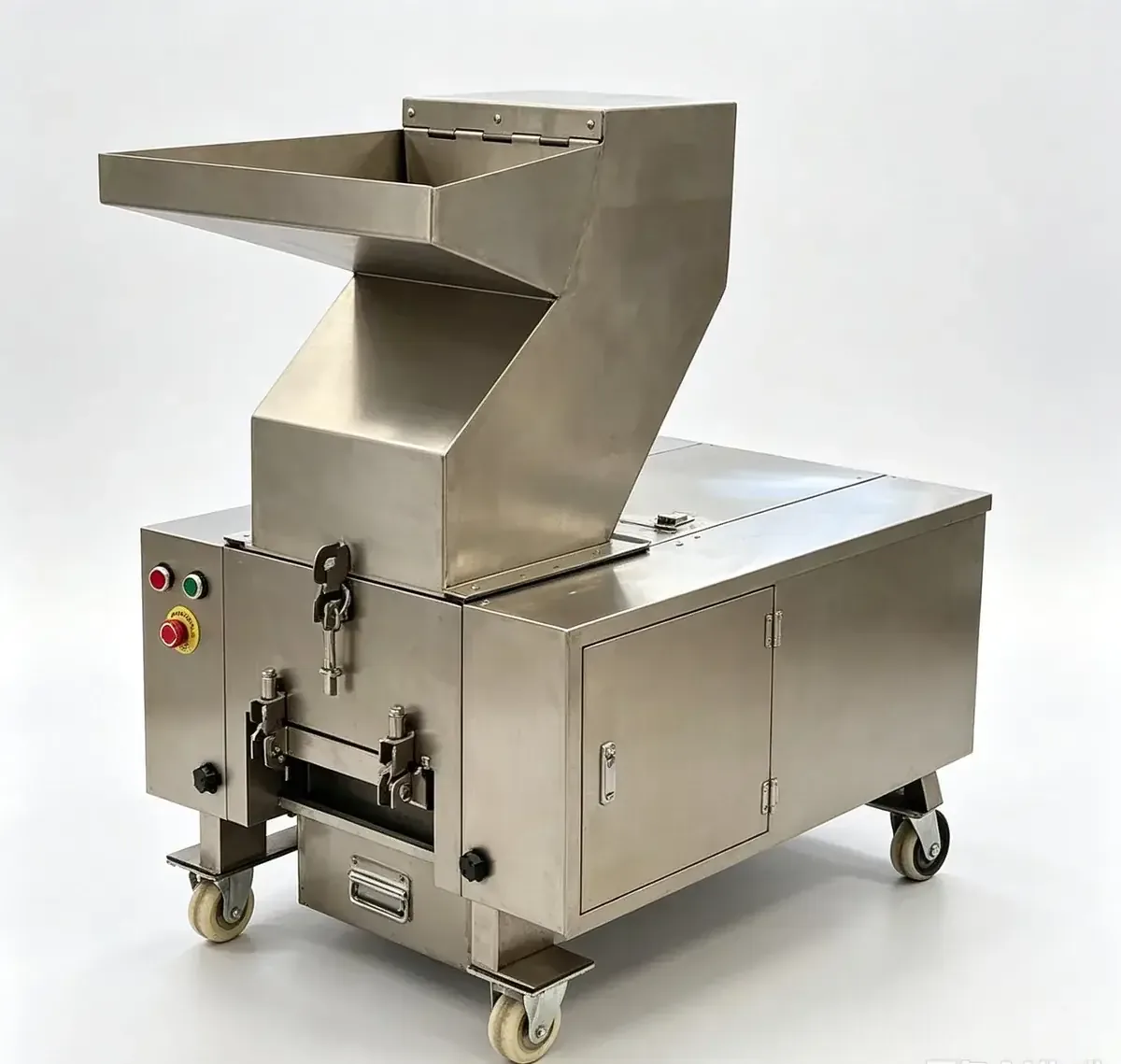
If the feed contains large pieces, a primary crusher may be useful before fine grinding.
“Fine turmeric powder” can mean different things to different buyers. A supplier should not select equipment based only on that description.
Specify the required particle size using a measurable standard, such as a target particle-size distribution or a defined sieve test.
For example, ask whether the specification requires:
The machine's screen opening does not always equal the final measured particle size. Actual results depend on the machine design, material properties, operating conditions, and the test method used.
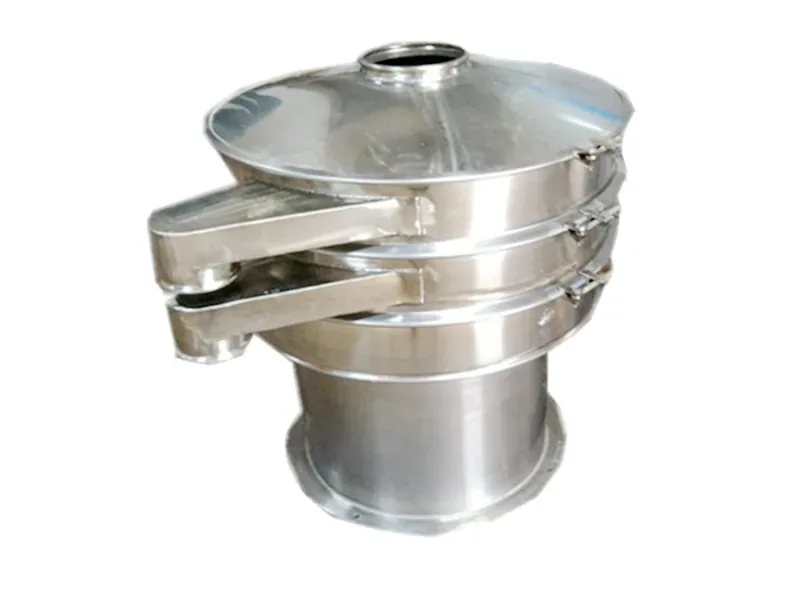
If the final product requires consistent particle sizing, a separate screening stage may be necessary. A round vibrating screen can be considered where suitable.
Production capacity should be assessed in relation to the complete process, not just the grinder's nominal rating.
The actual throughput may vary with:
A machine that produces a coarse powder at a certain rate may deliver a different throughput when a finer specification is required.
Before requesting a quotation, provide the target output per hour or per shift, the number of operating hours, and the final product specification.
Turmeric grinding can generate heat through mechanical energy and friction. The resulting product temperature depends on the machine, feed rate, material condition, grinding intensity, and operating environment.
Temperature should be evaluated if the final product has specific color, aroma, quality, or processing requirements.
Discuss the following with the equipment supplier:
Do not assume that a particular grinder automatically guarantees low-temperature processing. Confirm the result under representative operating conditions.
Cleaning requirements depend on the product, plant procedures, and applicable regulations.
For food-processing applications, buyers should confirm:
If the machine will process multiple spices or food ingredients, changeover time and cross-contamination controls may also affect the design.
Specify the required material grade and documentation in the purchasing specification rather than assuming that every stainless-steel machine has the same construction or compliance status.
A standalone grinder may be sufficient for a small or existing operation. A complete system can be more appropriate when the production process requires coordinated feeding, grinding, screening, collection, and packaging.
Prepared Turmeric ↓ Grinding Machine ↓ Manual Collection
This configuration may suit applications where production requirements are relatively simple and material handling is managed separately.
Turmeric Feed ↓ Feeding or Pre-Crushing ↓ Grinding Machine ↓ Screening (if required) ↓ Powder Collection
This arrangement can help coordinate material handling and product sizing, depending on the equipment and process design.
Raw Material Preparation ↓ Pre-Crushing ↓ Fine Grinding ↓ Screening ↓ Powder Conveying ↓ Packaging
Not every project needs every stage. The configuration should be selected according to feed condition, target fineness, output requirements, available space, labor arrangements, and cleaning procedures.
For a complete application-oriented overview, see the planned turmeric powder production line guide. Confirm that the page has been published before deploying this internal link.
The grinder is only one part of the system. Supporting equipment can affect feeding consistency, dust control, product handling, and packaging efficiency.
| Equipment | Purpose | When to consider it |
|---|---|---|
| Primary crusher | Reduces larger feed pieces | When raw turmeric exceeds the grinder's suitable feed size |
| Feeding equipment | Provides a controlled material supply | When stable feeding or reduced manual handling is required |
| Hammer mill or pin mill | Reduces material to the required powder | Selected according to the application |
| Vibrating screen | Separates particles according to screening specifications | When particle classification is needed |
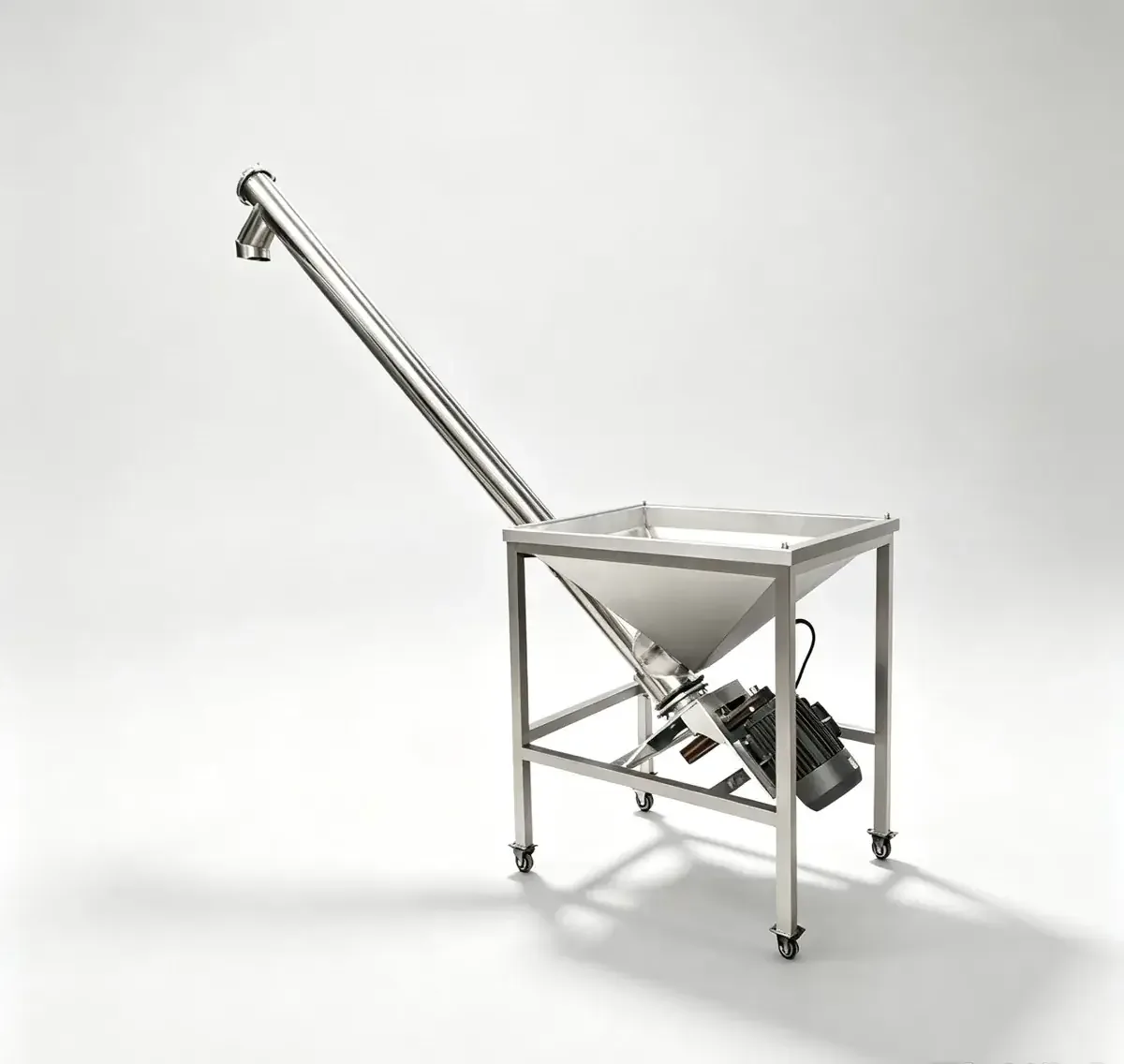
| Screw conveyor | Transfers suitable powders between process stages | When enclosed or mechanically assisted conveying is appropriate |
| Dust collection system | Collects airborne dust at suitable points | When required by the process, workplace, and safety assessment |
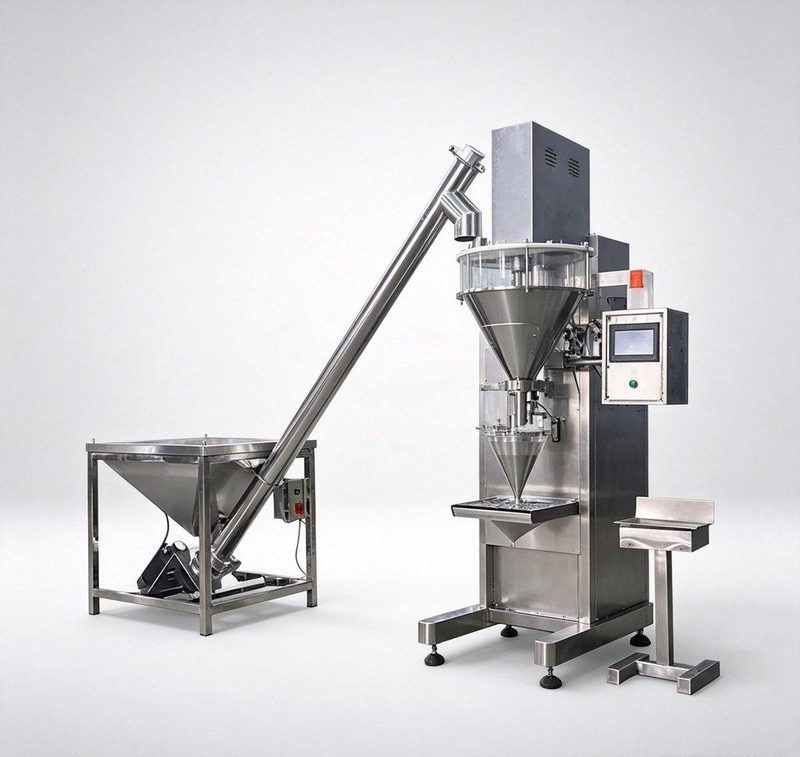
| Packing system | Fills and packages the finished powder | When the production process includes integrated packaging |
| For example, a screw conveyor may be used to transfer compatible powder between equipment, while the PURSYS packing system can be evaluated for the final packaging stage. |
Dust collection design deserves particular attention in spice-processing environments. Fine combustible dust can present a fire or explosion hazard under certain conditions. The system should be designed and assessed by qualified professionals according to the material properties, installation environment, and applicable safety requirements.
The price of an industrial turmeric grinder depends on the machine configuration and the requirements of the application. A standalone machine and an integrated production system should not be compared as if they provide the same scope of supply.
Major cost factors include:
A useful quotation should clearly distinguish the main machine from optional equipment and services.
When comparing suppliers, evaluate the proposed output specification, equipment scope, testing method, maintenance requirements, and operating costs—not only the initial purchase price.
Motor power does not independently determine powder fineness or throughput. Material properties, grinding design, feed conditions, and the required product specification also matter.
Without a defined particle-size target and test method, it is difficult to compare equipment proposals accurately.
Moisture can affect feeding, grinding behavior, screen performance, and product handling. Test the actual material whenever possible.
A grinder may not solve bottlenecks caused by screening, collection, conveying, or packaging. Consider the full production sequence.
Different feed conditions, product specifications, and production targets may require different machine configurations. A solution for one plant should not automatically be copied to another.
Prepare the following details to help the supplier recommend a suitable solution.
| Information | What to specify |
|---|---|
| Raw material | Whole dried turmeric, pieces, chips, or pre-crushed feed |
| Moisture | Measured moisture content, if available |
| Feed size | Approximate dimensions or size distribution |
| Target fineness | Required particle size and test method |
| Capacity | Target output per hour or per shift |
| Operating schedule | Hours per day and shifts per day |
| Product-contact materials | Required construction materials and finish |
| Temperature requirements | Any defined product-temperature limit |
| Production layout | Standalone machine or integrated line |
| Downstream processes | Screening, conveying, collection, and packaging |
| Installation | Available space and site conditions |
| Documentation | Required drawings, test results, manuals, and other documents |
| If possible, provide a representative sample of the raw material and clarify how the finished powder will be evaluated. This makes it easier to determine whether testing is needed before finalizing the equipment configuration. |
Conclusion
Selecting an industrial turmeric grinding machine requires more than comparing equipment names or motor ratings. Raw material condition, target particle size, throughput, temperature requirements, cleaning procedures, and downstream handling all influence the final choice.
A hammer mill, pin mill, or integrated grinding system may be appropriate depending on the specific application. The most reliable approach is to define the product requirements first, evaluate the material, and select equipment based on verified performance and the full production process.
For more on chili grinding systems, explore our spice grinding machine, pin mill and the full range of PURSYS grinding equipment.
The best machine depends on the feed condition, target fineness, required throughput, and process constraints. Hammer mills and pin mills are possible options for different applications, but the final choice should be confirmed through testing or validated application data.
A hammer mill can produce turmeric powder at a suitable fineness for many applications. The achievable result depends on the machine design, screen configuration, feed condition, and operating parameters. A specific particle-size requirement should be tested rather than assumed.
Not universally. The two machines use different grinding mechanisms and may perform differently with the same material. Compare them against the required particle size, throughput, temperature, cleaning needs, and operating cost.
Pre-crushing may be necessary when the raw turmeric pieces are too large for the selected grinder or when more consistent feeding is required. The decision depends on the feed size and the machine's design.
Define a measurable particle-size specification, select a suitable grinding configuration, maintain consistent feed conditions, and evaluate screening where necessary. Product testing should use an agreed method.
No. A standalone grinder may be adequate for some operations. An integrated line becomes more relevant when feeding, screening, dust collection, conveying, and packaging need to work together as a coordinated process.
Start with the required production output and operating schedule. Then evaluate whether the proposed machine can meet the target using the actual turmeric material and specified final powder quality. Throughput should be confirmed for the intended application.
Looking for an industrial turmeric grinding machine?
Contact PURSYS with your raw material details, required powder fineness, target capacity, and processing requirements.
Our team can review your application and discuss a suitable grinding machine or powder-processing configuration.
Request a Quote →Back to NewsCopyright © Zhengzhou Pursys Machinery Co., Ltd. All Rights Reserved. | XML Sitemap | Site Map
Zhengzhou Pursys Machinery Co., Ltd.
+86 177 2975 3706
+8617729753706
No.21 South Huagong Road, Zhangcun, Gaocun Township, Xingyang City, Zhengzhou City, Henan Province, P.R.China