Mobile:
+86 177 2975 3706
E-mail:
info@pursysmachine.com
News · Sep. 11, 2026 · Hammer Mill
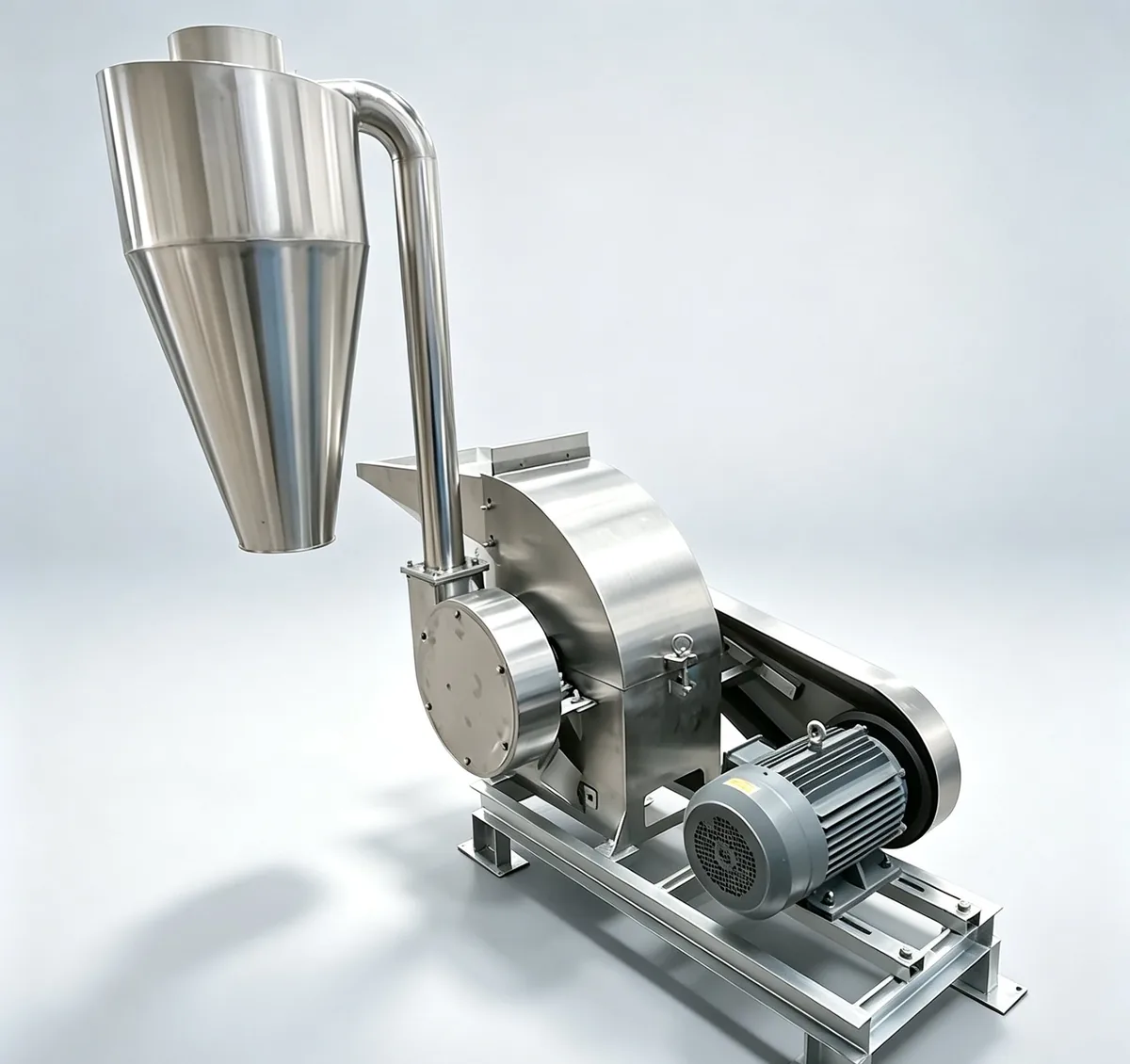
A hammer mill machine is one of the most widely used grinding machines for reducing dry materials into smaller particles and powders.
Hammer mills are commonly used for processing spices, herbs, grains, feed materials and other suitable dry raw materials.
However, choosing a hammer mill should not be based only on machine size or motor power.
The material characteristics, feed size, required particle size, production capacity, moisture content and overall process configuration all affect the performance of the grinding system.
This guide explains the hammer mill working principle, main components, screen selection, applications, capacity considerations and how to choose an industrial hammer mill for a powder-processing project.
A hammer mill machine is a mechanical size-reduction machine that uses rapidly rotating hammers to break material through impact.
The basic process is:
Raw Material → Controlled Feeding → Grinding Chamber → Rotating Hammers → Impact Grinding → Screen Classification → Finished Material
The material enters the grinding chamber and encounters rotating hammers mounted on a rotor.
Repeated impact reduces the material into smaller particles.
When particles become small enough to pass through the selected screen openings, they leave the grinding chamber.
This makes the hammer mill particularly useful for continuous dry grinding applications.
The hammer mill working principle is based primarily on impact.
Inside the machine, a rotor rotates at high speed.
Hammers attached to the rotor move rapidly through the grinding chamber.
When the incoming material encounters the moving hammers, impact forces break the material into smaller pieces.
A simplified process is:
HAMMER MILL → Material → Feed Inlet → Rotating Rotor → Hammers → IMPACT → SCREEN → Powder Output
The grinding process continues until the particles are sufficiently small to pass through the screen.
Therefore, the hammer mill is not simply a machine that “hits” material once.
Grinding performance is the result of repeated impact, particle movement, airflow and screen classification inside the grinding chamber.
A typical industrial hammer mill contains several important components.
The feed inlet introduces raw material into the grinding chamber.
A controlled feeding system can help maintain stable material flow.
The rotor is the rotating assembly that carries the hammers.
Its rotational speed and mechanical design influence grinding performance.
Hammers are the primary impact components.
Their design, arrangement and material affect:
The grinding chamber provides the space where material encounters the rotating hammers.
Its internal configuration affects how material moves through the grinding process.
The screen controls which particles can leave the grinding chamber.
It is therefore one of the most important components for particle-size control.
After passing through the screen, the processed material exits through the discharge system.
Depending on the complete line, the discharge can connect to:
A complete hammer mill process can be represented as:
RAW MATERIAL → Feeding → Hammer Mill → Impact → Grinding → Screen → Powder / Granules
In a complete industrial system, additional equipment may be installed before or after the hammer mill.
For example:
Cleaning → Drying → Primary Crushing → Hammer Mill → Fine Grinding → Screening → Dust Collection → Packaging
The actual configuration depends on the application.
Hammer mills can process many suitable dry materials.
Common applications include:
Selected dried herbs and botanical materials can be processed using hammer-mill systems.
Hammer mills are commonly used for size reduction of suitable grain materials.
Examples include:
Hammer mills can reduce the particle size of suitable feed materials before further processing.
Depending on material properties, hammer mills can also be considered for selected industrial and chemical powder applications.
Material compatibility should always be evaluated before selecting the equipment.
Spice grinding is one of the important applications for hammer mill machines.
A typical spice grinding process is:
Whole Spice → Cleaning → Moisture Control → Pre-Crushing → Hammer Mill → Screening → Dust Collection → Spice Powder → Packaging
For example, dried chili may require a different grinding configuration from turmeric because the physical characteristics of the materials are different.
For this reason, the same hammer mill should not automatically be expected to produce identical results for every spice.
PURSYS also provides dedicated spice powder processing solutions.
Hammer mills are also widely associated with grain size reduction.
A basic grain grinding process may be:
Grain → Cleaning → Foreign Material Removal → Hammer Mill → Screening → Grain Powder
The required screen size and grinding configuration depend on the desired final product.
For example, an application producing a relatively coarse meal may require a different configuration from one producing a fine flour-like powder.
The hammer mill screen plays an important role in controlling particle size.
The general principle is:
Large Particle → Hammer Impact → Smaller Particle → Screen → Too Large Small Enough → Continue Output → Grinding
Particles that are too large remain in the grinding chamber.
Particles that are sufficiently small can pass through the screen.
Changing the screen can influence:
Therefore, the screen should be selected according to the desired product specification rather than simply choosing the smallest available opening.
Yes, a hammer mill can be used for fine powder applications, depending on:
However, a hammer mill is not necessarily the best solution for every ultra-fine powder application.
If the target is particularly fine, a second grinding stage may be considered.
For example:
Primary Crushing → Hammer Mill → Pin Mill / Fine Grinder → Screening → Final Powder
This is why defining the final particle-size requirement is one of the first steps in equipment selection.
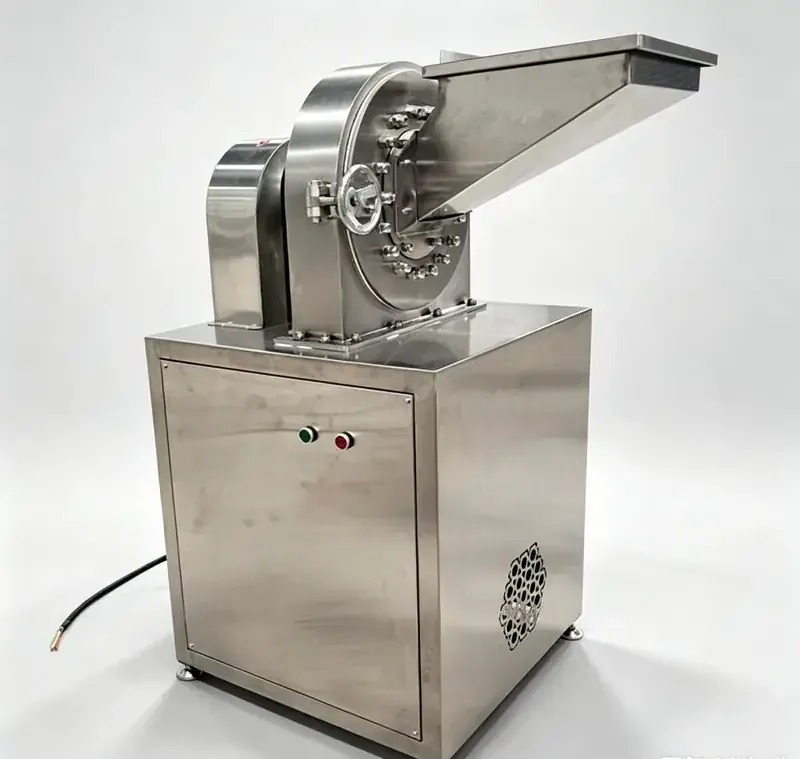
Both machines can be used for industrial powder processing, but they operate differently.
Feature
Hammer Mill
Pin Mill
Main mechanism
Impact
Impact + shearing
Typical role
General size reduction
Fine grinding
Spices
Widely used
Suitable for fine applications
Grains
Common
More application-specific
Fine powder
Possible
Often suitable
Screen
Commonly used
Configuration dependent
Application flexibility
High
More focused on fine grinding
Neither machine is universally superior.
The right choice depends on the customer's:
Material + Particle Size + Capacity + Process Requirements
For a broader comparison, see our article Hammer Mill vs. Pin Mill: Which Grinding Machine Is Right for Your Application?.
The terms hammer mill and pulverizer are sometimes used interchangeably in industrial equipment marketing, but they do not necessarily describe exactly the same machine.
A hammer mill refers to a grinding machine that uses hammers mounted on a rotating rotor.
“Pulverizer” is a broader term that can describe equipment designed to reduce material into powder.
Therefore:
Industrial Grinding Equipment → Hammer Mill → Pin Mill → Fine Grinder → Other Pulverizing Systems
For a detailed introduction to pulverizing equipment, see our guide What Is a Pulverizer Machine: Complete Guide for Industrial Powder Processing.
A hammer mill's performance depends on multiple variables.
Material hardness, fiber content, density and structure all influence grinding.
Excessive moisture can affect:
Large material may require pre-crushing.
Finer products normally require more intensive grinding.
An unstable or excessive feed rate can affect grinding consistency.
Screen opening affects both particle size and throughput.
Not necessarily.
If the raw material is already small enough for the hammer mill's feed requirements, it may be possible to feed it directly.
However, large or difficult-to-process raw materials may benefit from pre-crushing.
Example:
Large Raw Material → Primary Crusher → Smaller Material → Hammer Mill → Powder
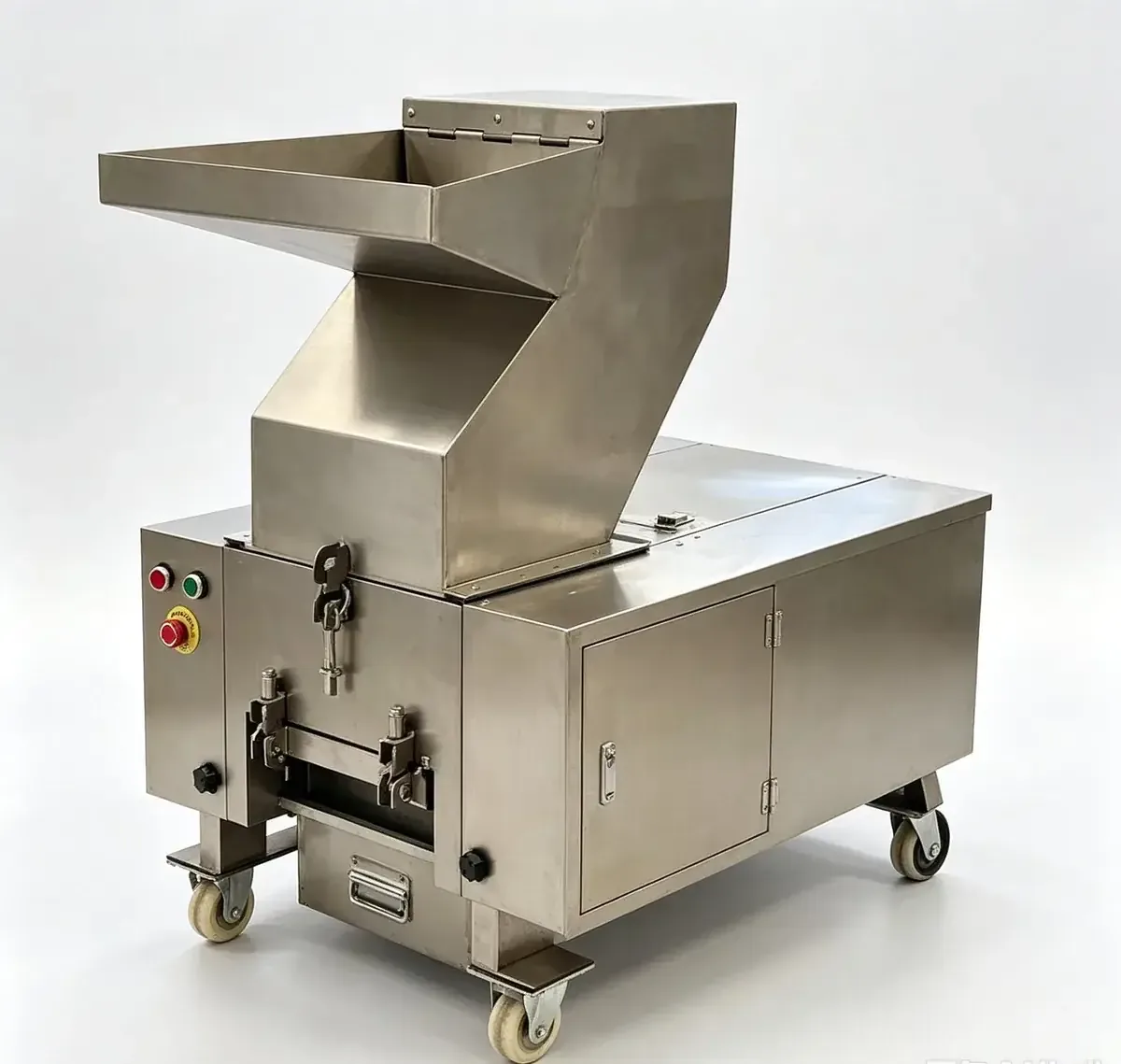
A primary crusher can reduce the feed size before fine grinding.
PURSYS offers a primary crusher for applications where pre-crushing is required.
A customer may need either a standalone hammer mill or a complete grinding system.
Feeding → Hammer Mill → Output
This configuration can be appropriate for relatively simple applications.
Raw Material → Feeding → Primary Crushing → Hammer Mill → Fine Grinding → Vibrating Screen → Dust Collection → Conveying → Packaging
A complete line provides more process integration but requires more equipment and engineering.
The best configuration depends on the customer's actual production requirements.
Dry grinding can generate airborne powder.
A dust collection system can therefore be an important part of an industrial grinding line.
A typical configuration is:
Hammer Mill → Powder + Air → Dust Collector → Collected Material Filtered Air
Dust collection can help create a cleaner and more controlled production environment.
For fine powder applications, dust management should be considered during the initial process design.
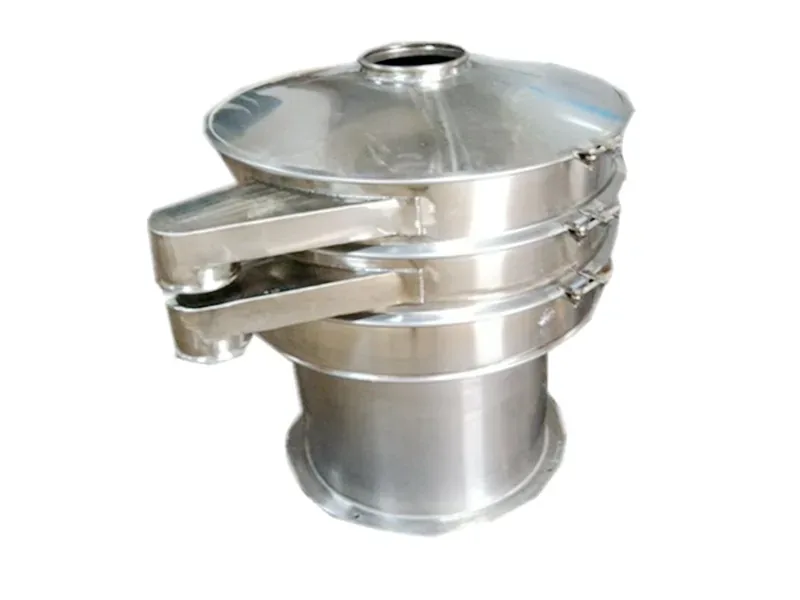
Screening can be used after grinding when the final product requires additional particle-size classification.
A typical configuration is:
Hammer Mill → Vibrating Screen → Fine Oversize → Product Re-Grinding
The oversize fraction can potentially be returned to the grinding stage depending on the process design.
PURSYS offers a round vibrating screen for powder and material classification applications.
Customers often ask:
“How many kilograms per hour can this hammer mill produce?”
There is no single capacity number that applies to every material.
Actual capacity can depend on:
For example, a machine processing a brittle dry material into a relatively coarse powder may achieve a different throughput from the same machine processing a harder material into a much finer powder.
Therefore, capacity should always be evaluated together with the required particle size.
Grinding generates mechanical energy, and some applications can experience temperature increases during operation.
This can be particularly important when processing:
Potential process factors include:
For heat-sensitive products, the complete grinding system should be designed with temperature management in mind.
Stainless steel construction is commonly considered for food-processing applications.
Potential advantages include:
The appropriate stainless-steel grade and construction should depend on the customer's application, cleaning process and applicable requirements.
For food powder processing, equipment material should be discussed during the quotation and engineering stage.
A practical selection process can be simplified into seven steps.
What are you grinding?
For example:
Dried chili
Determine:
Do you need:
For example:
Required production: ___ kg/h
Large raw material may require a crusher.
Very fine products may require another grinding stage.
Consider:
The result should be a complete process rather than simply a machine selection.
The price of a hammer mill machine depends on its configuration.
Key cost factors include:
Cost Factor
Why It Matters
Machine size
Influences material and manufacturing cost
Motor
Depends on application
Stainless steel
Construction requirements affect cost
Rotor / hammer design
Influences machine configuration
Screen system
Different requirements affect configuration
Feeding system
Manual and automatic feeding differ
Dust collection
Adds system components
Conveyor
Required for integrated systems
Automation
Adds control equipment
Packaging
Complete lines require additional machinery
Therefore, customers should compare quotations based on the complete processing configuration, not simply the hammer mill body.
Motor power is only one part of the system.
It does not by itself determine final powder quality.
A machine capable of high throughput may not necessarily achieve the required fine powder specification.
Moist material can behave very differently from dry material during grinding.
A larger machine is not automatically more economical.
Oversizing can increase:
A grinding machine may work correctly but still create problems if the screening, dust collection or packaging system is poorly designed.
The same hammer mill configuration should not automatically be used for every material.
Consider a hypothetical chili powder project.
The customer requires dried chili to be processed into a consistent powder.
A possible process could be:
Dried Chili → Cleaning → Drying / Moisture Control → Primary Crushing → Hammer Mill → Fine Grinding → Vibrating Screen → Dust Collection → Finished Chili Powder → Packaging
The actual configuration would depend on:
This illustrates why industrial grinding systems should be designed around the product specification.
Turmeric can require a different grinding configuration from chili.
A typical conceptual process could be:
Dried Turmeric → Cleaning → Drying → Primary Crushing → Hammer Mill → Fine Grinding → Screening → Dust Collection → Turmeric Powder → Packaging
For turmeric applications, the moisture condition, raw-material size and target powder fineness should be evaluated before selecting the hammer mill.
For a complete turmeric line layout, see our Turmeric Powder Production Line guide.
Regular maintenance is important for industrial grinding equipment.
Typical inspection points include:
Check for wear and replace or service them according to the equipment design.
Inspect for:
Check the rotor and related components according to the manufacturer's maintenance schedule.
Monitor bearing condition and lubrication requirements according to the equipment design.
Keep the chamber clean and inspect it periodically.
Inspect filters, connections and collection components.
A preventive maintenance program can help reduce unexpected downtime.
Before requesting a quotation, prepare the following information:
A hammer mill machine is a versatile industrial grinding solution for many dry material-processing applications.
Its main advantages come from a relatively straightforward impact-grinding principle, flexible screen-based particle-size control and compatibility with complete powder-processing systems.
However, the best hammer mill is not simply the machine with the highest motor power or largest capacity.
The correct selection should consider:
Material → Moisture → Feed Size → Particle Size → Capacity → Grinding Configuration → Auxiliary Equipment
For more demanding applications, a hammer mill can also be integrated with:
The final objective is not just to select a grinding machine, but to build a stable and efficient powder-processing system.
Looking for an industrial hammer mill, spice grinding machine or complete powder processing line? Send us the following information and PURSYS can evaluate your requirements and recommend a suitable grinding configuration:
PURSYS — Industrial Powder Processing Equipment & Complete Grinding Solutions
Need an industrial hammer mill, spice grinding machine or complete powder processing line? Tell PURSYS your raw material + required capacity + target powder fineness. Explore our industrial hammer mill, pin mill, primary crusher, vibrating screen and full range of PURSYS powder processing equipment, or get a quote.
Copyright © Zhengzhou Pursys Machinery Co., Ltd. All Rights Reserved. | XML Sitemap | Site Map
Zhengzhou Pursys Machinery Co., Ltd.
+86 177 2975 3706
+8617729753706
No.21 South Huagong Road, Zhangcun, Gaocun Township, Xingyang City, Zhengzhou City, Henan Province, P.R.China