Mobile:
+86 177 2975 3706
E-mail:
info@pursysmachine.com
News · Aug. 17, 2026 · Spice Processing
Producing spice powder on an industrial scale requires more than a single grinding machine. A commercial spice processing operation may need to handle raw material preparation, cleaning, grinding, particle-size control, dust collection, conveying, storage and packaging. A properly designed spice powder production line connects these individual processes into an integrated system. The exact configuration depends on the type of spice, raw-material condition, production capacity and required final powder specification. This guide explains how an industrial spice powder production line works, what equipment may be required and how to plan a system for different production requirements.
For background on the core machines, see our guides on the pulverizer machine and powder grinding machine, as well as the dedicated industrial spice grinding machine.
A spice powder production line is an integrated processing system designed to convert whole or pre-processed spices into finished powder.
Depending on the application, the line may include:
A simplified process can look like: raw spices → drying / conditioning → fine grinding → dust collection → powder storage.
Not every spice requires every stage. A turmeric processing line, for example, may require a different configuration from a chili or pepper processing line.
A standalone grinder can reduce particle size, but a complete production line provides a more integrated approach to production.
A typical industrial spice powder production process consists of several stages.
The production process begins when raw spices arrive at the processing facility. Examples include chili, black pepper, white pepper, turmeric, ginger, cumin, coriander, cinnamon and cardamom. At this stage, manufacturers may check material condition, moisture, foreign matter, particle size and storage condition. The quality of the incoming material directly affects the final powder.
Raw spices may contain unwanted materials such as stones, plant debris, metal particles and other foreign materials. Depending on the raw material, cleaning equipment may include vibrating screens, magnetic separators, air separators and sorting equipment. The objective is to remove unwanted material before grinding.
Moisture is an important factor in spice processing. Excessive moisture can cause material sticking, screen blockage, reduced grinding efficiency, inconsistent powder flow and increased cleaning requirements. The appropriate moisture level depends on the specific spice and process. For this reason, drying should not be treated as a universal fixed step; the processing system should be designed according to the actual raw material.
Some whole spices may be too large for direct fine grinding. A pre-crusher can reduce the incoming material to a more manageable size before the main grinding stage. A simplified flow is whole spice → primary crusher → smaller particles → fine grinder. Pre-crushing can reduce the load on the final grinding machine in certain applications.
Grinding is the core stage of the production line. Depending on the material and target particle size, different technologies can be considered.
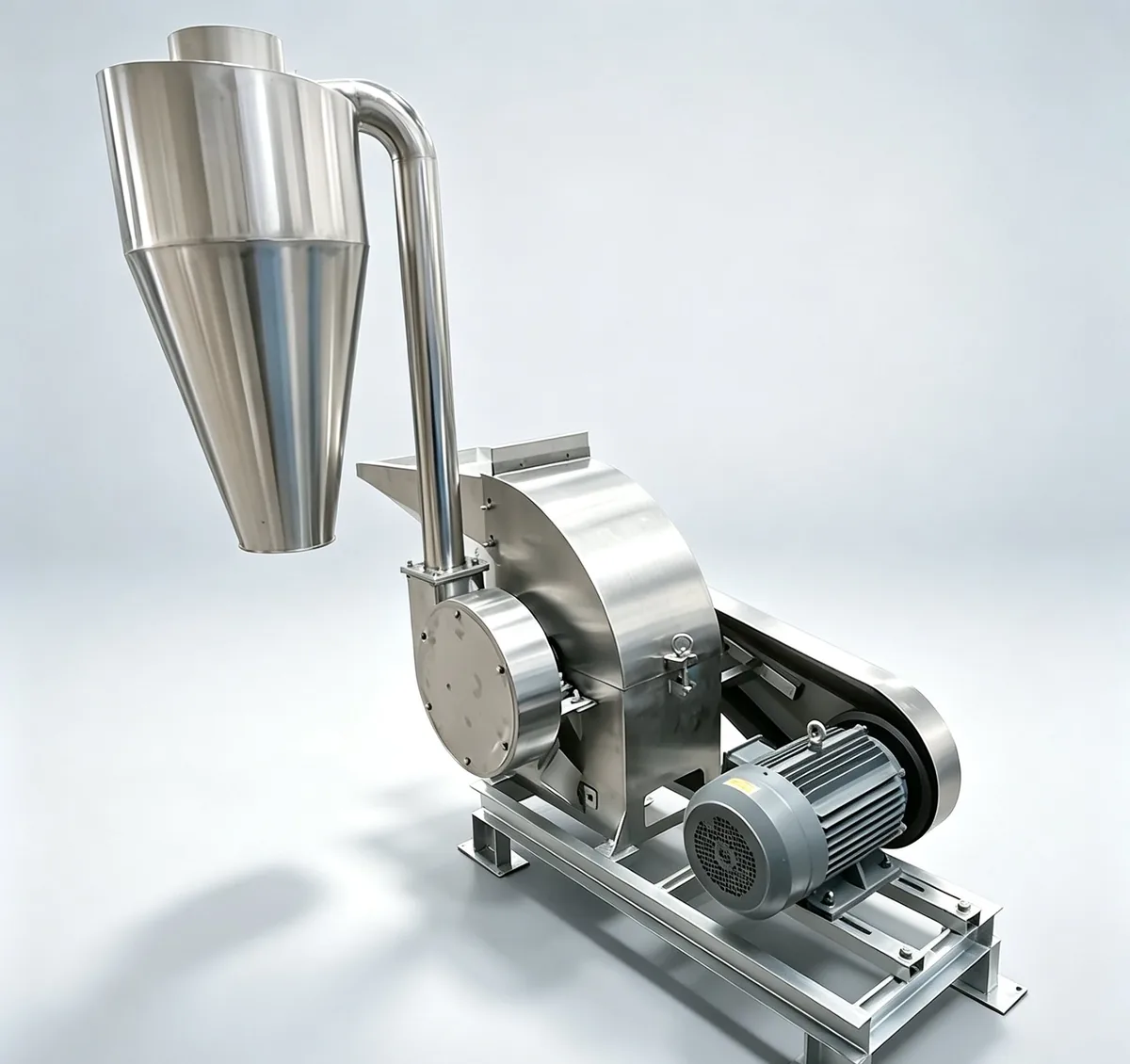
A hammer mill uses high-speed rotating hammers to reduce material size through repeated impact. It can be suitable for chili, turmeric, pepper, ginger, dried herbs and agricultural materials. See our hammer mill working principle and hammer mill vs pin mill guides for more detail. A pin mill uses high-speed pins to create impact and shear forces. It may be considered when finer grinding is required and the material is suitable for this type of grinding.
After grinding, the powder may need to be screened. The purpose is to separate particles according to the required specification. A vibrating screen can be integrated into the production line to help separate oversized particles, qualified powder and material requiring further processing. A simplified process is qualified powder → next process, while oversized material returns to grinding. Whether recirculation is required depends on the product specification and system design.
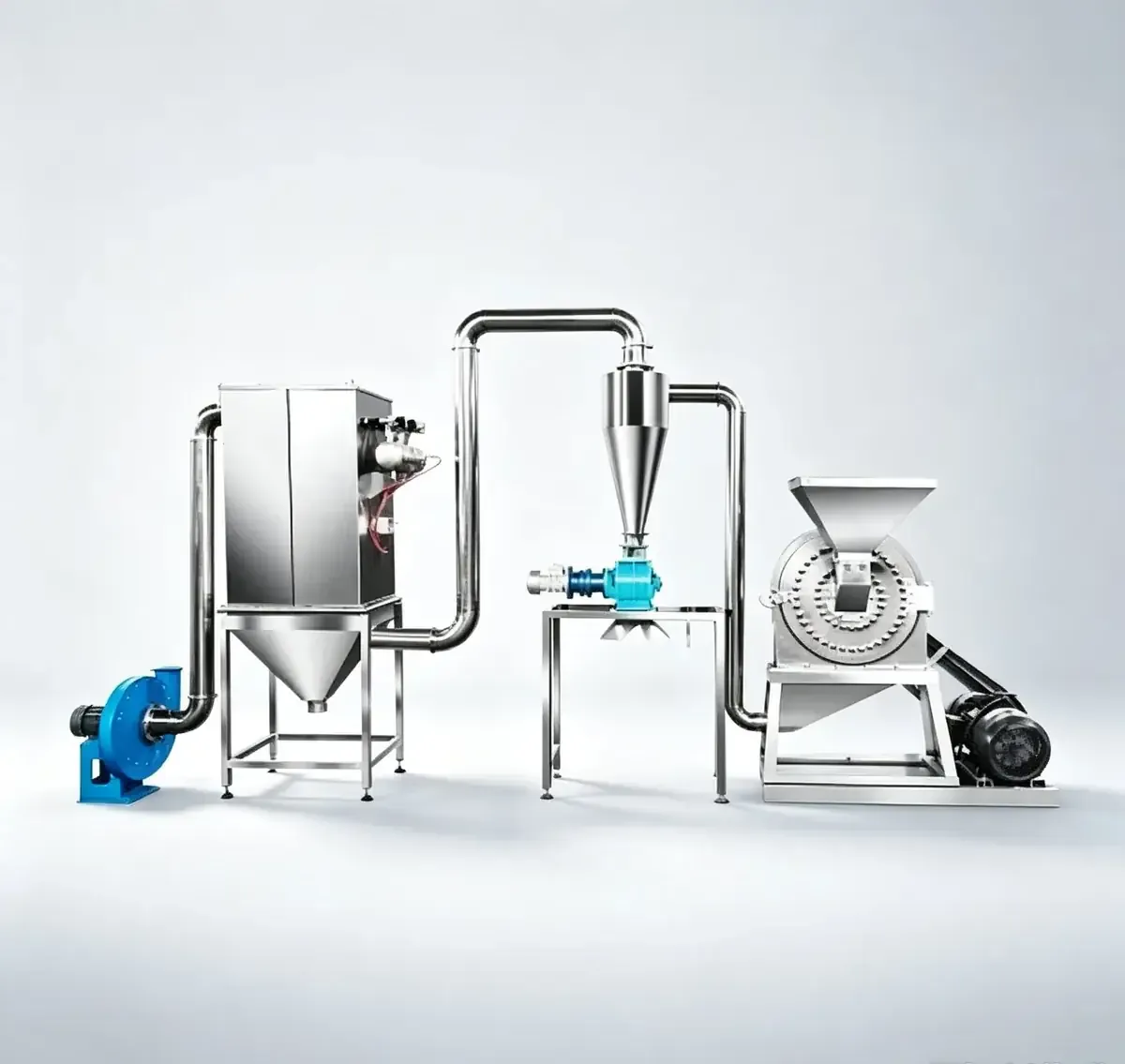
Dust control is an important consideration in industrial spice processing. Fine spice particles can become airborne during feeding, crushing, grinding, screening, conveying and packaging. A dust collection system may include a cyclone separator, bag filter, cartridge filter, ducting and exhaust fan. The exact system depends on the material, capacity and required environmental controls.
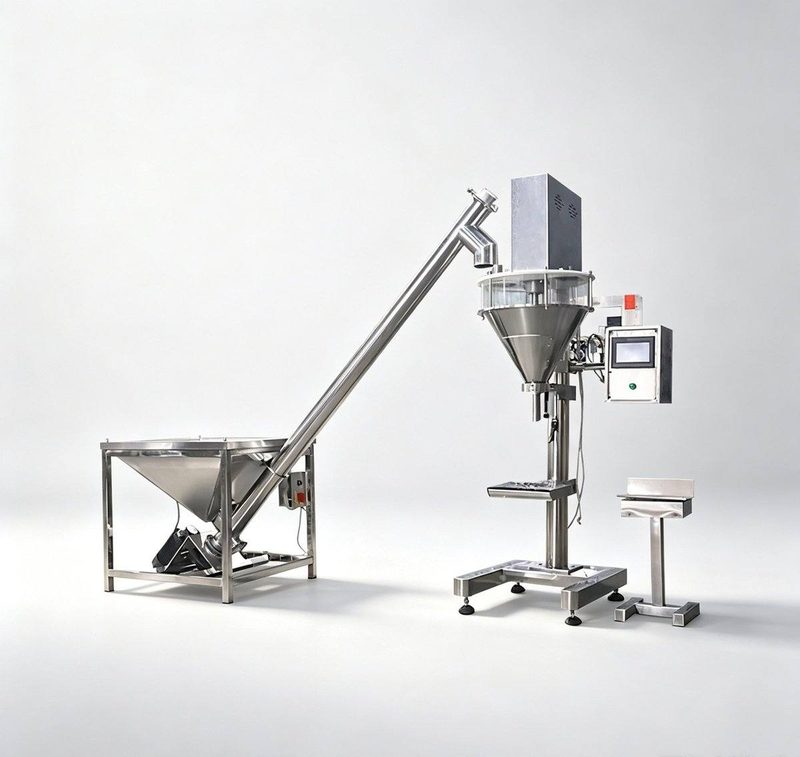
Once the spice has been ground and screened, the finished powder may need to be transferred to storage bins, mixing equipment or packaging machines. Possible conveying methods include screw conveyors, pneumatic conveying, vacuum conveying and other mechanical conveying systems. The best option depends on powder characteristics, distance, capacity, hygiene requirements and layout.
A storage hopper or powder bin can provide a buffer between grinding and packaging. This can help separate the operating rates of different processing stages. This can be useful when the grinding system and packaging machine operate at different rates.
The final stage is packaging. Depending on the product and market, packaging may include small retail bags, large industrial bags, sachets, containers and bulk packaging. A complete automated system can connect the powder storage hopper directly to the packaging equipment.
A simplified industrial layout can be: raw material → feeding system → drying / conditioning → primary crusher → hammer mill / pin mill → cyclone / dust collector → vibrating screen → finished powder hopper → packing machine.
The actual layout should be customized according to factory space, material flow, production capacity, equipment dimensions, maintenance access, electrical requirements and dust-control requirements.
Different spices have different processing characteristics. A single standard configuration should therefore not be applied to every material.
Production capacity is usually expressed in tons/month. However, capacity should always be associated with the final product specification. For example, 500 kg/h at the required powder fineness is much more useful than 500 kg/h grinding capacity. Because grinding capacity can change significantly depending on material, moisture, target particle size and grinding technology.
There is no universal factory size. The required space depends on the number of machines, production capacity, storage requirements, packaging area, raw-material storage, finished-product storage, maintenance access, worker access and dust collection equipment. A good factory layout should provide enough space for both operation and maintenance. Equipment should not simply be placed as close together as possible.
For food and spice processing, equipment construction is an important consideration. Common considerations include SUS304 stainless steel, SUS316 stainless steel where appropriate, smooth product-contact surfaces, easy cleaning and reduced material retention. The correct material grade should be selected according to the product and applicable processing requirements.
Semi-Automatic Line – a semi-automatic system may require operators for feeding, material transfer, packaging and cleaning. Lower initial complexity, easier for smaller production and more flexible manual operation.
Automatic Line – an automatic system can connect multiple stages through automatic feeding, conveying, grinding, screening, dust collection, powder storage and automatic packaging. Advantages can include reduced manual handling, more consistent production, better production monitoring and higher automation. The appropriate level of automation depends on the factory's production volume and investment plan.
There is no meaningful single price for every spice powder production line. The total investment depends on production capacity, number of processing stages, grinding technology, stainless steel requirements, dust collection system, screening equipment, conveying system, automation, packaging equipment and factory layout. A small grinding system and a fully automated multi-stage production line can have very different configurations and costs. Therefore, buyers should compare complete technical specifications rather than comparing only equipment prices.
A professional planning process can follow these steps:
PURSYS provides powder processing equipment and complete processing solutions for applications including spices, food ingredients, herbs, agricultural materials and industrial powders.
Depending on the application, a PURSYS system can integrate feeding equipment, crushing equipment, hammer mills, pin mills, vibrating screens, dust collection systems, conveying equipment, powder storage and packaging equipment. The objective is to develop a process configuration around the customer's actual material and production requirements rather than supplying a standard machine without considering the complete process.
If you are requesting a production-line proposal, provide as much of the following information as possible: material condition, target fineness, semi-automatic / automatic, required / not required, and factory location (country / region). You can also provide raw material photos, existing production-line information, finished powder samples, factory layout and target investment range. This information helps engineers design a more appropriate solution.
A successful spice powder production line begins with the product specification, not the machine. Before selecting equipment, define raw material, moisture, production capacity, final particle size, temperature requirements, hygiene requirements and automation level. Once these parameters are established, the appropriate process flow and equipment can be selected. A complete spice processing system may combine crushing, grinding, screening, dust collection, conveying, storage and packaging to create a more efficient production process. For manufacturers planning a new spice powder factory or upgrading an existing production line, a customized process design and material test can help reduce equipment-selection risk.
For more on the machines described here, explore our industrial hammer mill, pin mill, spice powder processing solutions and the full range of PURSYS grinding equipment.
Copyright © Zhengzhou Pursys Machinery Co., Ltd. All Rights Reserved. | XML Sitemap | Site Map
Zhengzhou Pursys Machinery Co., Ltd.
+86 177 2975 3706
+8617729753706
No.21 South Huagong Road, Zhangcun, Gaocun Township, Xingyang City, Zhengzhou City, Henan Province, P.R.China