Mobile:
+86 177 2975 3706
E-mail:
info@pursysmachine.com
Guide · Jun. 26, 2026 · Spice Powder
Chili powder is one of the most widely used spice ingredients in the global food industry. From traditional food processing factories to large-scale spice manufacturers, producing consistent chili powder requires more than simply crushing dried chili. A professional chili powder production process must control particle size, color retention, aroma preservation, production efficiency and food safety standards. Industrial chili powder production usually includes several important stages: raw material preparation, drying, crushing, grinding, screening and packing. PURSYS provides professional chili grinding machines and powder processing solutions designed for spice manufacturers worldwide.
Industrial chili powder processing is the process of converting dried chili peppers into uniform powder through mechanical size reduction. Compared with traditional manual processing, industrial production provides higher production capacity, more stable powder quality, better hygiene control, lower labor cost and continuous operation. A complete chili powder production system may include crushing equipment, grinding machines, screening equipment, conveying systems and packing machines.
The first step in chili powder production is preparing suitable raw materials. Common chili varieties include red chili, cayenne pepper, bird's eye chili, paprika and dried pepper. Before grinding, manufacturers need to check moisture content and cleanliness. Moisture level affects grinding efficiency, powder quality and machine performance; too much moisture may cause material sticking, reduced output and poor powder flow. Raw chili should be cleaned to remove dust, foreign materials, stones and unwanted particles, and food processing factories usually require hygienic handling throughout the process.
Drying is an important stage because moisture directly affects grinding performance. Proper drying helps improve grinding efficiency, maintain powder quality and reduce material blockage. Common drying methods include natural drying, hot air drying and industrial drying equipment. For large-scale production, controlled drying provides more stable results.
Before fine grinding, dried chili is usually crushed into smaller pieces. The purpose of crushing is to reduce material size, improve grinding efficiency and protect the fine grinding equipment. A coarse crusher or primary crusher can be used for initial size reduction: whole dried chili → coarse crushing → small chili particles → fine grinding. For this stage, a professional Chili Powder Grinding Machine is the foundation of an efficient production line.
Grinding is the core step of chili powder production. The goal is to produce powder with uniform particle size, good color, strong aroma and stable quality. Different grinding machines can be selected depending on production requirements.
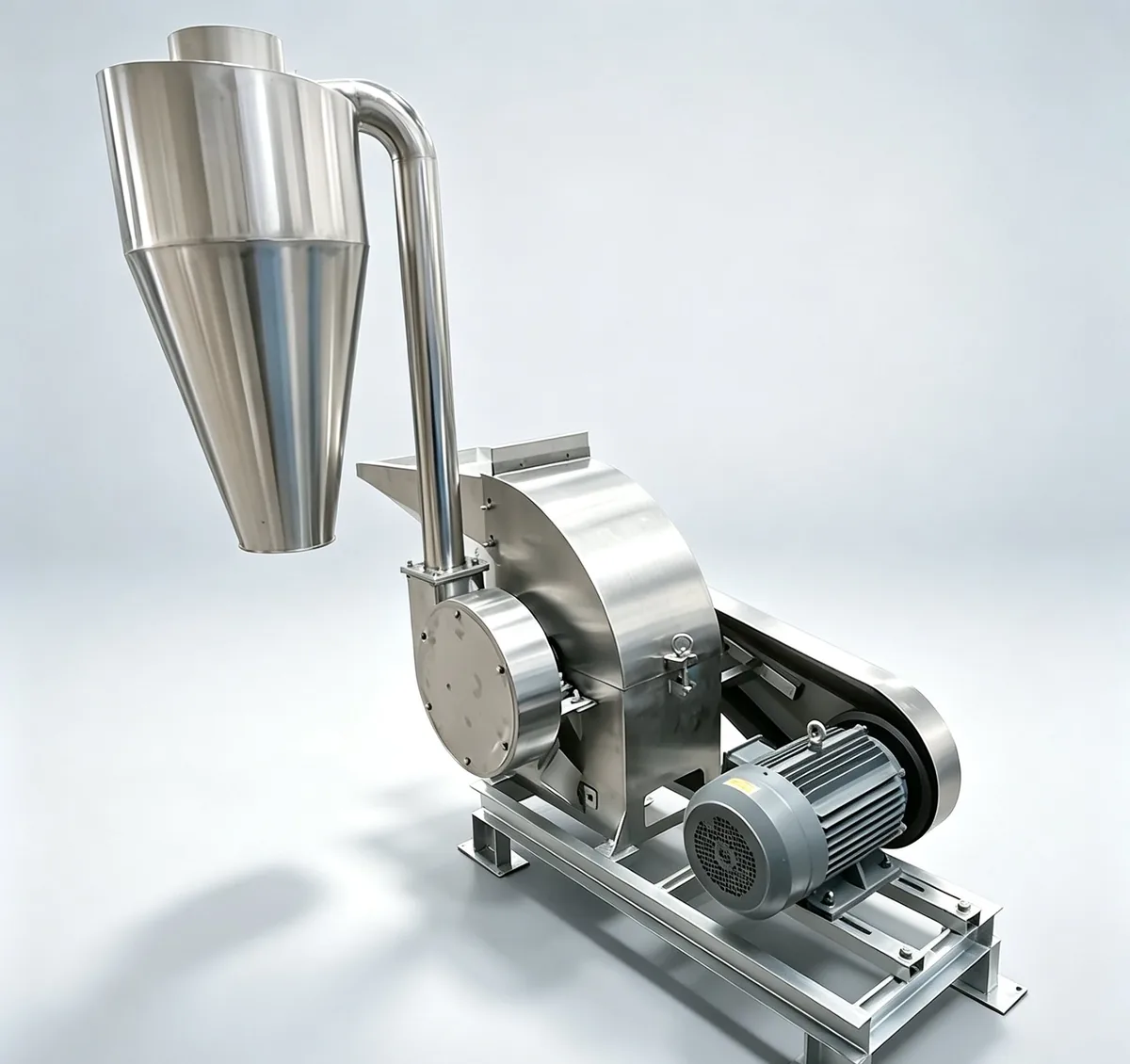
Chili Hammer Mill for Powder Production – A hammer mill uses high-speed rotating hammers to crush chili materials through impact force. Advantages include high processing capacity, strong crushing performance and suitability for continuous production. Applications cover chili powder, spice powder, pepper powder and agricultural materials. A stainless steel hammer mill is commonly selected for food processing because it provides easy cleaning, corrosion resistance and better hygiene performance.
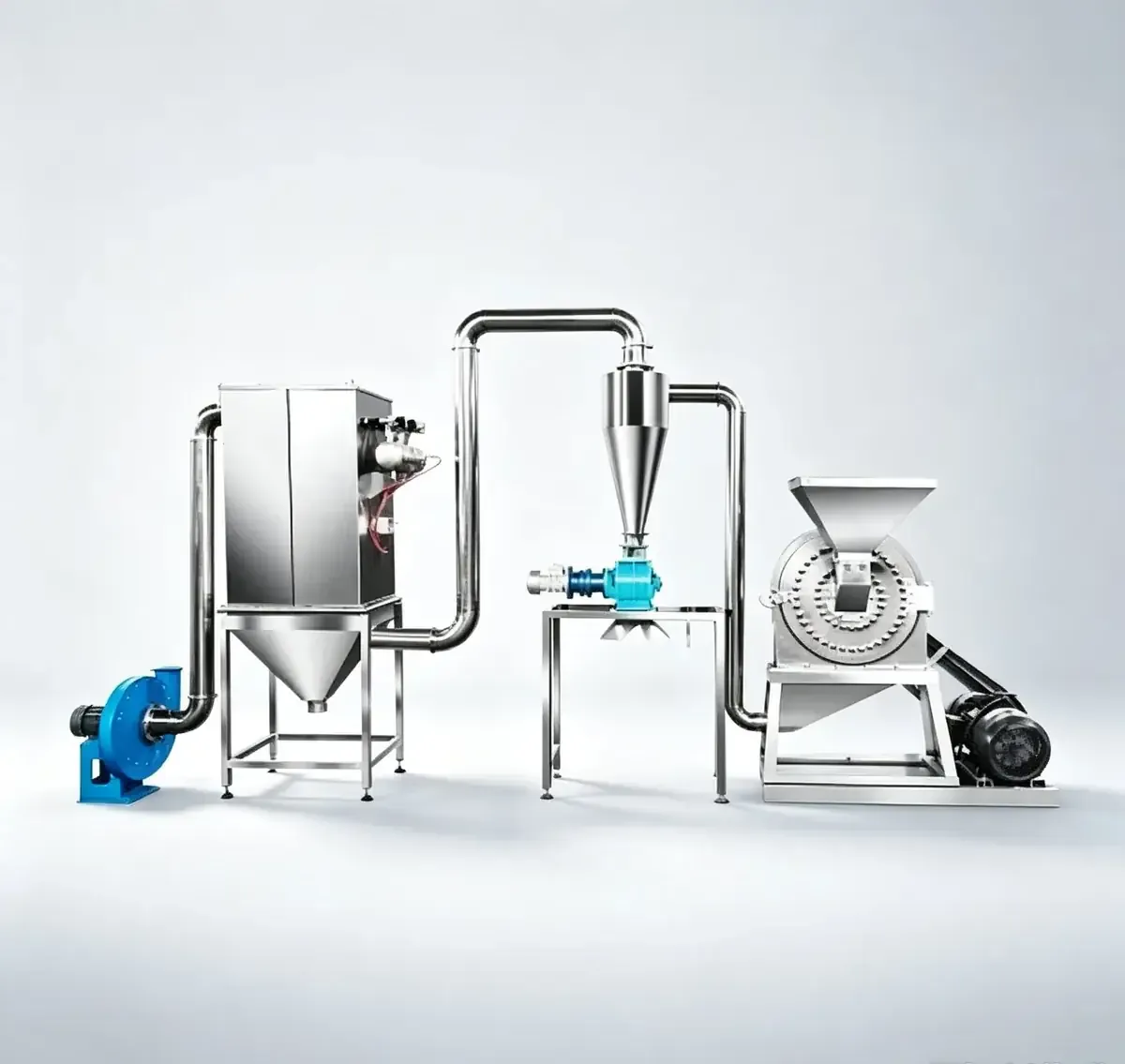
Chili Pin Mill for Fine Powder – A pin mill is suitable when manufacturers require finer chili powder. Advantages include fine particle size, better powder uniformity and suitability for premium spice products. Applications include fine chili powder, seasoning powder and food ingredients. See the Hammer Mill vs Pin Mill comparison to choose the right technology.
After grinding, chili powder may contain particles with different sizes. Screening equipment helps remove oversized particles, improve consistency and control final powder size. A vibrating screen is commonly used for powder classification: grinding → screening → qualified chili powder → packing.
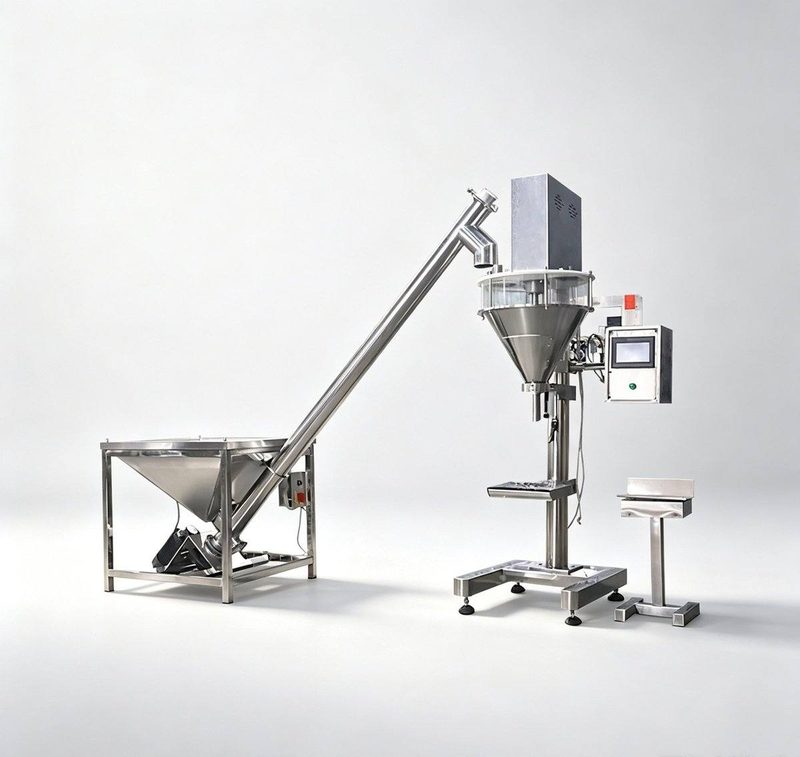
The final step is packaging. Industrial packing systems help reduce manual operation, improve efficiency and maintain product quality. Common packaging methods include small bags, food ingredient bags and large industrial bags. PURSYS provides powder packing solutions for different production requirements.
A complete chili powder processing workflow is: dried chili → cleaning → crushing → grinding → screening → packing → finished chili powder. Equipment selection depends on production capacity, required powder fineness, factory conditions and automation requirements.
When selecting chili grinding equipment, manufacturers should consider production capacity, required powder fineness, material characteristics and food safety requirements. Small production suits restaurants and small spice workshops; medium production suits spice manufacturers; large production suits industrial food factories. Coarse chili powder points to a hammer mill, while fine chili powder points to a pin mill. Because chili contains natural oil, aroma compounds and heat-sensitive components, grinding equipment should consider temperature control, grinding speed and processing time. For food powder production, equipment should focus on food-grade stainless steel, easy cleaning design and stable operation. Learn more from our Spice Powder Processing Solution.
PURSYS provides professional spice powder processing equipment for global customers. Our solutions focus on precision (stable particle size and consistent powder quality), reliability (designed for continuous industrial operation) and flexibility (customized according to material, capacity, voltage and factory requirements). From equipment selection to export delivery, PURSYS provides complete powder processing solutions.
Copyright © Zhengzhou Pursys Machinery Co., Ltd. All Rights Reserved. | XML Sitemap | Site Map
Zhengzhou Pursys Machinery Co., Ltd.
+86 177 2975 3706
+8617729753706
No.21 South Huagong Road, Zhangcun, Gaocun Township, Xingyang City, Zhengzhou City, Henan Province, P.R.China