Mobile:
+86 177 2975 3706
E-mail:
info@pursysmachine.com
News · Oct. 12, 2026 · Chili Grinder Guide
Choosing the right chili powder grinding machine is an important decision for spice manufacturers, food processors, and industrial powder producers. Different chili varieties and production requirements can call for different grinding solutions. A machine that works well for coarse chili flakes may not be the best choice for fine chili powder. Similarly, a grinder suitable for a small processing operation may not meet the requirements of a continuous industrial production line. Before purchasing a machine, manufacturers should evaluate the raw material, target particle size, required capacity, temperature considerations, screening requirements, and downstream processing needs. This guide explains the key factors to consider when selecting an industrial chili powder grinding machine and how to evaluate whether a standalone grinder or a complete processing system is more appropriate.
The first step is to define the product you want to make.
Before comparing machines, answer these questions:
These details help determine which grinding technologies and supporting equipment should be considered. For a broader overview of equipment options, see our guide to the chili grinding machine.
Not all dried chili peppers behave identically during grinding. Differences in moisture, skin characteristics, seed content, oil content, and initial size can affect feeding and grinding performance.
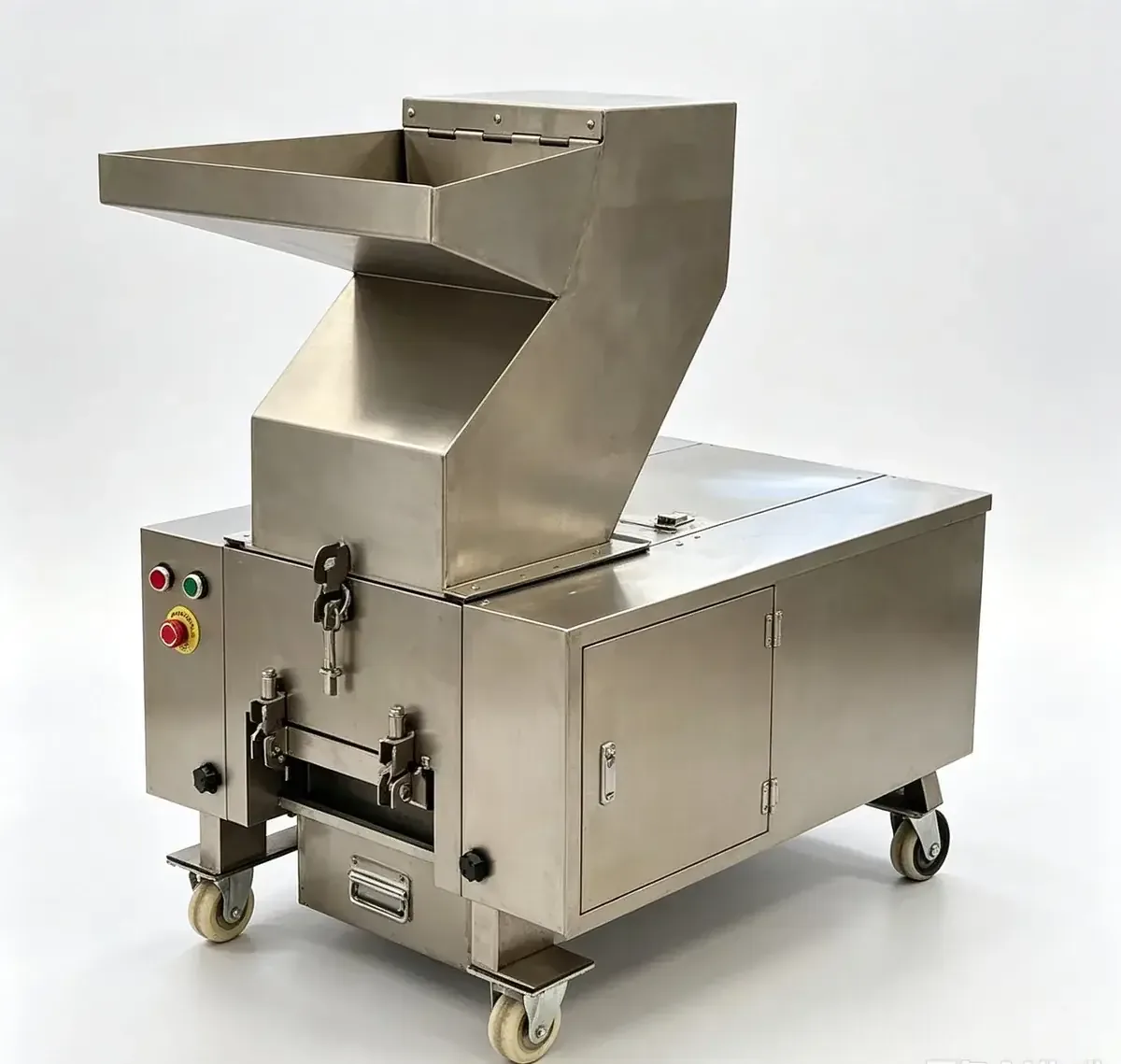
Whole dried chili may require size reduction before fine grinding, depending on the machine's feed opening and the dimensions of the raw material. A primary crusher may be useful when the incoming pieces are too large for direct feeding. Explore the PURSYS primary crusher.
Pre-cut material may be suitable for direct feeding into some grinding machines. However, suitability still depends on the feed size, material condition, and the selected machine configuration.
Moisture can influence flow, grinding behavior, and the finished powder characteristics. The appropriate moisture condition should be established for the actual chili variety and production process rather than assumed to be the same for every application.
Two machine types that may be considered for industrial chili grinding are hammer mills and pin mills. Their suitability depends on the application and the required final product.
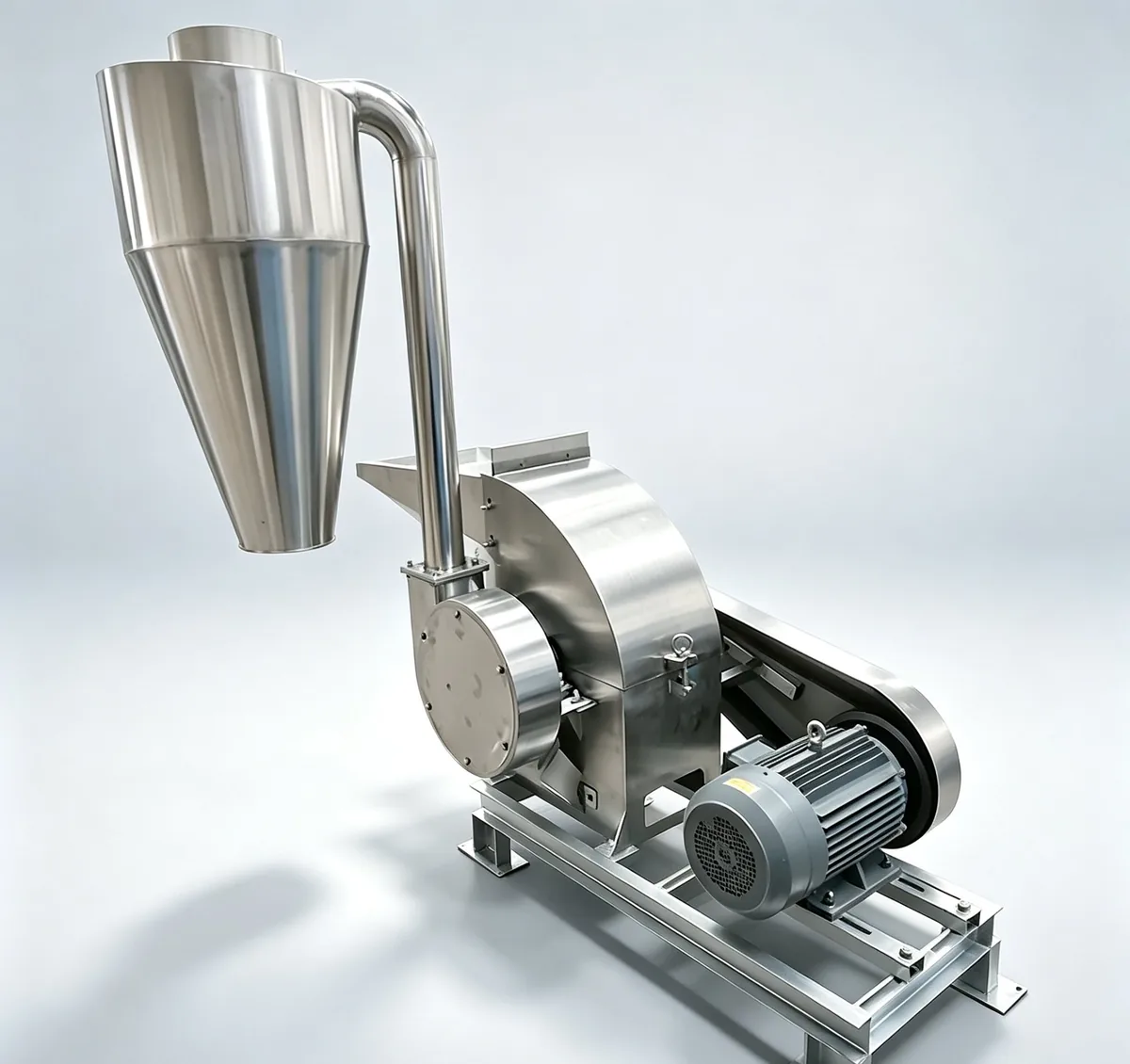
A hammer mill uses rotating hammers to reduce material through impact and related grinding actions. It may be considered for dried chili applications where the required particle size, feed characteristics, and production conditions are compatible with the machine design.
Factors to evaluate include:
Learn more about the PURSYS industrial hammer mill. For a more detailed explanation of hammer mill construction and operation, see the hammer mill machine guide.
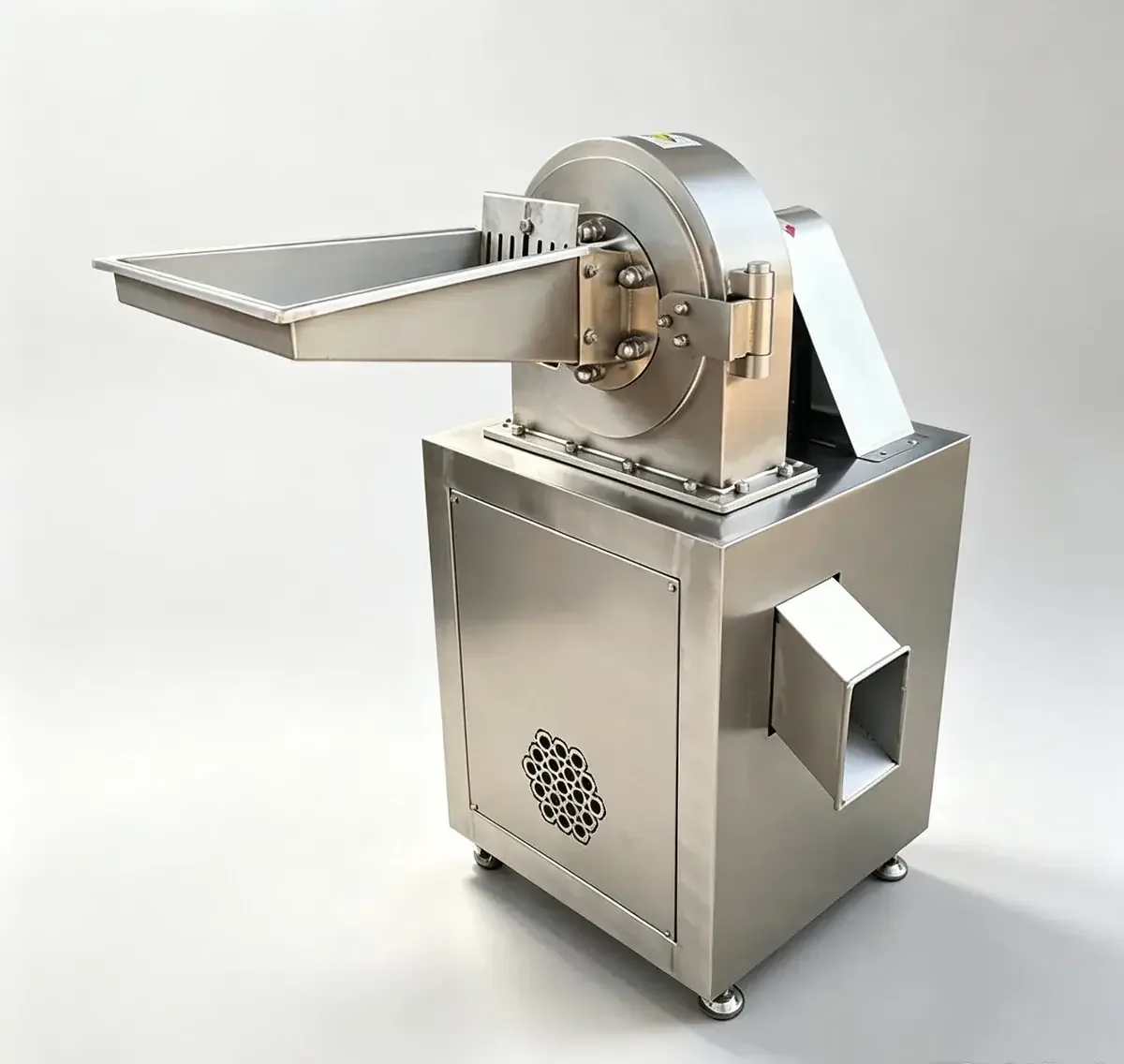
A pin mill uses pin assemblies to reduce particle size through impact. Depending on its design, it may be considered for applications requiring a different grinding action or particle-size range. Its suitability for chili should be evaluated using the actual material and target product specification. Explore the PURSYS pin mill.
There is no universal winner between these two machine types.
| Selection factor | Hammer mill | Pin mill |
| Grinding mechanism | Rotating hammers | Pin assemblies |
| Particle size | Depends on screen and operating conditions | Depends on design and operating conditions |
| Feed requirements | Depends on machine design | Depends on machine design |
| Chili suitability | Must be evaluated for the specific application | Must be evaluated for the specific application |
| Selection basis | Material, fineness, capacity, and process | Material, fineness, capacity, and process |
| The best choice should be based on material testing, required product characteristics, and the overall production process. |
See our detailed comparison: Hammer Mill vs. Pin Mill.
The target particle size is one of the most important factors in machine selection. Chili products may range from coarse flakes to relatively fine powder. The required specification should be defined before choosing a grinder.
Consider:
The grinding mechanism, machine settings, screen configuration, and raw material condition all affect the result. Do not select a machine based only on a general claim such as "fine powder." Provide the supplier with a clear target specification and, where possible, a sample of the material.
Capacity should be based on the required output of finished chili powder. For example, a manufacturer may specify a target number of kilograms per hour or a total production requirement per shift.
However, actual throughput depends on:
A machine's nominal capacity is not necessarily the same as the finished-product output for a particular application. When comparing quotations, ask suppliers to clarify the material and operating conditions associated with any stated capacity.
Grinding converts mechanical energy into size reduction, and some energy is released as heat. Temperature behavior can vary with the machine design, material condition, feed rate, and required fineness. If temperature-sensitive product characteristics are important, discuss the issue with the equipment supplier before selecting the machine.
Possible areas for evaluation include:
The appropriate solution should be determined from the actual material and product requirements rather than assuming that one configuration is suitable for every chili variety.
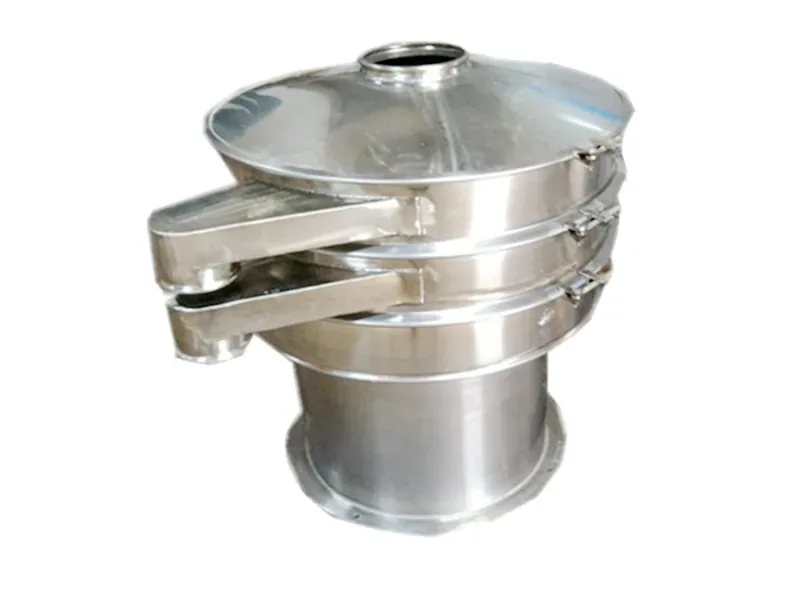
A grinding machine does not always produce a finished product that meets every particle-size specification without additional processing. A vibrating screen may be incorporated to classify the ground material. Screening can help separate particles according to the selected screen configuration and the characteristics of the powder.
Consider whether your process needs to:
Screening and grinding should be evaluated as connected stages. Learn more about the PURSYS round vibrating screen.
Chili grinding can generate airborne particles during feeding, grinding, screening, and material transfer. A dust collection system can help capture dust at appropriate points in the production line.
When evaluating dust collection, consider:
For industrial installations, dust control should be considered during process design rather than left until after the main equipment has been installed.
A standalone grinder may be sufficient for a facility that already has raw material preparation, powder collection, and packaging equipment. A more integrated system may be appropriate when multiple processing stages need to operate together. Standalone Grinding System Prepared Dried Chili
Standalone Grinding System ↓ Prepared Dried Chili ↓ Grinding Machine ↓ Powder Collection ↓ Integrated Chili Powder Processing Line ↓ Raw Material Preparation ↓ Pre-Crushing (If Required) ↓ Grinding ↓ Screening (If Required) ↓ Dust Collection ↓ Conveying ↓ Packaging ↓ The integrated line may include a primary crusher, hammer mill or pin mill, vibrating screen, screw conveyor, and packaging equipment. ↓ For a complete process overview, see the chili powder production line guide. ↓ 10. Check Cleaning and Maintenance Requirements ↓ Cleaning and maintenance can influence long-term operating efficiency, especially for manufacturers processing multiple spice varieties. ↓ Before purchasing a chili powder grinding machine, review: ↓ Access to grinding components ↓ Screen replacement procedures ↓ Cleaning access ↓ Product residue removal ↓ Wear-part replacement ↓ Maintenance intervals and instructions ↓ Availability of replacement parts
Construction materials and cleaning procedures should be selected according to the product, operating environment, and applicable requirements. If multiple products are processed on the same equipment, also discuss changeover procedures and cross-contact prevention.
The machine's construction should be appropriate for the application. For food-related spice processing, buyers often evaluate the product-contact surfaces, surface finish, cleanability, and compatibility with their own hygiene requirements.
Before ordering, clarify:
Do not assume that a machine automatically meets every food-contact or regulatory requirement. Confirm the specific requirements with the supplier and the relevant authorities for your market.
The price of a chili powder grinding machine depends on more than the main grinder.
Important cost factors include:
A standalone machine and a complete production line are different purchasing options. Compare quotations using the same scope of supply wherever possible. The lowest initial price may not represent the best fit if the machine cannot meet the required process specifications.
A low purchase price does not establish whether the machine is suitable for the required output and product specification.
Different chili varieties and material conditions can produce different grinding results.
A requirement such as "fine powder" is not precise enough for a reliable equipment evaluation.
Screening, dust collection, conveying, and packaging may be necessary for the intended production workflow.
Capacity claims should be evaluated against the same raw material, target particle size, and operating conditions.
When the application is uncertain, a material test can help establish whether the proposed equipment and process are appropriate.
Prepare the following information before contacting an equipment supplier.
| Information | What to provide |
| Raw material | Chili variety and condition |
| Feed size | Whole, cut, or pre-crushed |
| Moisture | Measured value, if available |
| Target particle size | Mesh or particle-size specification |
| Required capacity | Finished product output per hour |
| Operating schedule | Batch or continuous operation |
| Screening | Required or not yet determined |
| Dust collection | Existing system or new requirement |
| Packaging | Bag type and target weight |
| Installation | Country and available space |
| Construction | Product-contact material requirements |
| Project scope | Standalone machine or complete line |
| The clearer the project requirements, the easier it is to evaluate machine suitability and compare supplier proposals. |
Choosing a chili powder grinding machine requires a clear understanding of the raw material, target particle size, production capacity, and overall process. Hammer mills and pin mills offer different grinding mechanisms, and their suitability should be evaluated against the actual application. Manufacturers should also consider screening, dust collection, cleaning, maintenance, conveying, and packaging before finalizing the equipment configuration. By defining the product requirements first and evaluating the complete process, buyers can make a more informed equipment decision.
For more on chili grinding systems, explore our spice grinding machine, pin mill and the full range of PURSYS grinding equipment.
A hammer mill or pin mill may be suitable, depending on the raw material, target particle size, required capacity, and machine configuration. Material testing can help determine the appropriate option.
Some machines may accept whole dried chili, while others require pre-cut or pre-crushed material. The feed opening, material dimensions, and machine design should be checked before purchase.
Start with the finished-product specification and the requirements of the intended application. The appropriate mesh and particle-size distribution should be confirmed with the customer or product specification.
Not every application requires a separate vibrating screen. Screening may be useful when particle-size classification or removal of oversized material is necessary.
Select capacity based on the required finished-product output and operating schedule. Ask the supplier to evaluate capacity using your actual raw material and target fineness.
Not always. A standalone grinder may be sufficient when supporting equipment is already available. A complete line may be more appropriate when preparation, grinding, screening, conveying, and packaging need to be integrated.
Provide the raw material, material condition, target particle size, required output, packaging format, installation location, and any special construction or automation requirements.
Looking for an industrial chili powder grinding machine?
Contact PURSYS with your raw material details, required particle size, target capacity, and processing requirements.
Our team can review your application and discuss a suitable grinding machine or powder-processing configuration.
Request a Quote →Back to NewsCopyright © Zhengzhou Pursys Machinery Co., Ltd. All Rights Reserved. | XML Sitemap | Site Map
Zhengzhou Pursys Machinery Co., Ltd.
+86 177 2975 3706
+8617729753706
No.21 South Huagong Road, Zhangcun, Gaocun Township, Xingyang City, Zhengzhou City, Henan Province, P.R.China