Mobile:
+86 177 2975 3706
E-mail:
info@pursysmachine.com
Guide · Aug. 10, 2026 · Grinding Equipment
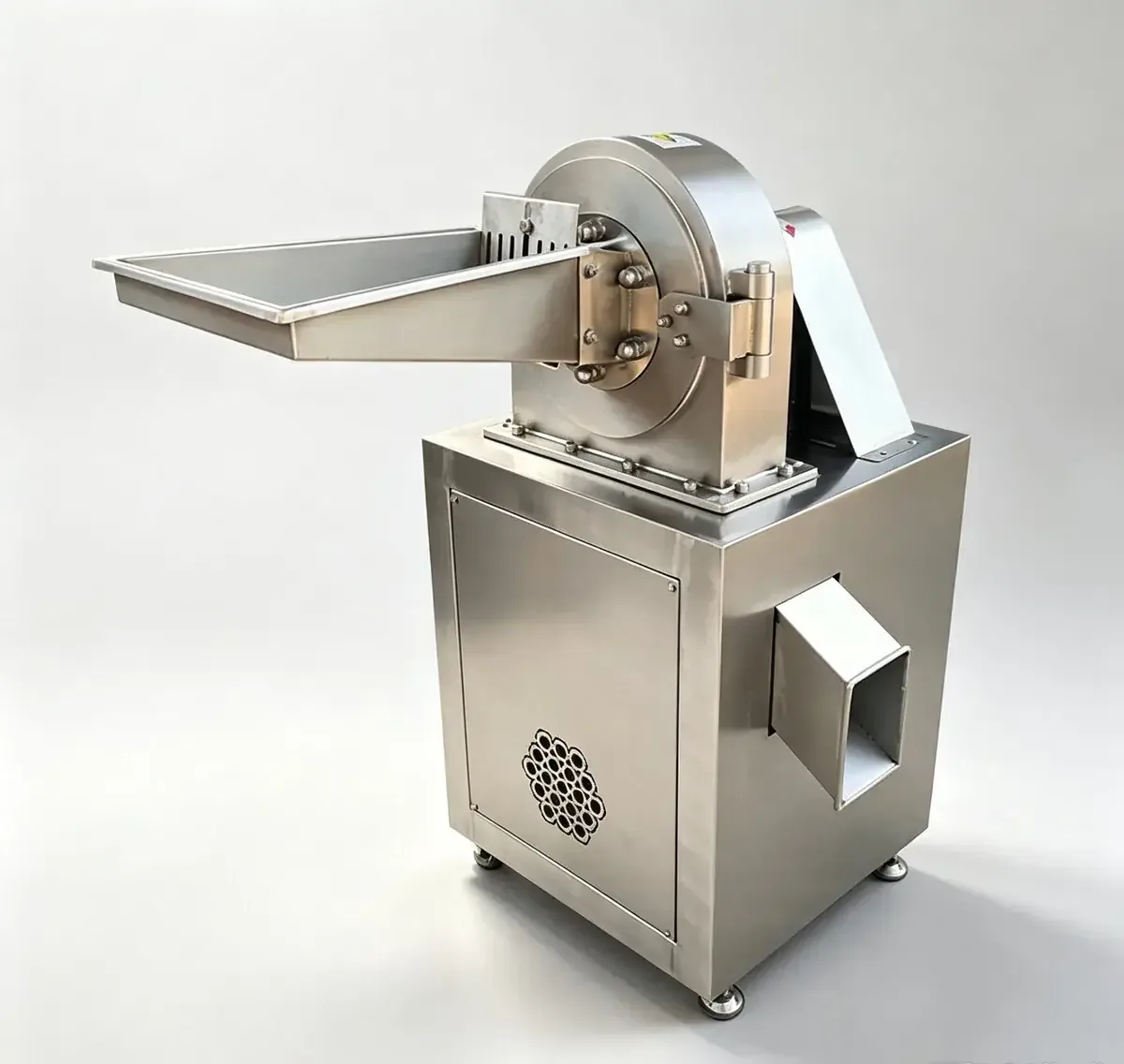
Hammer mills are one of the most commonly used grinding machines in industrial powder processing. They are widely applied in industries such as food processing, spices, herbs, agriculture, chemicals and other powder production fields. A hammer mill reduces material size through repeated impact between high-speed rotating hammers and the raw material. Understanding the working principle of a hammer mill helps manufacturers choose the right grinding equipment, improve production efficiency and achieve the required powder fineness. In this guide, we will explain how a hammer mill works, its main components, the grinding process, applications, advantages and how to select the right industrial hammer mill.
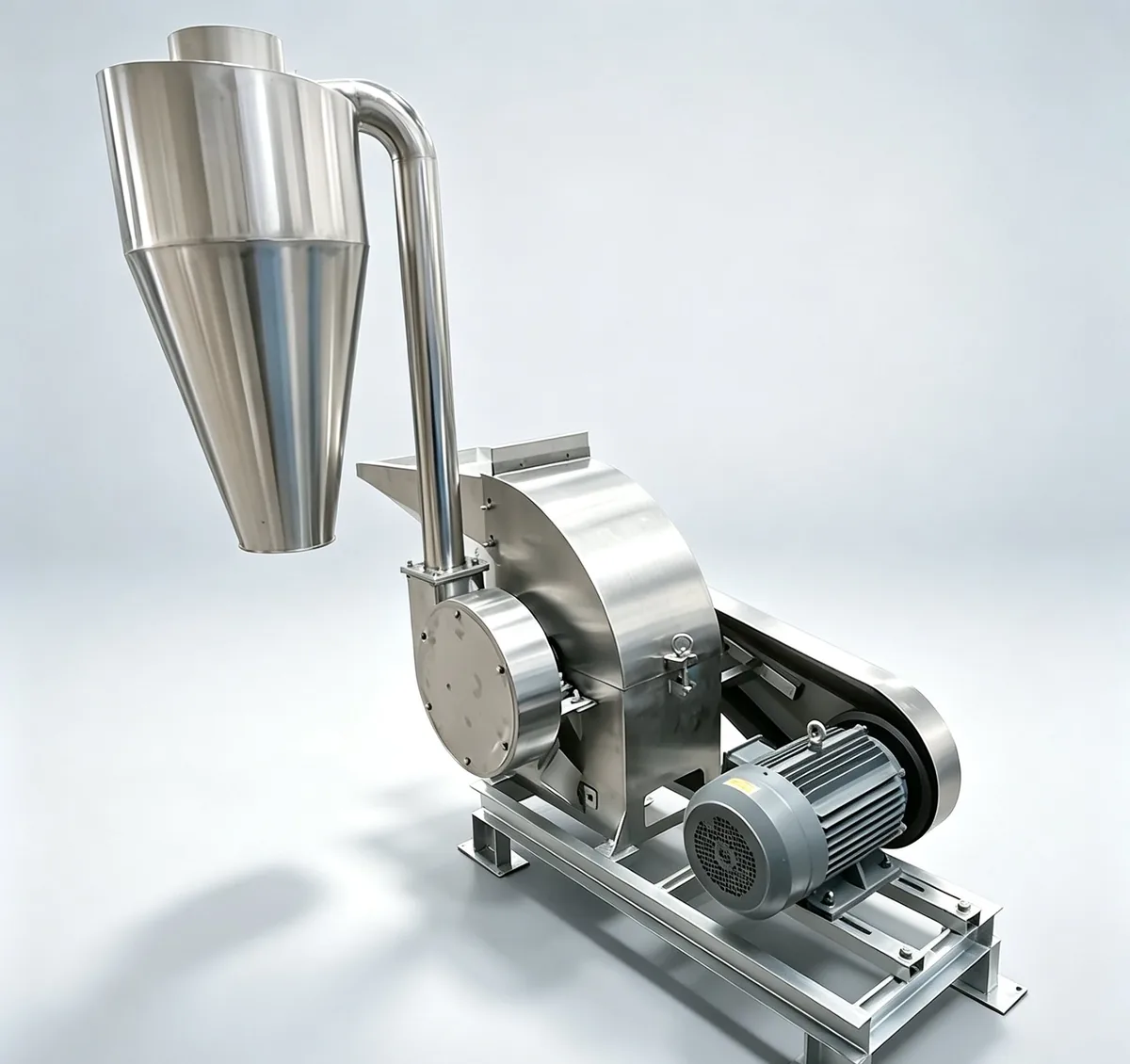
A hammer mill is an industrial grinding machine that uses rotating hammers to crush and pulverize materials into smaller particles. The machine consists of a high-speed rotor equipped with multiple hammers inside a grinding chamber. When materials enter the chamber, the rotating hammers generate strong impact force and break the materials into smaller particles. Depending on the screen size and machine configuration, the final powder size can be adjusted. Hammer mills are commonly used for:
The working process of a hammer mill can be divided into four main steps:
The raw material enters the grinding chamber through the feeding inlet. Depending on the application, materials can be fed manually or through an automatic feeding system. Examples include chili, pepper, turmeric, grain and herbal materials. A stable feeding rate ensures consistent grinding performance.
Inside the grinding chamber, the rotor rotates at high speed. The hammers mounted on the rotor move rapidly and strike the incoming materials. The impact force causes crushing, breaking and fragmentation of the raw materials. This repeated impact process gradually reduces the material size.
After the initial impact, the material continues to collide with the hammers, grinding plates and chamber walls until the particles reach the required size. The final particle size depends on hammer speed, screen opening size, material characteristics and feeding rate.
After grinding, particles pass through the screen located at the bottom of the grinding chamber. Only particles smaller than the screen opening can pass through. Larger particles remain inside the chamber for further grinding. This creates uniform powder quality.
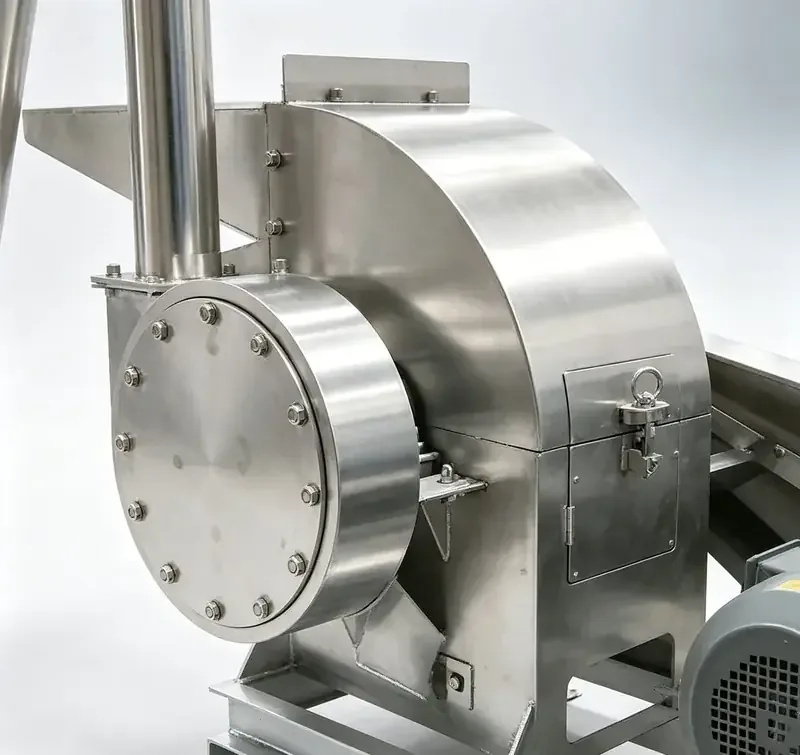
A typical industrial hammer mill includes several important components.
The rotor is the rotating part of the machine. It includes the shaft, hammer holders and hammers. The rotor speed directly affects grinding performance.
Hammers are the main grinding elements. They are usually manufactured from stainless steel or hardened alloy steel. The hammer design affects grinding efficiency, wear resistance and particle size.
The grinding chamber provides the space where impact grinding occurs. For food and pharmaceutical applications, stainless steel construction is commonly preferred because it provides hygiene, easy cleaning and corrosion resistance.
The screen controls final powder size. Different screen openings can produce different particle sizes, for example coarse powder, medium powder and fine powder.
The motor provides power for rotor rotation. Motor selection depends on material hardness, capacity requirement and required fineness.
The complete grinding process is:
This simple structure makes hammer mills reliable and easy to operate.
Hammer mills provide efficient size reduction through continuous impact grinding. They are suitable for high-volume production.
By changing the screen size, operators can adjust the final powder fineness.
Hammer mills can process many different materials, including food ingredients, spices, herbs, agricultural products and chemicals.
Compared with many other grinding systems, hammer mills have simple operation, easy maintenance and reliable performance.
Industrial hammer mills can be integrated into complete powder processing lines, for example grinding, cyclone separation, dust collection and packaging.
Hammer mills are widely used for producing chili powder, pepper powder, turmeric powder and ginger powder.

Applications include grain powder, sugar powder, coffee grinding and food ingredients.
Used for herbal powder, plant materials and natural ingredients.
Used for mineral powder, chemical materials and industrial additives.
| Machine | Working Method | Best Application |
|---|---|---|
| Hammer Mill | Impact grinding | Spices, grains, herbs |
| Pin Mill | Shearing and impact | Fine powder |
| Crusher | Compression crushing | Large materials |
| Roller Mill | Compression | Grain processing |
Different materials require different configurations. Consider hardness, moisture content, fiber content and temperature sensitivity.
Choose equipment based on production requirements. Examples: small production 50–100 kg/h, medium production 200–500 kg/h, industrial production 1000 kg/h+.
The final particle size determines screen selection, rotor speed and machine configuration.
For food processing applications, SUS304 stainless steel is recommended. For special applications, SUS316 stainless steel can be used.
PURSYS provides industrial powder processing equipment designed for food, spice, herbal and chemical applications. Our hammer mill solutions feature stainless steel construction, reliable grinding performance, customized configurations and integration with complete powder processing systems. From individual grinding machines to complete production lines, PURSYS helps customers develop efficient powder processing solutions.
A hammer mill is a reliable and versatile industrial grinding machine built on a simple but effective impact-working principle. By understanding how a hammer mill works, its main components and how to choose the right configuration, manufacturers can improve powder quality, production efficiency and operating cost. For companies planning a powder production project, integrating a hammer mill into a complete processing line delivers the best long-term value. PURSYS specializes in hammer mill equipment and complete powder processing systems for global customers.
Contact PURSYS engineers for customized powder grinding equipment based on your material and production requirements.
Get QuoteCopyright © Zhengzhou Pursys Machinery Co., Ltd. All Rights Reserved. | XML Sitemap | Site Map
Zhengzhou Pursys Machinery Co., Ltd.
+86 177 2975 3706
+8617729753706
No.21 South Huagong Road, Zhangcun, Gaocun Township, Xingyang City, Zhengzhou City, Henan Province, P.R.China