Mobile:
+86 177 2975 3706
E-mail:
info@pursysmachine.com
News · Jul. 31, 2026 · Manufacturing
Powder processing equipment lives or dies by the precision of its core components. At PURSYS we treat CNC machining as the foundation of every machine we build: it is the first stage that decides whether a grinding chamber seals cleanly, whether a rotor spins true at high speed, and whether a screen holds its mesh under continuous load. A machine is only as reliable as the parts inside it, and those parts begin as flat stainless steel plates that must be transformed into tightly toleranced, hygienically finished components. This article walks through how our precision CNC machining process turns raw material into the high-tolerance parts that keep industrial powder processing lines running day after day.
The decision to invest heavily in in-house CNC capability was not incidental. Many equipment suppliers outsource their machined parts, which makes tolerances, lead times and traceability difficult to control. By keeping machining inside our own workshop, PURSYS controls every critical dimension from the first cut to the final inspection report, and we can respond quickly when a customer needs a modified chamber, a different screen seat, or a bespoke rotor profile.
Stainless steel powder processing equipment operates in some of the most demanding conditions in the plant. Food, spice, herbal and chemical materials require hygienic, non-contaminating surfaces that can be cleaned without residue, while abrasive feeds place constant wear on chambers, rotors and screens. The margin for error is small: a misaligned chamber wall of only a few tenths of a millimeter can cause powder leakage, uneven particle size, abnormal vibration, and premature bearing failure. Large components also behave differently from small ones — a heavy chamber plate can flex or spring during cutting, and heat from machining can introduce distortion that only appears after the part cools.
Our challenge, then, is to hold tight dimensional accuracy on large, heavy stainless parts without sacrificing surface finish, without introducing heat distortion, and without blowing out the delivery schedule. Meeting all four constraints at once is what separates a precision machining cell from a general fabrication shop.
Every component follows a controlled, repeatable route that is documented and auditable:
We machine grinding chambers to tolerances of ±0.01 mm and hold bore concentricity within 0.02 mm so rotors run true at high RPM without imposing side loads on the bearings. Surface roughness is controlled to Ra ≤ 0.8 µm on product-contact areas: a smooth finish is easier to clean and helps prevent material buildup that would otherwise change the particle-size distribution over time. Through-coolant tooling and rigid workholding keep cutting heat and vibration low, protecting both the cutting edge and the stainless microstructure so corrosion resistance is not compromised by overheating.
Screens and perforated plates are machined with consistent aperture geometry and spacing, which is what delivers uniform powder fineness batch after batch. Where a component will be welded later, we machine the joint faces to a controlled finish so the subsequent TIG weld has a clean, consistent root to bond to. In short, the machining step is where most of the machine's long-term reliability is decided.
All machined parts are produced under our ISO 9001 quality system. Material certificates, dimensional inspection reports and surface-finish checks are filed for each batch, giving customers full traceability from raw plate to finished component. Critical dimensions are recorded against the approved drawing, and any deviation outside tolerance is reviewed before the part is allowed to advance to welding or assembly. This discipline is what lets PURSYS promise not just that a machine looks right, but that it measures right.
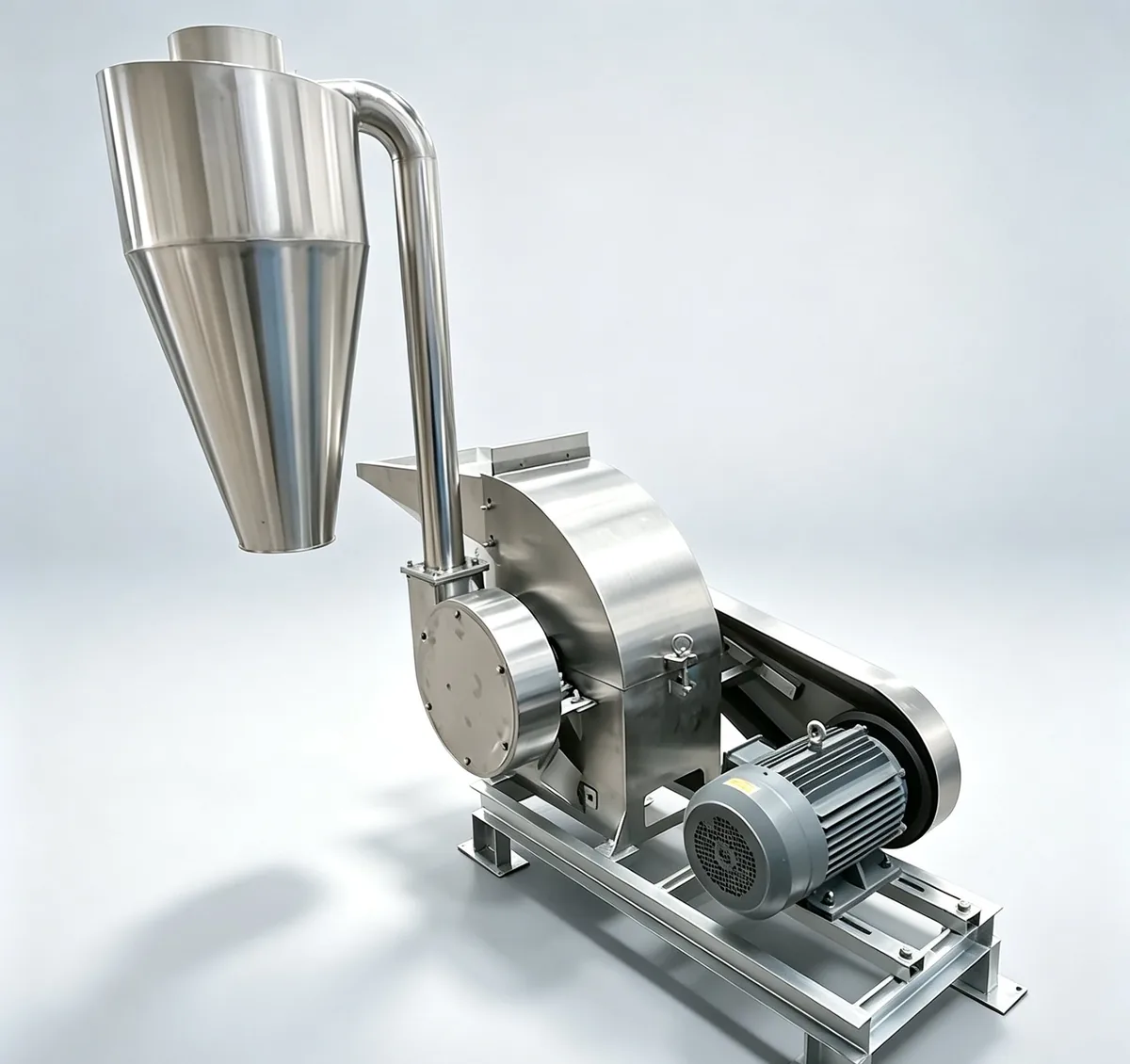
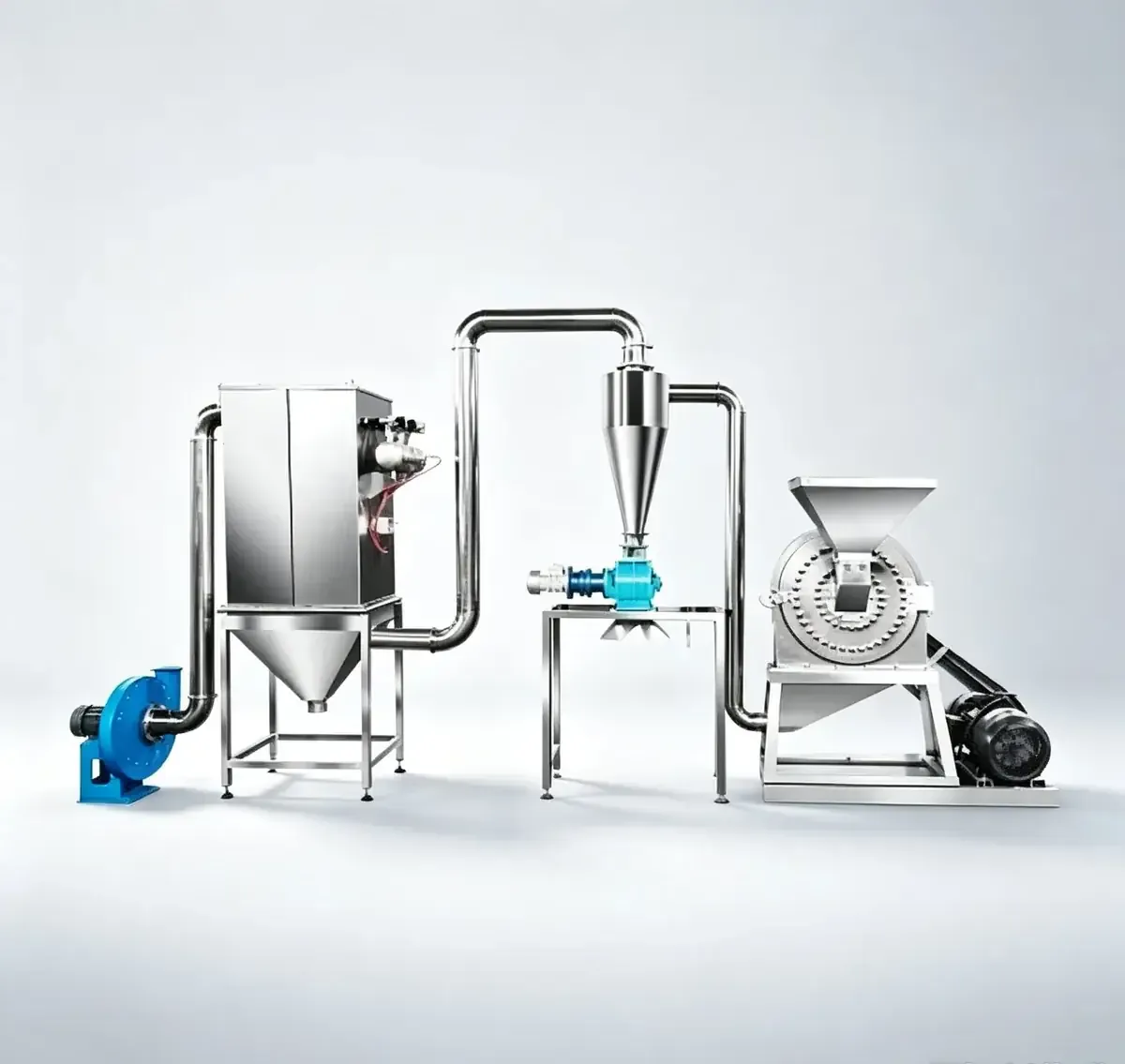
For more on the machines described here, explore our industrial hammer mill, pin mill and the full range of PURSYS grinding equipment.
Copyright © Zhengzhou Pursys Machinery Co., Ltd. All Rights Reserved. | XML Sitemap | Site Map
Zhengzhou Pursys Machinery Co., Ltd.
+86 177 2975 3706
+8617729753706
No.21 South Huagong Road, Zhangcun, Gaocun Township, Xingyang City, Zhengzhou City, Henan Province, P.R.China