Mobile:
+86 177 2975 3706
E-mail:
info@pursysmachine.com
News · Oct. 31, 2026 · Turmeric Equipment Guide
Turmeric powder production requires more than a grinding machine. The right equipment configuration depends on the condition of the raw turmeric, the required powder fineness, production capacity, cleaning requirements, and the way the finished powder will be collected and packaged.
For industrial processors, selecting an appropriate industrial turmeric powder making machine starts with understanding the complete process. Depending on the raw material and production requirements, a system may include a primary crusher, a hammer mill or pin mill, a vibrating screen, a dust collection system, powder conveying equipment, and a packing machine.
This guide explains the main equipment options, how they work together, and what to consider before requesting a quotation from an industrial powder processing equipment supplier.
An industrial turmeric powder making machine is equipment designed to reduce prepared turmeric material into powder for commercial processing and manufacturing.
The term can refer to a single grinding machine or a group of machines configured as a processing system. The appropriate solution depends on whether the raw material is dried turmeric fingers, pre-crushed turmeric, or another prepared form.
A typical system may include:
Not every installation needs every component. A compact operation may use a standalone grinder, while a larger production facility may require integrated feeding, grinding, screening, conveying, and packaging.
For an overview of the main grinding technologies, see the PURSYS guide to the industrial turmeric grinding machine.
Turmeric powder processing generally follows a sequence of raw material preparation, size reduction, grinding, screening, collection, and packaging.
A typical process flow is:
Prepared Dried Turmeric ↓ Raw Material Inspection ↓ Primary Crushing (if required) ↓ Industrial Grinding ↓ Screening (if required) ↓ Powder Collection ↓ Conveying (if required) ↓ Packaging
This is a general process framework rather than a fixed equipment specification. The actual arrangement should be determined by the raw material condition, desired particle size, production target, and plant layout.
Before grinding, confirm that the turmeric is suitable for the intended machine and process.
Important considerations include:
High or inconsistent moisture can affect feeding, grinding behavior, and powder flow. If the material requires drying, the drying stage should be selected according to the material condition and process requirements. PURSYS provides a drying oven product page for equipment reference, but the appropriate drying solution must be assessed for the specific application.
Large or irregular dried turmeric pieces may be unsuitable for direct feeding into the selected fine grinding machine.
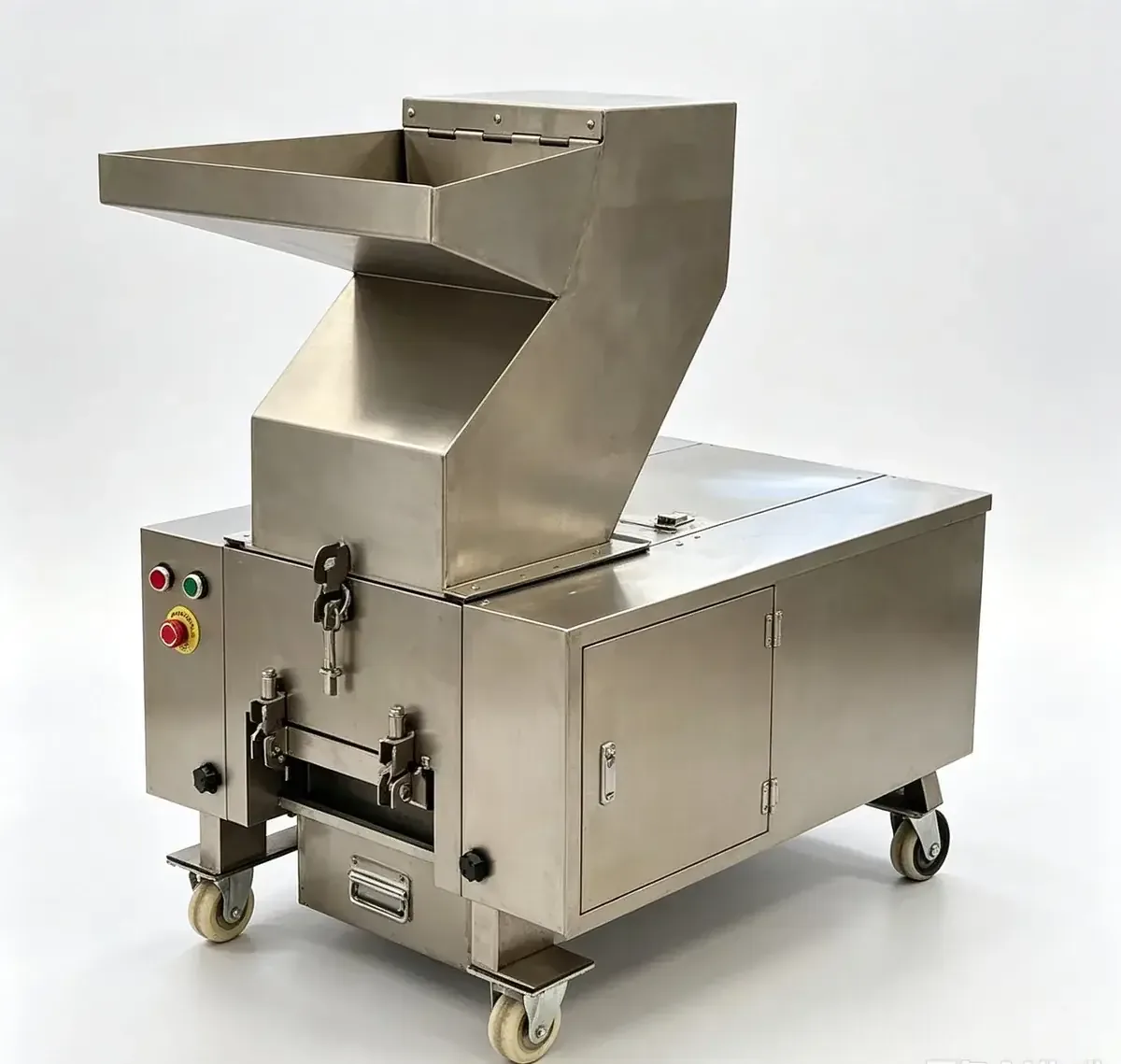
A primary crusher can reduce the material to a more suitable feed size before fine grinding. Whether this stage is necessary depends on the incoming material dimensions, grinder inlet, and required throughput.
Explore the primary crusher for applications that need an initial size-reduction stage.
The grinding machine is the central component of the process. It determines how the material is reduced and influences the attainable particle size, throughput, heat generation, and maintenance requirements.
Two commonly considered technologies are hammer mills and pin mills.
Hammer mill
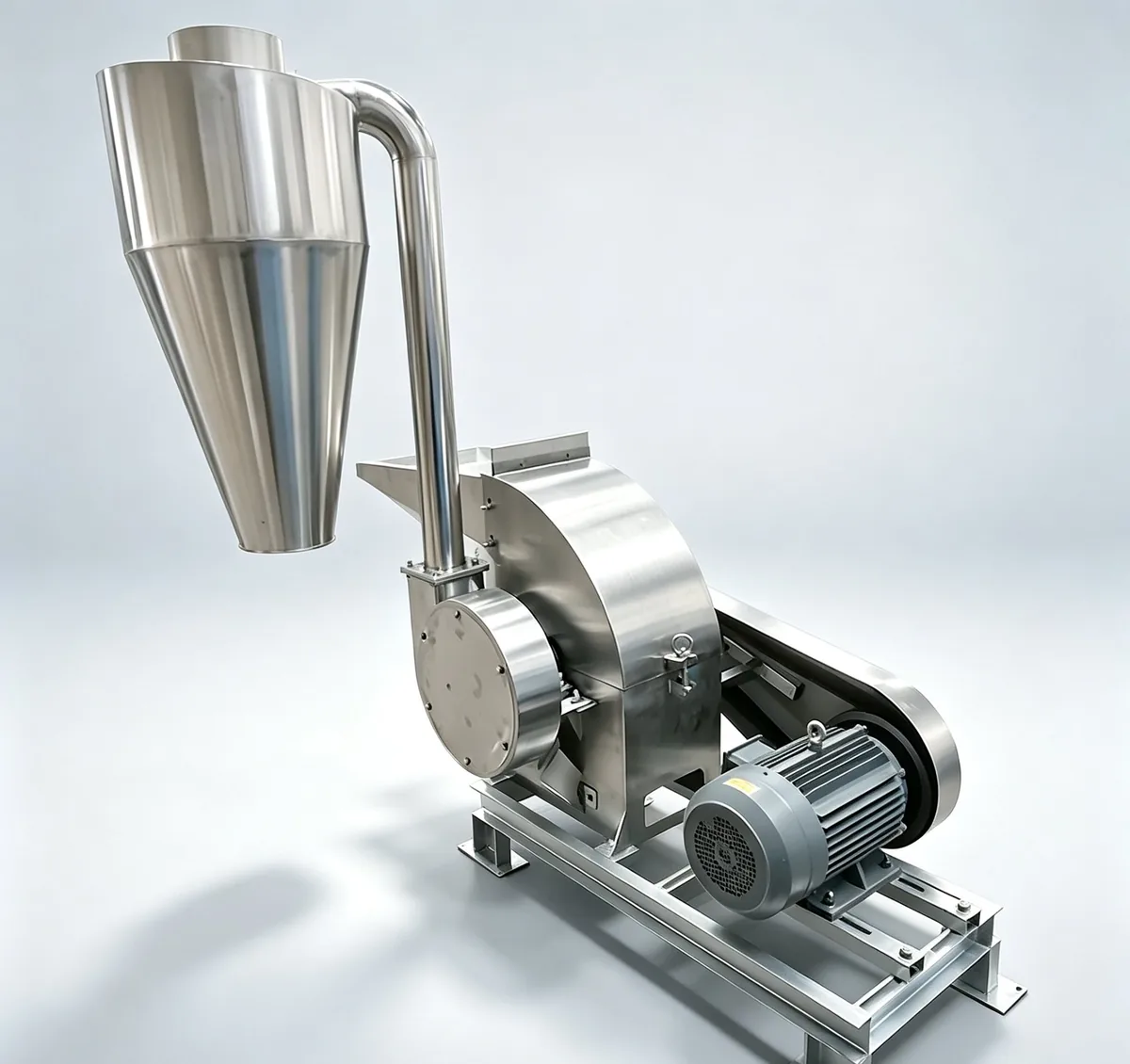
A hammer mill uses rotating hammers to impact the material. It can be suitable for a range of size-reduction applications, including prepared dried turmeric. The actual result depends on machine configuration, screen selection, feed condition, and operating parameters.
See the PURSYS hammer mill for equipment details.
Pin mill
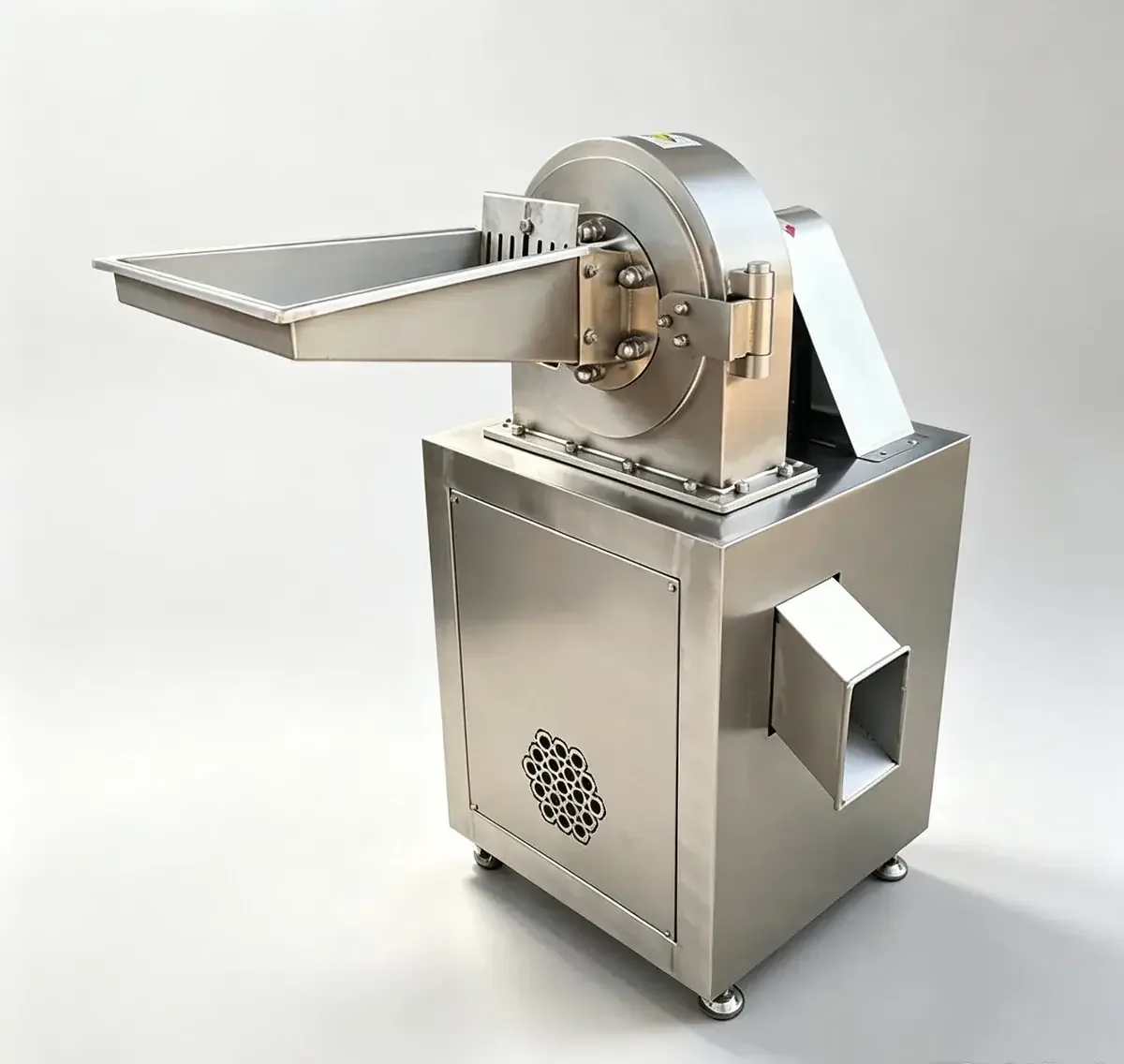
A pin mill uses a rotor and stator arrangement with pins to generate impact and shear forces. It may be considered when the application requires a different grinding mechanism or a particular particle-size distribution.
A pin mill is not automatically the best choice for every turmeric application. Testing the actual material is important before finalizing the machine.
See the PURSYS pin mill for an alternative grinding technology.
Grinding does not always produce a finished powder with a sufficiently uniform particle-size distribution. A screening stage may be used to separate particles according to the selected screen specification.
Depending on the process design, oversize material may be returned for additional grinding. The return path and screening arrangement should be engineered to suit the target product and required production rate.
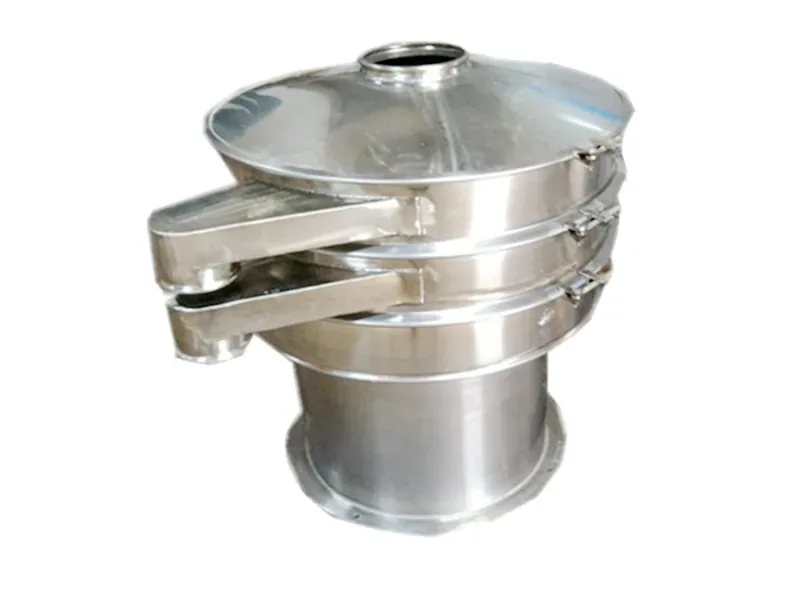
A round vibrating screen may be considered when the process requires a separate powder screening stage.
Powder collection and transfer are important parts of system design.
The equipment arrangement should account for:
A dust collection system may be needed to help control airborne powder. The design should be suitable for the specific material and workplace requirements.
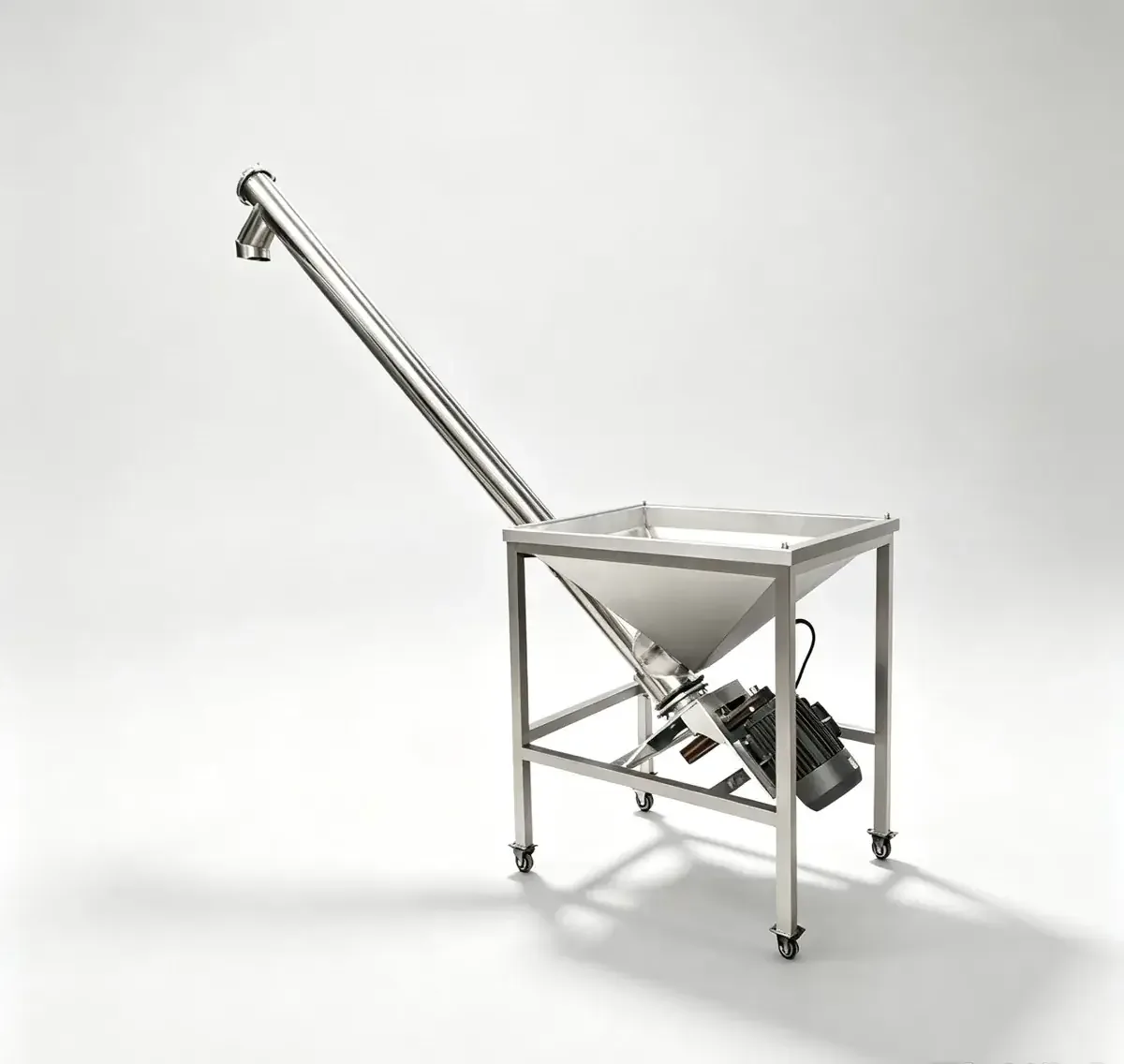
Where mechanical transfer is appropriate, a screw conveyor may be used to move powder between selected process stages.
Packaging requirements depend on the target market, pack size, production workflow, and downstream handling method.
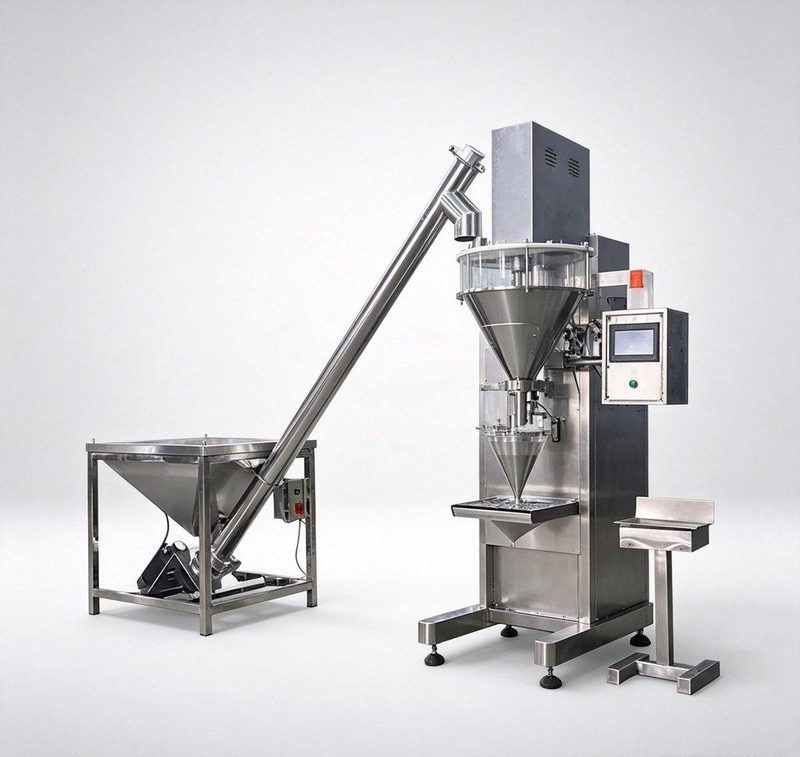
A basic installation may use separate weighing and filling equipment. A more integrated system may incorporate powder transfer and packaging into a coordinated production arrangement.
Review the PURSYS packing system when planning the finished-product handling stage.
There is no single machine configuration that suits every turmeric processor. The choice should be based on the material and the required product rather than the machine name alone.
| Selection factor | What to evaluate | Why it matters |
|---|---|---|
| Raw material condition | Size, moisture, preparation | Affects feeding and grinding behavior |
| Target particle size | Required fineness and acceptable distribution | Helps determine the grinding and screening arrangement |
| Required output | Target production rate under defined conditions | Influences machine size and system configuration |
| Heat sensitivity | Product temperature requirements and process limits | May affect grinding settings and the need for process trials |
| Cleaning requirements | Changeover frequency and access to product-contact areas | Influences equipment design and maintenance procedures |
| Powder collection | Dust control and transfer method | Affects the layout and supporting equipment |
| Packaging format | Bag, container, or other pack type | Determines downstream handling requirements |
The following comparison is a starting point for equipment evaluation, not a universal performance ranking.
| Consideration | Hammer Mill | Pin Mill |
|---|---|---|
| Grinding mechanism | Impact from rotating hammers | Impact and shear from pin assemblies |
| Feed preparation | Depends on inlet design and raw material size | Depends on machine design and feed condition |
| Particle-size control | Influenced by screen and operating conditions where applicable | Influenced by rotor design, operating conditions, and feed properties |
| Best selection method | Assess material suitability and required output | Assess material suitability and required output |
| Validation | Confirm with a representative material test | Confirm with a representative material test |
For a more detailed comparison, read Hammer Mill vs. Pin Mill.
4. Should You Buy a Standalone Machine or a Complete System?
Option A: Standalone Grinding Machine
This approach can reduce the initial scope of equipment procurement, but the buyer should still assess feeding, discharge, dust management, and packaging compatibility.
A combined grinding and screening arrangement may be suitable when particle-size separation is an important part of the production process.
Before selecting this configuration, define the target particle-size distribution, the screening specification, and the handling method for oversize material.
An integrated line may combine raw material feeding, primary crushing, grinding, screening, dust collection, conveying, and packaging.
This approach can help coordinate equipment interfaces and material flow, but it requires more detailed planning for layout, control, cleaning, maintenance, and installation.
For a broader system-level overview, see the PURSYS guide to a turmeric powder production line.
A machine's nominal size alone does not establish its actual production output. Capacity must be evaluated against defined material and product conditions.
Key factors include:
Turmeric size, moisture, hardness, preparation, and consistency can affect how material feeds and grinds.
A finer target may require different operating conditions or additional processing. The relationship between fineness and output must be verified for the specific machine and material.
Machine design, screen specification where applicable, rotor configuration, and operating settings all influence processing behavior.
Feeders, screens, conveying equipment, and dust collection arrangements can affect the overall system's practical throughput.
Continuous operation, feeding consistency, cleaning intervals, and maintenance requirements should be considered when estimating production over a full shift.
When requesting a capacity recommendation, provide the target output and required product specification. Ask the supplier to state the material conditions and test basis behind any proposed capacity figure.
Grinding can generate heat, and the effect on the finished product depends on the material, machine, operating conditions, and process duration.
Before selecting equipment, consider:
Avoid assuming that a particular machine type will automatically produce a low-temperature result. If temperature is a critical quality parameter, conduct a representative material trial and record the operating conditions and measured product temperature.
Turmeric powder can leave visible residues on equipment surfaces. Cleaning requirements should therefore be considered during equipment selection rather than after installation.
Discuss the following with the supplier:
Do not assume a specific stainless-steel grade, food-contact certification, or regulatory compliance from a general equipment description. Confirm the required material specifications and documentation in the quotation and technical agreement.
The supporting equipment depends on the selected process configuration.
| Equipment | Main function | When to consider it |
|---|---|---|
| Primary crusher | Reduces larger feed pieces | When raw material is too large for direct grinding |
| Vibrating screen | Separates particles by a selected screen specification | When particle-size separation is required |
| Dust collection system | Helps manage airborne powder | When the process generates airborne dust or requires controlled collection |
| Screw conveyor | Transfers powder between process stages | When a defined mechanical transfer path is needed |
| Packing system | Fills finished powder into specified packages | When packaging is part of the equipment scope |
| Drying equipment | Reduces moisture under an appropriate process | When the incoming material needs additional drying |
Auxiliary equipment should be selected as part of the process design. Adding equipment without confirming its purpose can increase cost, cleaning work, and maintenance complexity.
The price depends on the scope of supply rather than one universal market figure.
Common cost factors include:
For a price-focused evaluation, read Turmeric Grinding Machine Price: What Affects the Cost of Industrial Turmeric Grinders?.
To compare quotations fairly, confirm that each supplier is quoting for the same raw material, target particle size, output requirement, auxiliary equipment, and scope of supply.
Motor power is only one specification. It does not independently establish particle size, product quality, or throughput.
Large or inconsistent feed material may affect feeding and grinding. Confirm whether pre-crushing or drying is necessary.
Specify the required particle-size distribution and the method used to evaluate it. Avoid vague descriptions alone.
The grinder is only one part of the process. Discharge, collection, transfer, and packaging should be considered together.
Capacity estimates are difficult to compare when material type, moisture, target fineness, and operating conditions differ.
Review access to product-contact components and the expected cleaning procedure before approving the final configuration.
Providing clear process information helps an equipment supplier recommend a more suitable configuration.
Use this checklist:
If the target particle size or practical capacity is uncertain, discuss a material test before finalizing the equipment.
Selecting an industrial turmeric powder making machine requires more than comparing machine prices or specifications. The right configuration should match the raw material, target powder characteristics, required output, cleaning expectations, and downstream handling process.
Start by defining the product requirements, then evaluate the grinding technology and determine which supporting equipment is necessary. Where performance requirements are critical, use representative material testing to validate the proposed solution.
Planning a turmeric powder processing project? Contact PURSYS with your raw material details, target particle size, required output, and preferred process scope to discuss a suitable equipment configuration.
Contact PURSYS to discuss your industrial powder processing requirements.
The best choice depends on the raw material, target particle size, output requirement, cleaning needs, and process configuration. A hammer mill or pin mill may be considered, but the final selection should be validated with representative turmeric.
A single grinder may perform the main size-reduction step, but a complete production process may also require raw material preparation, screening, dust collection, conveying, and packaging. The necessary equipment depends on the application.
A hammer mill may be suitable for prepared dried turmeric, depending on the feed size, required powder specification, and machine configuration. Confirm suitability through a material evaluation.
A primary crusher may be useful when the incoming turmeric pieces are too large for the selected grinding machine or when feed preparation is needed for consistent operation. It is not necessary for every installation.
Start with the required finished-powder specification and confirm how particle size will be measured. Screen selection should be evaluated alongside the grinding machine and actual material properties.
The main factors include grinding technology, required output, target particle size, raw material condition, construction and cleaning requirements, auxiliary equipment, automation, and the scope of installation or service.
PURSYS can discuss the required processing steps and equipment configuration based on the information supplied for the project. The final proposal should define the machine scope, operating assumptions, and any testing needed to verify suitability.
Looking for an industrial turmeric powder making machine?
Contact PURSYS with your raw material details, target particle size, required output, and preferred process scope.
Our team can review your application and discuss a suitable grinding machine or complete turmeric powder processing configuration.
Request a Quote →Back to NewsCopyright © Zhengzhou Pursys Machinery Co., Ltd. All Rights Reserved. | XML Sitemap | Site Map
Zhengzhou Pursys Machinery Co., Ltd.
+86 177 2975 3706
+8617729753706
No.21 South Huagong Road, Zhangcun, Gaocun Township, Xingyang City, Zhengzhou City, Henan Province, P.R.China