Mobile:
+86 177 2975 3706
E-mail:
info@pursysmachine.com
News · Oct. 26, 2026 · Ginger Powder Processing Line
Ginger powder is used in spice manufacturing, food processing, seasoning production, and other applications that require powdered ginger ingredients. For commercial producers, a well-designed ginger powder production line can help coordinate raw material preparation, grinding, screening, powder handling, and packaging.
However, there is no single production line configuration suitable for every ginger-processing project. Fresh ginger and dried ginger require different preparation methods, while the final powder specification, required output, plant layout, and packaging format influence the equipment selection.
This guide explains the main stages of an industrial ginger powder production line, the equipment commonly considered at each stage, and the key factors to evaluate before planning a new system.
A ginger powder production line is a group of processing machines and supporting systems arranged to convert prepared ginger material into finished powder.
Depending on the application, a line may include:
Not every project requires every stage. For example, a plant that purchases properly dried and prepared ginger may not need an upstream drying stage. A producer handling fresh ginger may need a substantially different preparation process before dry grinding can take place.
The first step is to define the intended finished product and work backward to determine the equipment required.
Before selecting machinery, establish the condition of the raw material.
Dried ginger is generally more suitable for conventional dry grinding when its moisture content, feed size, and physical condition are compatible with the selected equipment.
A typical process may include:
Fresh ginger contains substantial moisture and should not automatically be fed into a conventional dry powder grinder.
Depending on the desired product, fresh ginger may require washing, slicing, drying, or other processing stages. The equipment and process will differ depending on whether the intended output is dried ginger powder, ginger paste, ginger juice, or another ginger-based product.
For a dry powder production line, the moisture-reduction process must be evaluated before choosing the grinding equipment.
PURSYS also offers a drying oven product page that can be reviewed when considering drying equipment. Whether that equipment is appropriate for a specific project depends on the raw material, drying requirements, and production scale.
A typical dry ginger powder process can be represented as follows:
Dried Ginger ↓ Raw Material Inspection ↓ Cleaning and Preparation ↓ Pre-Crushing (if required) ↓ Industrial Grinding ↓ Screening (if required) ↓ Powder Collection ↓ Conveying (if required) ↓ Packaging
This is a general process model, not a mandatory equipment list. Some plants may combine or omit stages, while others may require additional preparation, classification, or quality-control steps.
The system should be designed around the material entering the line and the specifications of the finished powder.
Raw material preparation helps ensure that the material entering the grinder is suitable for the selected equipment.
Depending on the incoming ginger, this stage may involve inspection, cleaning, sorting, moisture checks, or size reduction.
Important considerations include:
A consistent feed can make the grinding process easier to manage. The exact preparation equipment should be selected based on the actual raw material and plant workflow.
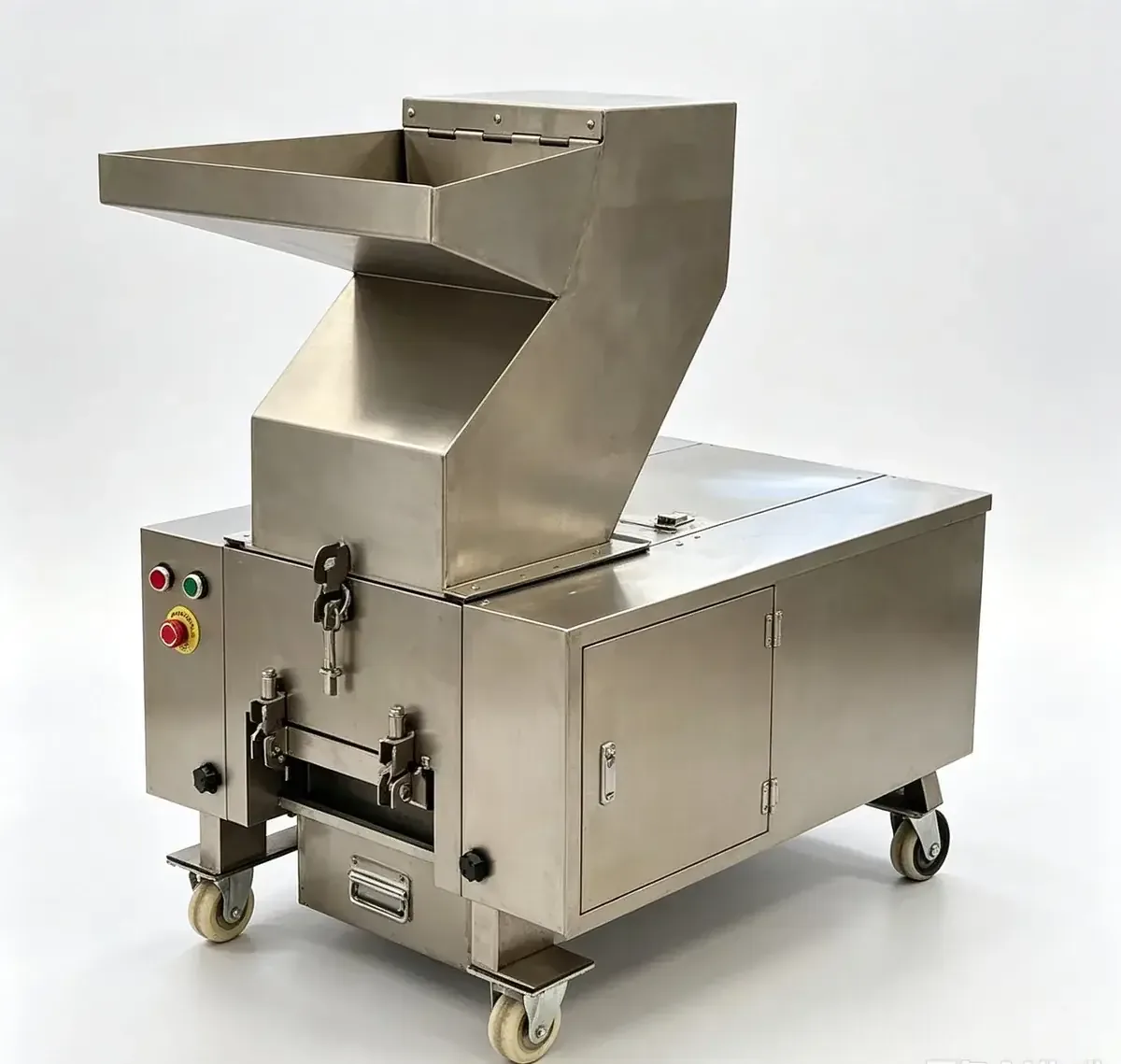
Large dried ginger pieces may require pre-crushing before fine grinding.
A primary crusher reduces the feed size so that the downstream grinding machine can process the material within its designed operating range.
A pre-crushing stage may be useful when:
However, pre-crushing is not always necessary. If the raw material already meets the grinder's feed requirements, an additional crusher may add unnecessary cost and complexity.
Review the PURSYS primary crusher when evaluating this stage.
Grinding is the main size-reduction stage of a ginger powder production line.
The selected machine should be capable of processing the prepared ginger to the required particle-size specification under the intended operating conditions.
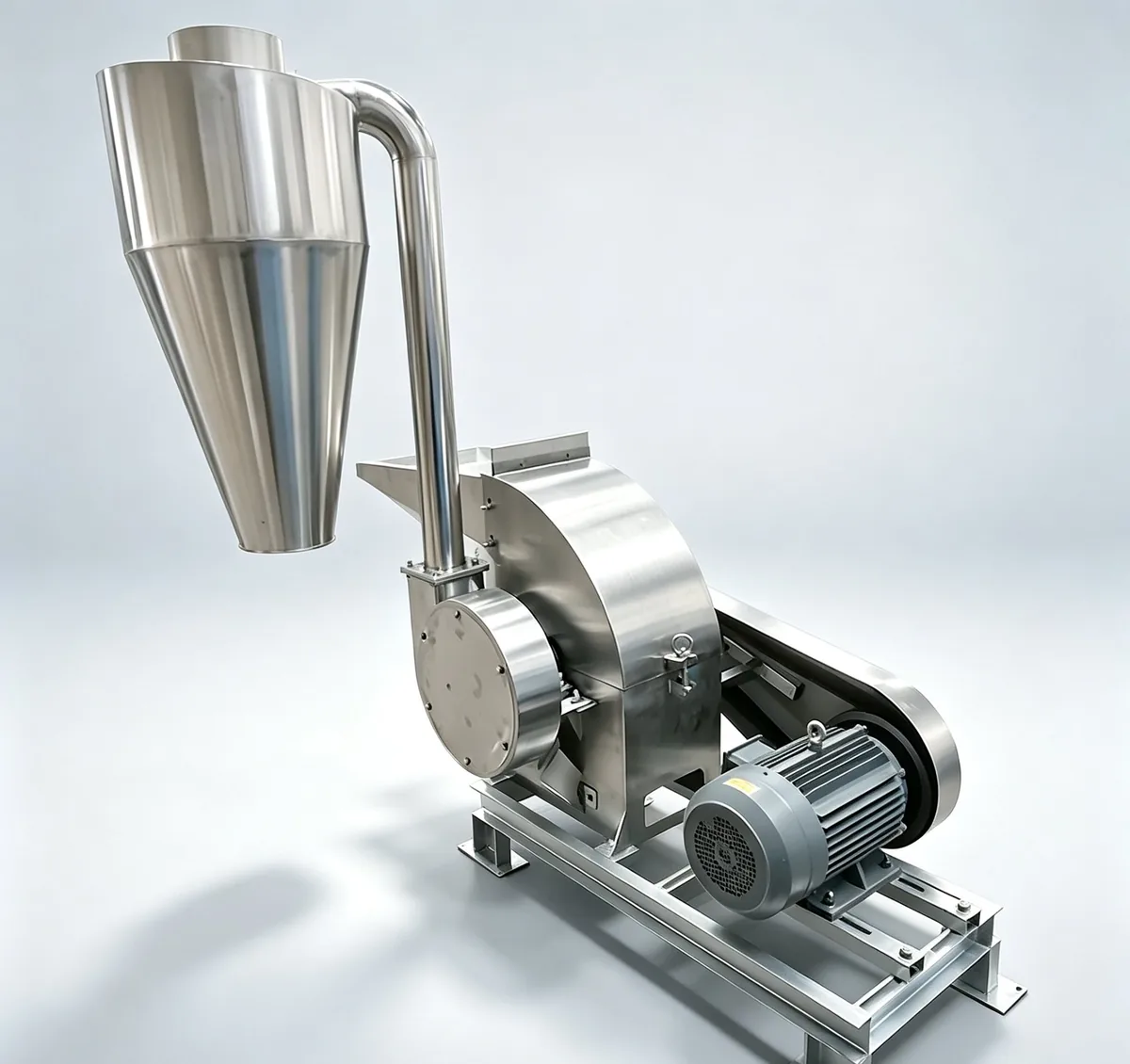
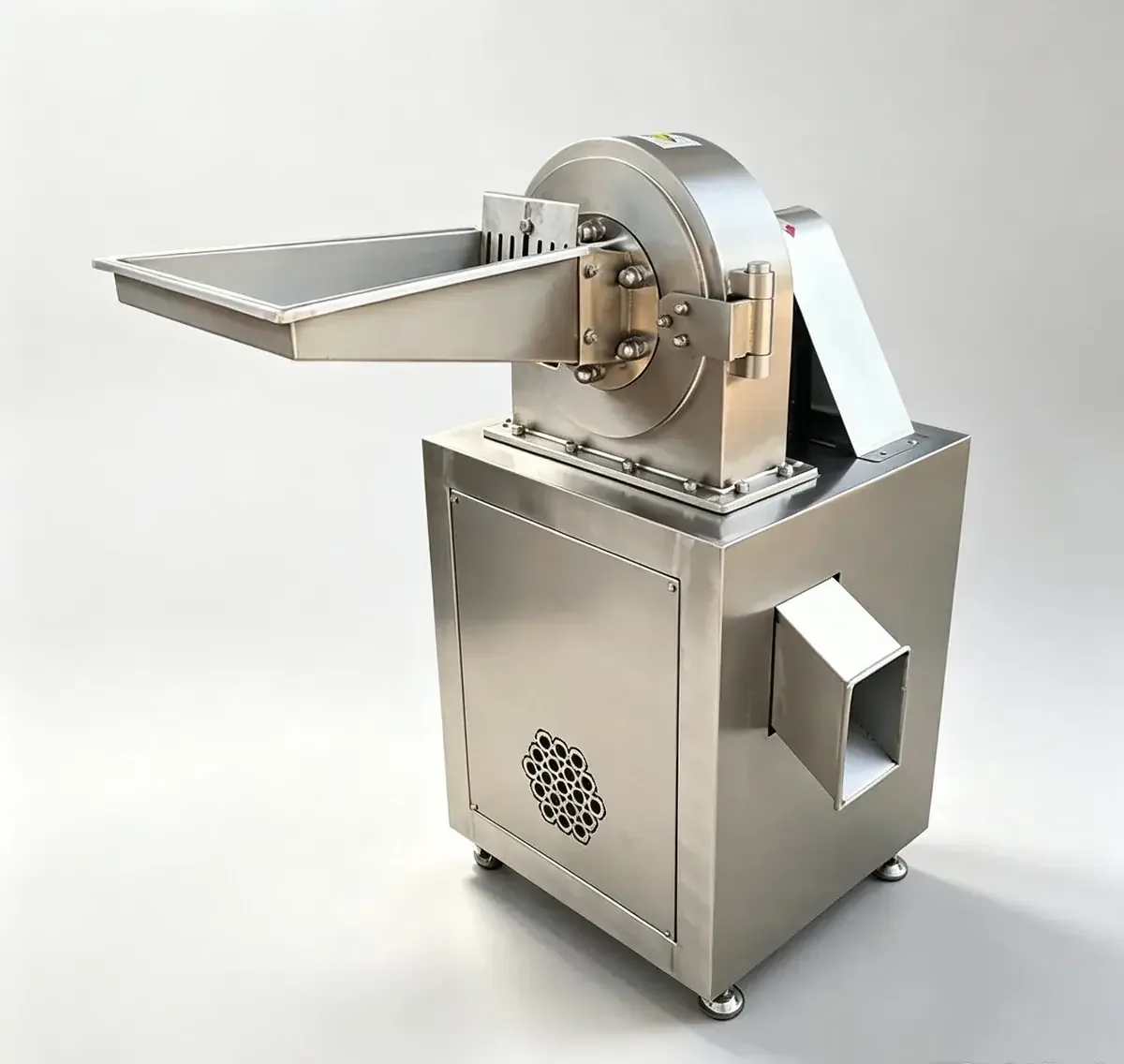
Two options that may be considered for dry grinding applications are hammer mills and pin mills.
Hammer mill
A hammer mill reduces material through impact from rotating hammers. A screen can help control the size of discharged particles.
It may be suitable for selected dried ginger applications, depending on feed condition, machine design, and the required final powder.
Explore the PURSYS hammer mill.
Pin mill
A pin mill uses rotating pins to create impact and particle interaction. It may be suitable for selected applications that require a particular degree of fineness or particle-size distribution.
Its suitability must be confirmed for the specific ginger material and target product.
Explore the PURSYS pin mill.
The correct machine should be selected using the feed characteristics, target fineness, required throughput, temperature considerations, cleaning requirements, and application testing where necessary.
For a dedicated ginger grinder, see the PURSYS ginger powder grinding machine product page.
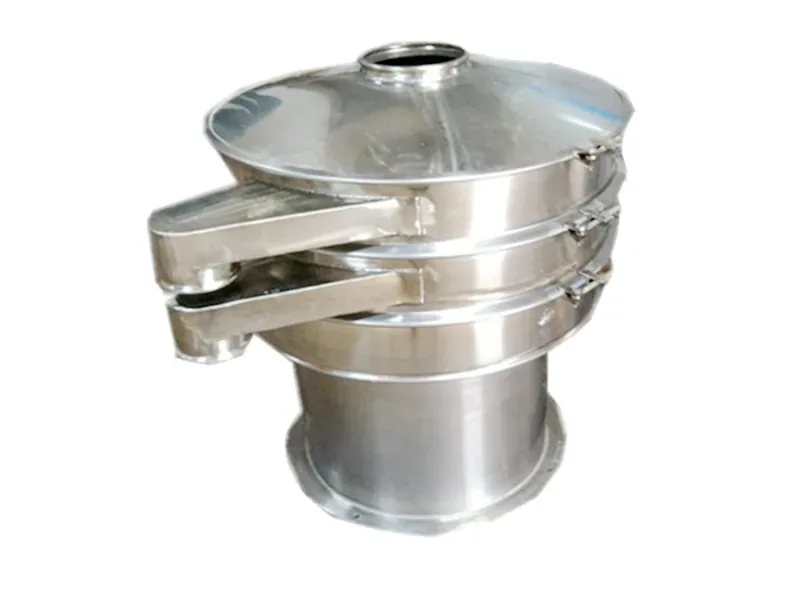
After grinding, screening may be used to separate particles according to the required size specification.
Screening can be useful when the finished product must meet a defined sieve specification or when oversized particles need to be separated from the product stream.
A screening stage should be specified according to:
A screen opening does not, by itself, guarantee a specific final particle-size distribution. The actual result depends on the complete process and the method used to test the powder.
A round vibrating screen may be considered when mechanical powder screening is required.
Ground ginger powder needs to be collected and handled in a way that suits the production process.
Depending on the grinding machine and line configuration, collection may take place directly after grinding or through an integrated material-handling system.
Dust control should be considered during equipment selection, layout planning, and system integration.
Important questions include:
Fine combustible dust can create fire or explosion hazards under certain conditions. A qualified professional should assess the material and installation to determine appropriate dust collection and safety measures.
A production line may need to move powder between the grinding, screening, collection, and packaging stages.
The appropriate conveying method depends on the material properties, transfer distance, layout, cleaning requirements, and equipment arrangement.
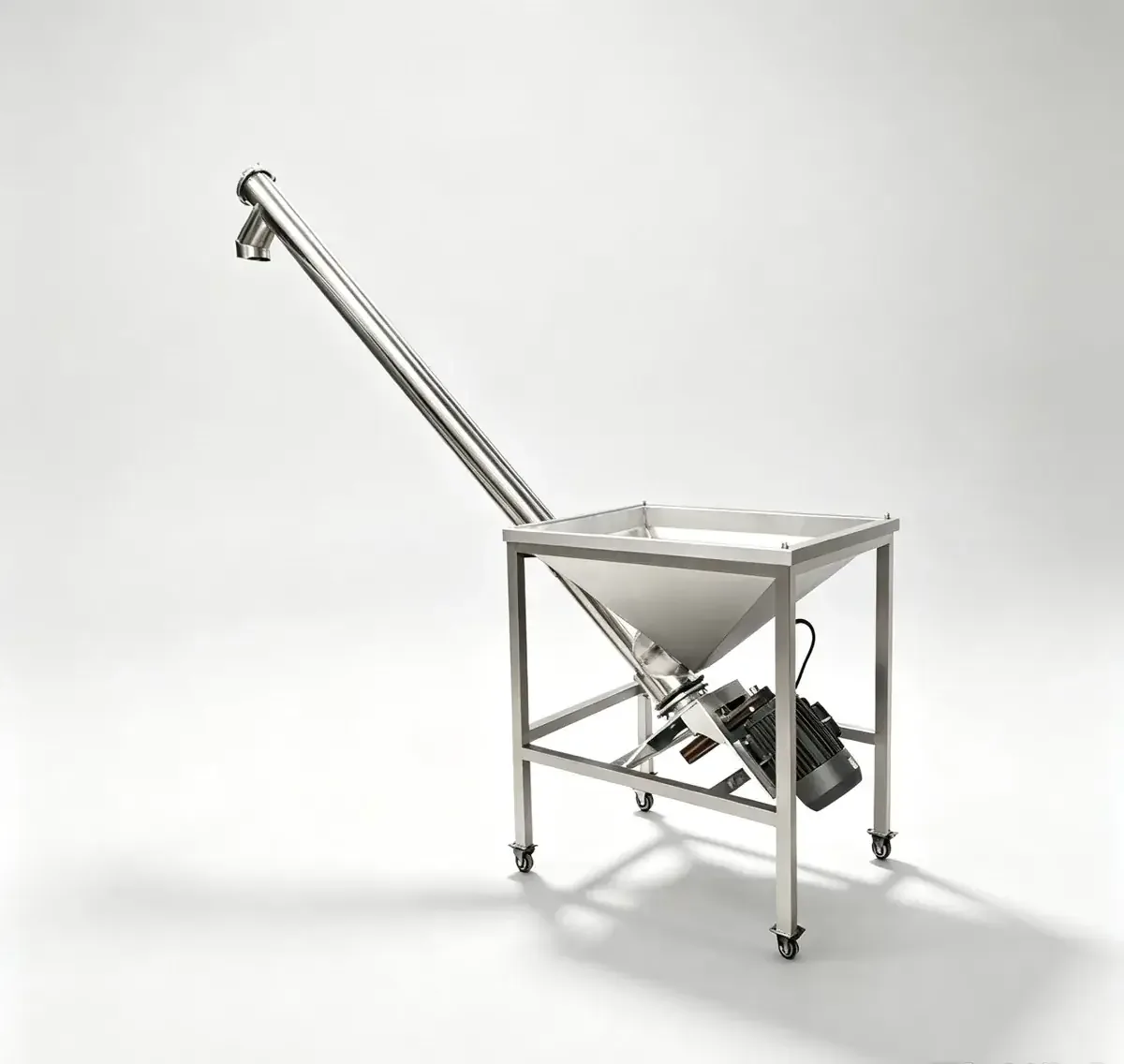
A screw conveyor may be suitable for some powder-transfer applications. Review the PURSYS screw conveyor when considering mechanical conveying.
Not every line requires a conveyor. A simple installation may use manual transfer or another suitable method, while a more integrated system may benefit from coordinated material handling.
Packaging is the final stage in many ginger powder production systems.
The packaging method depends on the product's intended market and distribution requirements. A plant supplying bulk ingredients may use a different format from one producing smaller retail packages.
Before selecting a packing system, define:
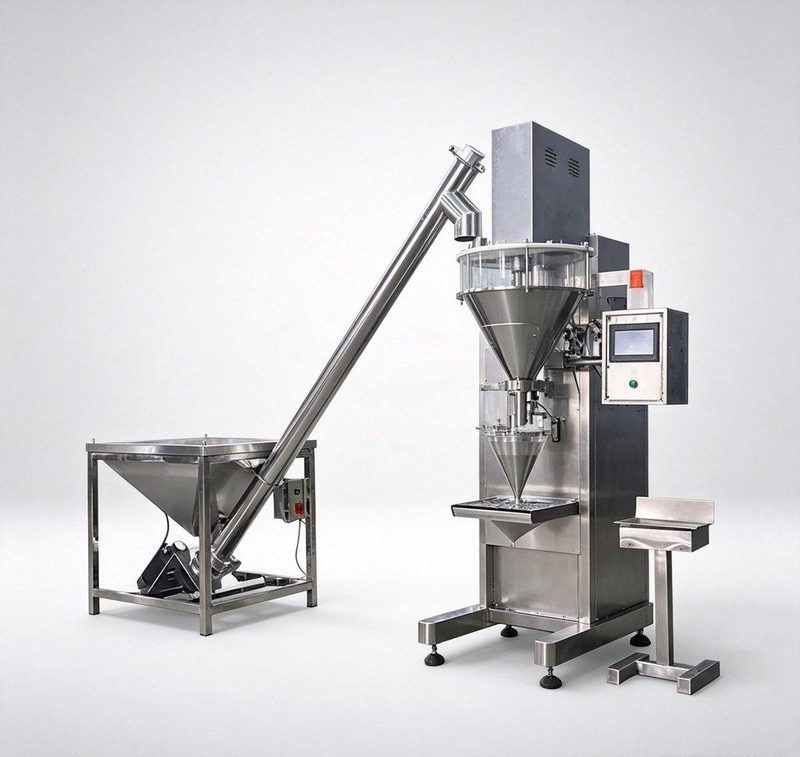
Explore the PURSYS packing system to evaluate packaging equipment for an industrial powder process.
The correct line configuration depends on the production objective and the condition of the material.
Prepared Dried Ginger ↓ Grinding Machine ↓ Powder Collection
This arrangement may suit a plant that receives prepared dried ginger and does not require a separate screening or automatic packaging stage.
Prepared Dried Ginger ↓ Pre-Crushing (if needed) ↓ Grinding ↓ Screening ↓ Powder Collection
This configuration may be considered when feed-size reduction or final particle classification is required.
Raw Material Preparation ↓ Pre-Crushing ↓ Fine Grinding ↓ Screening ↓ Powder Conveying ↓ Packaging
This option coordinates more processing stages and may reduce manual handling, depending on the system design.
The diagrams illustrate possible arrangements rather than guaranteed standard configurations. Each project should be reviewed individually.
For equipment selection at the individual machine level, see the PURSYS Industrial Ginger Grinding Machine article.
Production capacity is one of the most important design inputs for a ginger powder production line.
The target output should be defined alongside the finished product specification. A line that produces a coarser powder may operate at a different throughput from one producing a finer powder from the same material.
Actual output may depend on:
A production line should also be assessed as a complete system. If the grinder can discharge material faster than the downstream screen or packaging equipment can handle it, the downstream stage may become a bottleneck.
When requesting a quotation, specify the target output per hour or per shift and ask the supplier to state the assumptions behind the proposed capacity.
Where the specification is demanding, representative material testing may help establish a realistic operating range.
A successful ginger powder production line should be designed around the desired finished product.
Define a measurable particle-size target and an agreed test method. If the product needs classification, evaluate whether screening is required after grinding.
The moisture content of the feed can influence grinding behavior and powder handling. Establish an acceptable feed condition for the selected process.
Grinding can generate heat. If the finished product has specific temperature or quality requirements, discuss how the process will be evaluated and whether adjustments are necessary.
For food ingredient applications, consider product-contact materials, access for cleaning, removable components, and changeover procedures. Requirements should be defined by the buyer and verified against applicable standards.
Assess dust generation and accumulation at grinding, screening, transfer, and packaging points. Dust collection and safety measures should be based on the material and site-specific risk assessment.
These requirements should be considered during the design stage rather than treated as optional additions after the line has been installed.
The total investment depends on the scope of supply and the production requirements.
Common cost factors include:
A standalone grinder and an integrated line should not be compared on purchase price alone because their equipment scopes are different.
For a useful quotation comparison, ask suppliers to identify the main machine, auxiliary equipment, controls, included services, and any items excluded from the proposal.
Prepare the following information before contacting a supplier.
| Information | Details to provide |
|---|---|
| Raw material | Fresh ginger or dried ginger |
| Material condition | Whole, sliced, chipped, or pre-crushed |
| Moisture content | Measured value, if available |
| Feed size | Approximate dimensions or size distribution |
| Finished product | Ginger powder or another ginger-based product |
| Target fineness | Particle-size specification and test method |
| Production capacity | Required output per hour or per shift |
| Operating schedule | Hours per day and shifts per day |
| Packaging | Bulk bags, smaller bags, or other packaging format |
| Construction | Required product-contact materials and finish |
| Automation | Manual, partially automated, or integrated operation |
| Plant layout | Available space and existing equipment |
| Documentation | Drawings, manuals, test results, and other requirements |
If possible, provide a representative sample of the raw material and explain how the finished powder will be evaluated. This helps determine whether testing is needed to confirm the proposed equipment configuration.
A ginger powder production line should be designed around the raw material and the required finished product—not simply assembled from a list of machines.
For dried ginger, the main process may involve preparation, grinding, screening, collection, and packaging. Fresh ginger may require additional preparation stages before dry powder processing is appropriate.
By defining the target fineness, output, material condition, handling requirements, and plant layout before selecting equipment, buyers can compare proposals more effectively and develop a production system that matches their actual needs.
To connect these stages into a complete system, explore our spice powder processing solution and the full range of PURSYS powder processing equipment.
Depending on the raw material and final product, a line may include preparation equipment, a primary crusher, a grinding machine, a vibrating screen, powder collection, conveying, dust collection, and packaging equipment. Not every application requires all these stages.
Fresh ginger contains substantial moisture and typically requires suitable preparation, potentially including slicing and drying, before conventional dry grinding. The exact process depends on the intended finished product.
Hammer mills and pin mills may be suitable for different dried ginger applications. The final choice depends on feed size, moisture, target fineness, throughput, and other operating requirements.
Not always. A screen may be needed when the final powder must meet a defined particle-size specification or when particle classification is part of the process.
No. The need for conveying equipment depends on the layout, transfer distances, production volume, labor arrangements, and required level of automation.
Define the required output per hour or per shift, then evaluate the full process against the target powder specification. Confirm that grinding, screening, collection, and packaging can support the required throughput.
The cost depends on the machine configuration, required output, target fineness, preparation stages, automation, and supporting equipment. A meaningful quotation requires the project details and a clearly defined scope of supply.
A production system can be evaluated according to the raw material, finished product, plant layout, and operating requirements. The appropriate configuration should be confirmed with the equipment supplier.
Planning an industrial ginger powder production line?
Contact PURSYS with your raw material condition, target powder fineness, production capacity, and packaging requirements.
Our team can review your application and propose a suitable equipment configuration for your project.
Request a Quote → Back to NewsCopyright © Zhengzhou Pursys Machinery Co., Ltd. All Rights Reserved. | XML Sitemap | Site Map
Zhengzhou Pursys Machinery Co., Ltd.
+86 177 2975 3706
+8617729753706
No.21 South Huagong Road, Zhangcun, Gaocun Township, Xingyang City, Zhengzhou City, Henan Province, P.R.China