Mobile:
+86 177 2975 3706
E-mail:
info@pursysmachine.com
News · Sep. 29, 2026 · Chili Powder Making
A chili powder making machine is an essential piece of equipment for manufacturers processing dried chili peppers into powder for food production, spice manufacturing, and commercial distribution. However, producing chili powder on an industrial scale involves more than simply grinding dried chili peppers. The raw material, grinding method, target particle size, production capacity, and downstream processing requirements all influence the equipment configuration. Depending on the application, a chili powder making machine may refer to a standalone grinder or a complete processing system that includes feeding, crushing, grinding, screening, dust collection, conveying, and packaging. This guide explains how industrial chili powder making machines work, what equipment may be required, and how to select a suitable solution for your production requirements.
A chili powder making machine is industrial equipment used to reduce dried chili peppers into powder with a specified particle size. Depending on the machine design, the grinding process may use impact, shearing, or other mechanical actions to reduce the material. For industrial manufacturers, equipment selection should consider the entire production process rather than focusing only on the grinding machine. A complete chili powder processing system may include:
The actual configuration depends on the chili variety, raw material condition, required fineness, production capacity, and packaging requirements. For a broader overview of grinding equipment, see our guide to the industrial grinding machine.
The production process depends on the condition of the raw chili peppers and the specifications of the finished powder.
A typical industrial process follows these stages:
Dried Chili Peppers → Raw Material Inspection → Cleaning and Preparation → Pre-Crushing (If Required) → Grinding → Screening (If Required) → Dust Collection → Powder Conveying → Packaging → Finished Chili Powder
Not every production line requires all these stages. For example, some applications may allow direct feeding into the grinding machine, while others require pre-crushing or additional screening.
For a detailed explanation of the production process, read our guide to how to make chili powder.
Different grinding machines perform different functions and may be suitable for different chili powder applications.
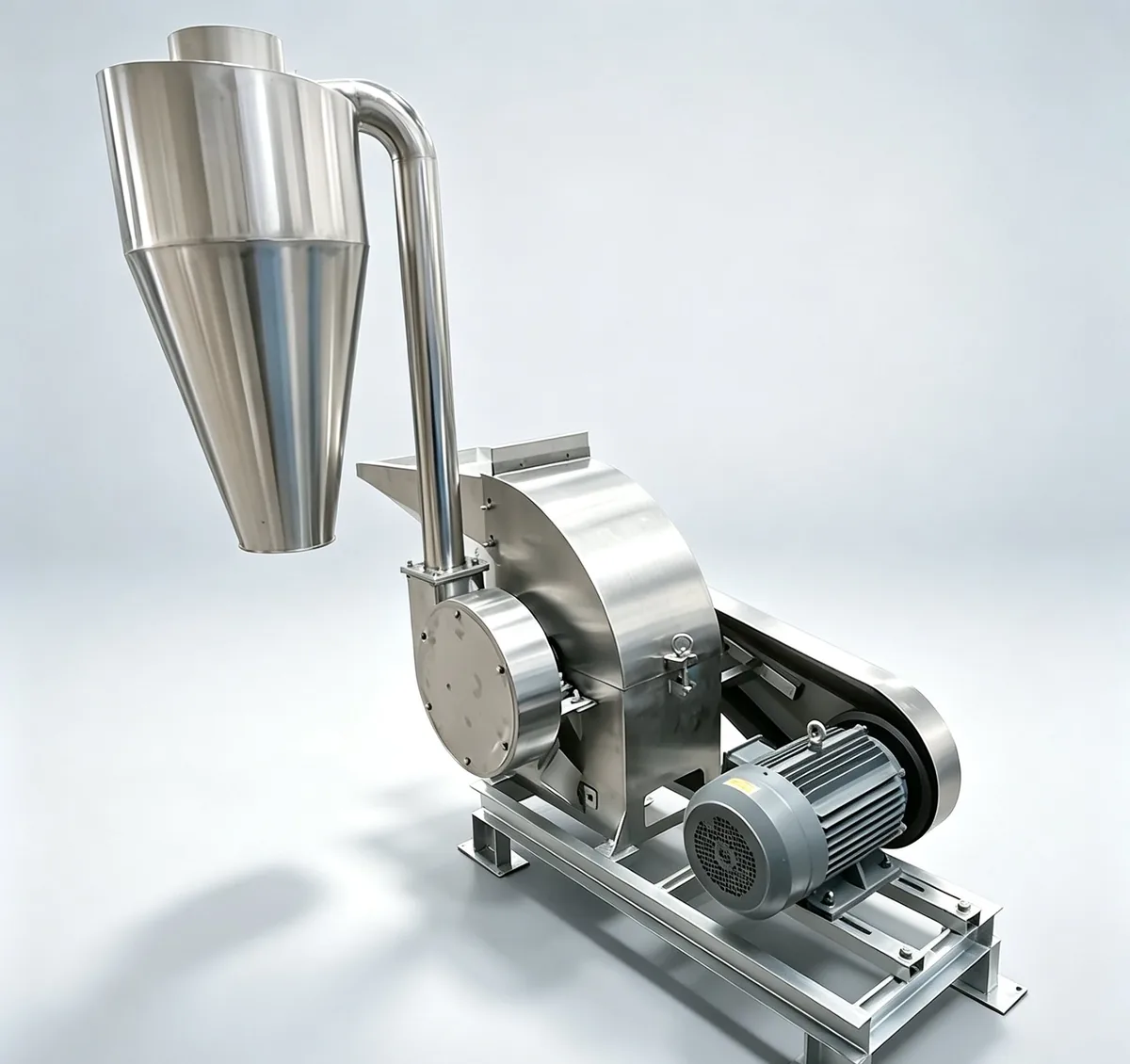
An industrial hammer mill uses rotating hammers to break down material through impact and related grinding actions. Hammer mills may be considered for processing dried chili peppers into powder, depending on the material condition, desired particle size, and machine configuration. They are commonly evaluated for applications involving size reduction of dried spices and other materials. Explore the PURSYS industrial hammer mill for more information.
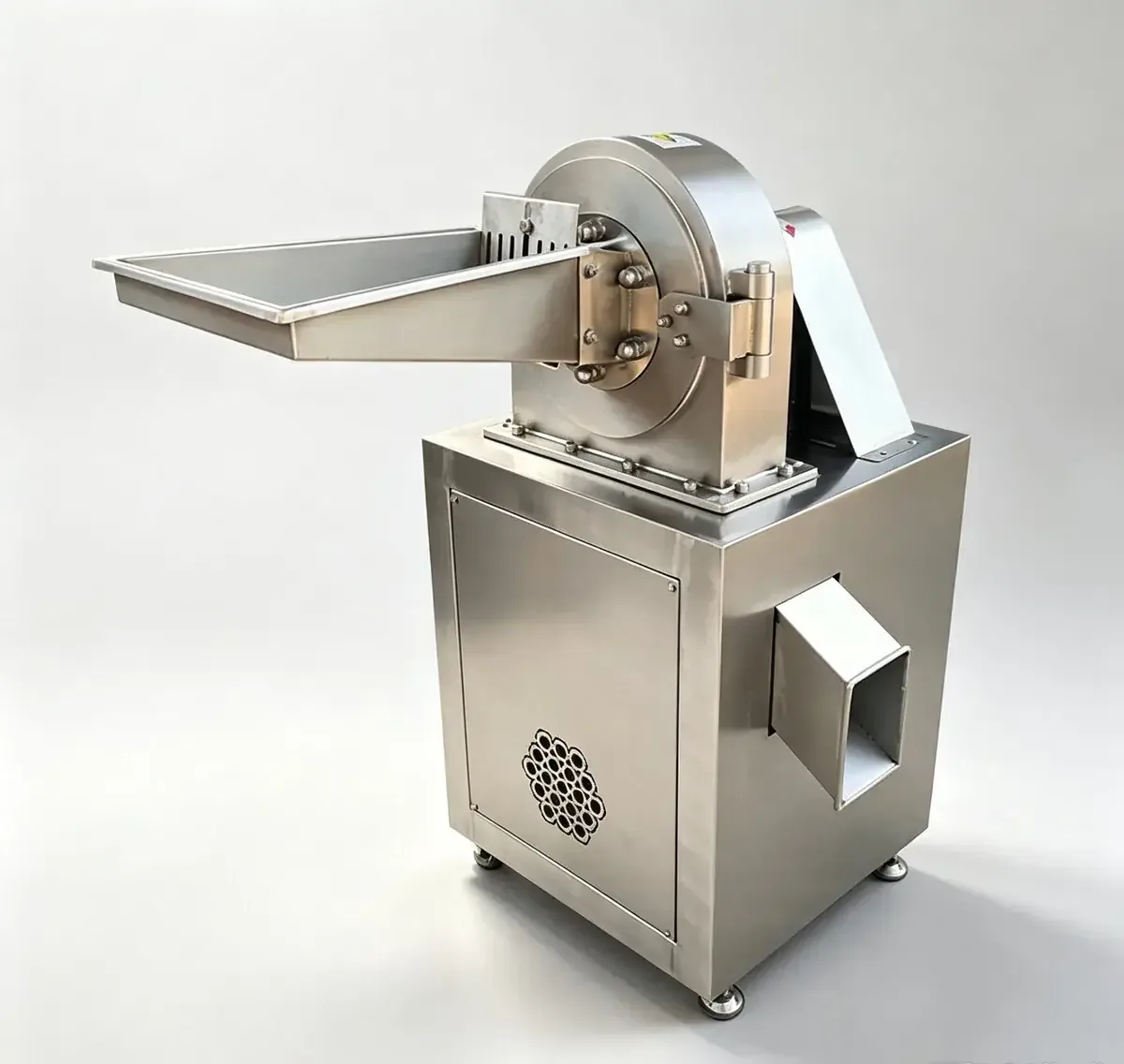
A pin mill uses rotating and stationary or counter-rotating pin assemblies, depending on its design, to reduce material size through impact. Pin mills may be considered when the application requires a different grinding action or particle-size range from a conventional hammer mill. Their suitability for chili depends on factors such as chili variety, moisture, oil content, target fineness, and operating conditions. Learn more about the PURSYS pin mill.
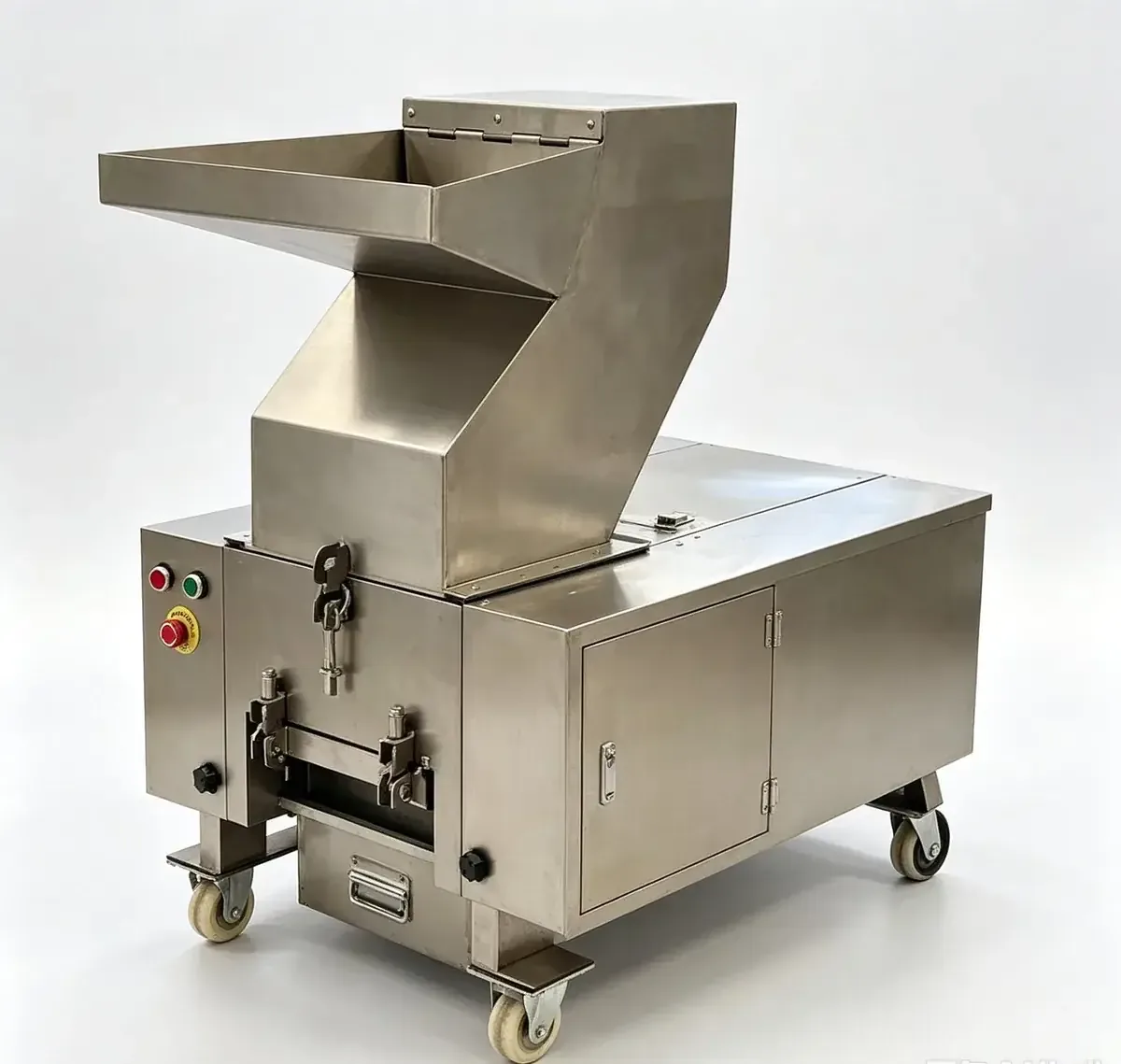
A primary crusher reduces larger pieces of dried chili into smaller fragments before fine grinding. It may be useful when the incoming material is too large for direct feeding into the main grinder or when a more controlled feed size is needed. Learn more about primary crushing equipment.
A complete chili powder making system can combine several types of equipment.
| Equipment | Main Function |
|---|---|
| Feeding system | Supplies raw material to the process |
| Primary crusher | Reduces large pieces before grinding |
| Hammer mill or pin mill | Performs the main grinding operation |
| Vibrating screen | Separates particles according to screen specifications |
| Dust collector | Collects airborne dust generated during processing |
| Screw conveyor | Transfers compatible powder or granular material |
| Packaging system | Fills and packages the finished powder |
The final equipment list depends on the process design, required output, material characteristics, and packaging format. For an integrated system, see the chili powder production line guide.
Before selecting equipment, define the actual production requirements.
Different chili varieties may have different shapes, moisture levels, skin characteristics, and seed proportions. These differences can affect feeding, grinding performance, particle-size distribution, and heat generation. Important information includes:
A suitable machine should be selected based on the actual material rather than the general category of chili.
The desired final particle size is one of the most important factors in selecting a chili powder making machine. Some applications require relatively coarse chili flakes or granules, while others require a finer powder. Particle size can be affected by:
For applications requiring a specific particle-size distribution, testing the actual material is an important step before finalizing the equipment configuration.
Production capacity should be specified in terms of the amount of finished product required per hour or per shift. However, the actual output of a chili powder making machine depends on:
A machine's nominal capacity should not be treated as a guaranteed output for every chili application.
Grinding can generate heat, and temperature may affect the characteristics of chili powder. The actual temperature rise depends on the grinding mechanism, material condition, feed rate, and operating parameters. If temperature-sensitive product characteristics are important, evaluate the grinding process through material testing and consider whether a multi-stage process or other process adjustments are appropriate.
For manufacturers processing multiple spice varieties, cleaning and changeover requirements should be considered during equipment selection. Discuss the following with the equipment supplier:
Equipment construction and cleaning methods should be selected according to the product and the customer's operating requirements.
Both hammer mills and pin mills may be considered for chili grinding, but their suitability depends on the application.
| Comparison Factor | Hammer Mill | Pin Mill |
|---|---|---|
| Grinding mechanism | Impact from rotating hammers | Impact involving pin assemblies |
| Feed requirements | Depends on machine design | Depends on machine design |
| Particle size | Depends on screen and operating conditions | Depends on design and operating conditions |
| Chili application | May be suitable for dried chili grinding | May be suitable for selected chili applications |
| Selection factors | Material, fineness, capacity, and process | Material, fineness, capacity, and process |
There is no universally suitable machine for every chili powder application. For a more detailed comparison, see Hammer Mill vs. Pin Mill.
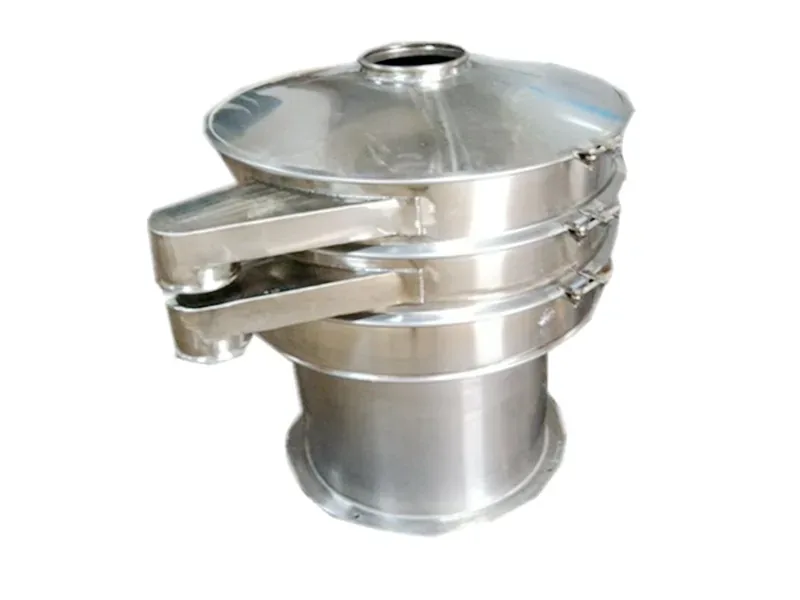
Screening can help separate particles according to the selected screen opening and the characteristics of the material. A vibrating screen may be integrated into a chili powder processing line when the finished product requires particle-size classification. Depending on the system design, screening may be used to:
Screening does not guarantee a uniform particle size by itself. The result depends on screen specifications, material behavior, and the overall process. Learn more about the PURSYS round vibrating screen.
Chili powder processing can generate airborne particles during feeding, grinding, screening, and material transfer. A dust collection system can help capture dust at selected points in the production line. The dust collection design should consider:
Because chili powder may be irritating when airborne, dust control and suitable operating procedures are important considerations for workers and the production environment.
After grinding and any required screening, chili powder may need to be transferred to a storage hopper or packaging machine.
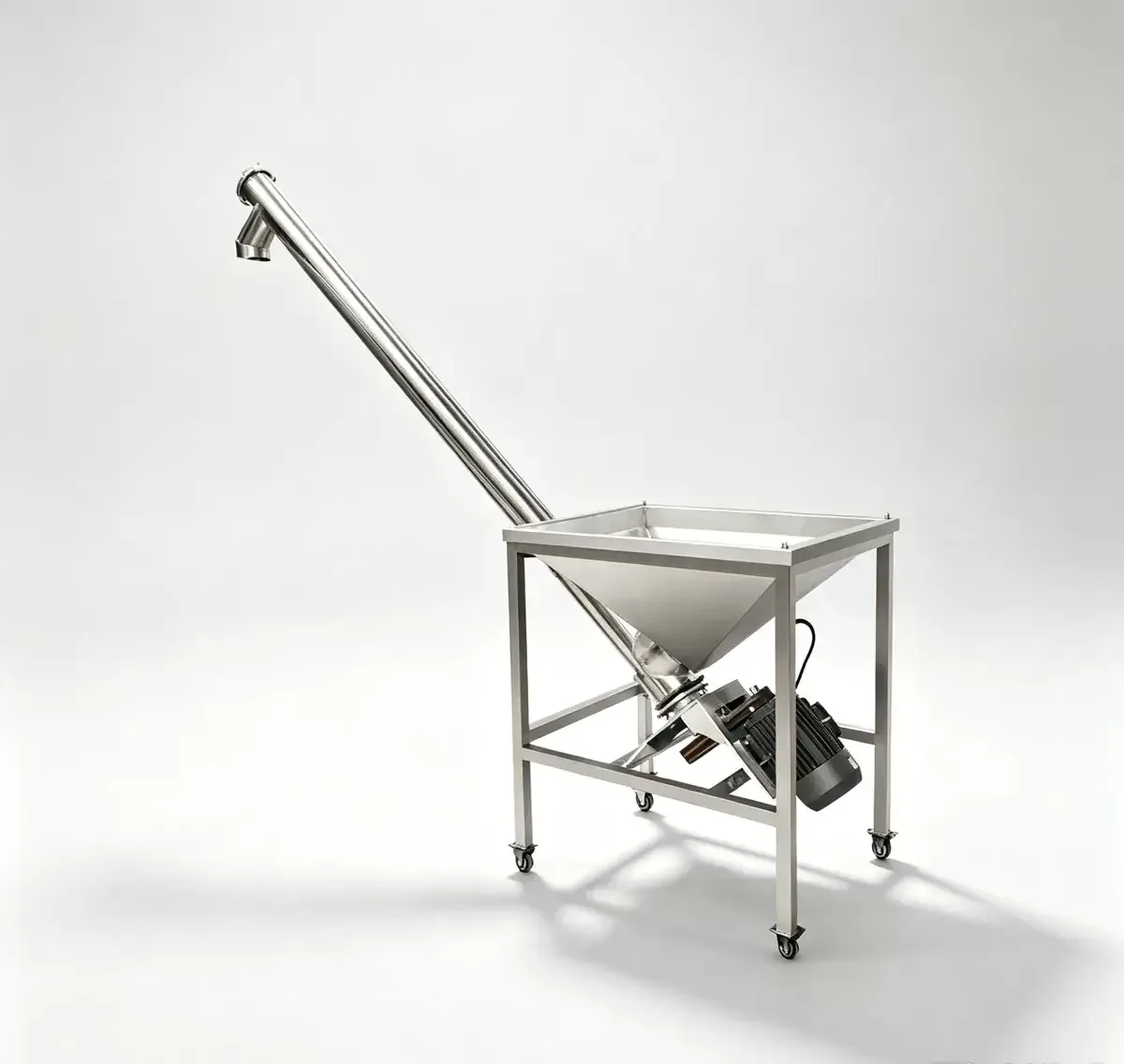
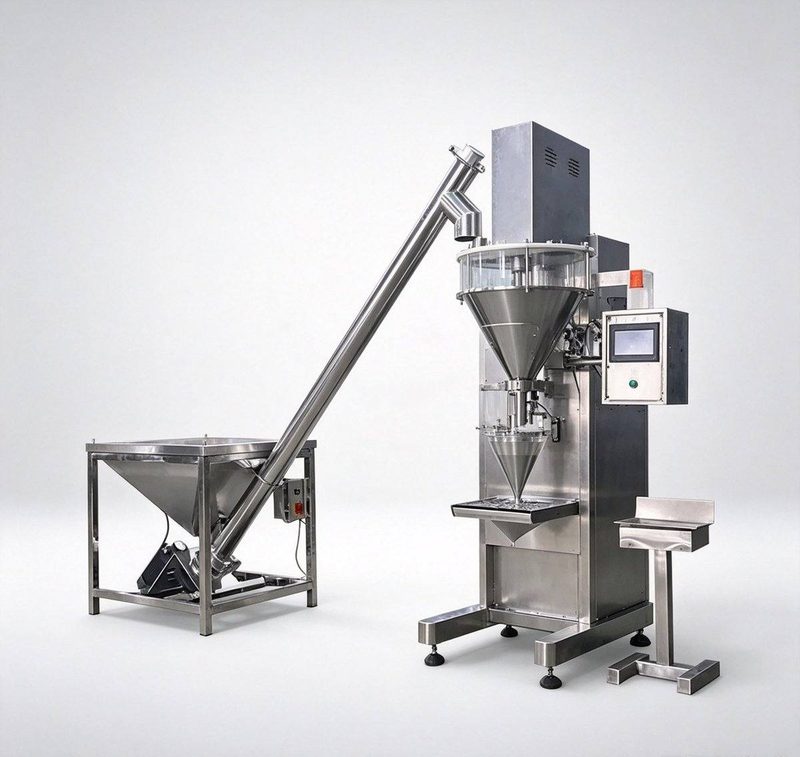
A screw conveyor may be considered for transferring compatible powder materials between process stages. The conveying method should be selected according to the powder's flow characteristics, transfer distance, layout, and cleaning requirements. Explore the PURSYS screw conveyor.
Packaging equipment depends on the required package type, weight range, and production workflow. Possible packaging formats include:
The packaging system should be selected based on the finished product, packaging material, and required operating process. Explore the PURSYS packing system.
Different production requirements may call for different system configurations.
Prepared Dried Chili → Grinding Machine → Collection
This configuration may be considered for applications where the raw material can be fed directly into the grinder and the required output does not call for additional processing stages.
Prepared Dried Chili → Grinding Machine → Vibrating Screen → Finished Chili Powder
This configuration may be suitable when particle-size classification is part of the product specification.
Raw Material Preparation → Primary Crushing (If Required) → Grinding → Screening (If Required) → Dust Collection → Conveying → Packaging
This configuration can be adapted to the customer's material, production target, process layout, and packaging requirements.
For a more detailed system overview, see the chili powder production line guide.
The price of a chili powder making machine depends on its configuration and application requirements. Key cost factors include:
A standalone grinder and a complete production line are different types of projects, so their prices should not be compared without considering the scope of supply. To obtain a relevant quotation, provide the supplier with your material details, target output, required fineness, and preferred packaging format.
Motor power alone does not determine whether a machine can achieve the required output or particle size.
Moisture, chili variety, and feed size can affect grinding performance and process stability.
A production line may also require screening, dust collection, conveying, and packaging.
Different products may require different grinding conditions and process configurations.
Without material information and target specifications, it is difficult to determine whether the proposed equipment is suitable.
To help an equipment supplier evaluate your project, prepare the following information.
| Project Information | Example |
|---|---|
| Raw material | Dried red chili |
| Material condition | Whole, cut, or pre-crushed |
| Moisture content | Measured value, if available |
| Target particle size | Required mesh or particle-size specification |
| Required capacity | Target finished-product output per hour |
| Processing stages | Grinding only or complete line |
| Packaging format | Bag size and packaging type |
| Construction requirements | Product-contact material requirements |
| Installation location | Country and available space |
| Automation requirements | Manual, semi-automatic, or automatic workflow |
Providing this information helps the supplier recommend an equipment configuration based on the actual application.
PURSYS provides industrial powder-processing equipment for applications involving grinding, screening, conveying, mixing, and packaging. For chili powder processing, the equipment configuration can be evaluated according to:
Depending on the project, the system may incorporate a hammer mill, pin mill, primary crusher, round vibrating screen, and other supporting equipment. The final configuration should be determined after reviewing the material and production requirements.
Choosing a chili powder making machine involves more than selecting a grinder. The right solution depends on the raw material, desired particle size, production capacity, and the overall process. For some applications, a standalone grinding machine may be sufficient. For others, a complete processing line with screening, dust collection, conveying, and packaging may be more appropriate. The most effective way to select equipment is to define the product requirements first and then evaluate the machine and process configuration against those requirements.
For more on chili powder processing systems, explore our hammer mill, pin mill and the full range of PURSYS powder processing equipment.
A chili powder making machine is equipment used to process dried chili peppers into powder. It may refer to a standalone grinder or a complete system with supporting equipment.
A hammer mill or pin mill may be suitable, depending on the chili variety, moisture, target particle size, and production requirements. Material testing can help determine the appropriate configuration.
Fine powder production depends on the grinding mechanism, machine configuration, material condition, and operating parameters. The required particle size should be confirmed through testing.
Not every process requires a vibrating screen. Screening may be useful when the product specification requires particle-size classification or separation of oversized particles.
No. Some applications may require only a grinding machine, while others benefit from an integrated system with preparation, grinding, screening, dust collection, conveying, and packaging.
Capacity depends on the raw material, target fineness, machine configuration, and operating conditions. The required finished-product output should be used to guide equipment selection.
Provide the raw material, material condition, target particle size, required output, packaging format, and any special construction or automation requirements.
Tell PURSYS about your project:
1. What material are you processing? 2. What capacity do you require? 3. What target particle size do you need?
PURSYS can evaluate the grinding and processing system according to your application.
Get a Quote →
Get a Quote →Back to NewsCopyright © Zhengzhou Pursys Machinery Co., Ltd. All Rights Reserved. | XML Sitemap | Site Map
Zhengzhou Pursys Machinery Co., Ltd.
+86 177 2975 3706
+8617729753706
No.21 South Huagong Road, Zhangcun, Gaocun Township, Xingyang City, Zhengzhou City, Henan Province, P.R.China