Mobile:
+86 177 2975 3706
E-mail:
info@pursysmachine.com
News · Aug. 31, 2026 · Turmeric Processing
Turmeric powder is widely used in food ingredients, seasonings, beverages, nutraceutical products and other applications. For industrial production, converting dried turmeric into consistent powder requires more than simply selecting a powerful grinder. The processing system may include raw-material cleaning, drying or moisture control, crushing, grinding, screening, dust collection, conveying and packaging. The appropriate turmeric grinding equipment depends on the condition of the turmeric, required production capacity and final particle size. This guide explains the typical industrial turmeric powder production process and the equipment that can be considered for different applications.
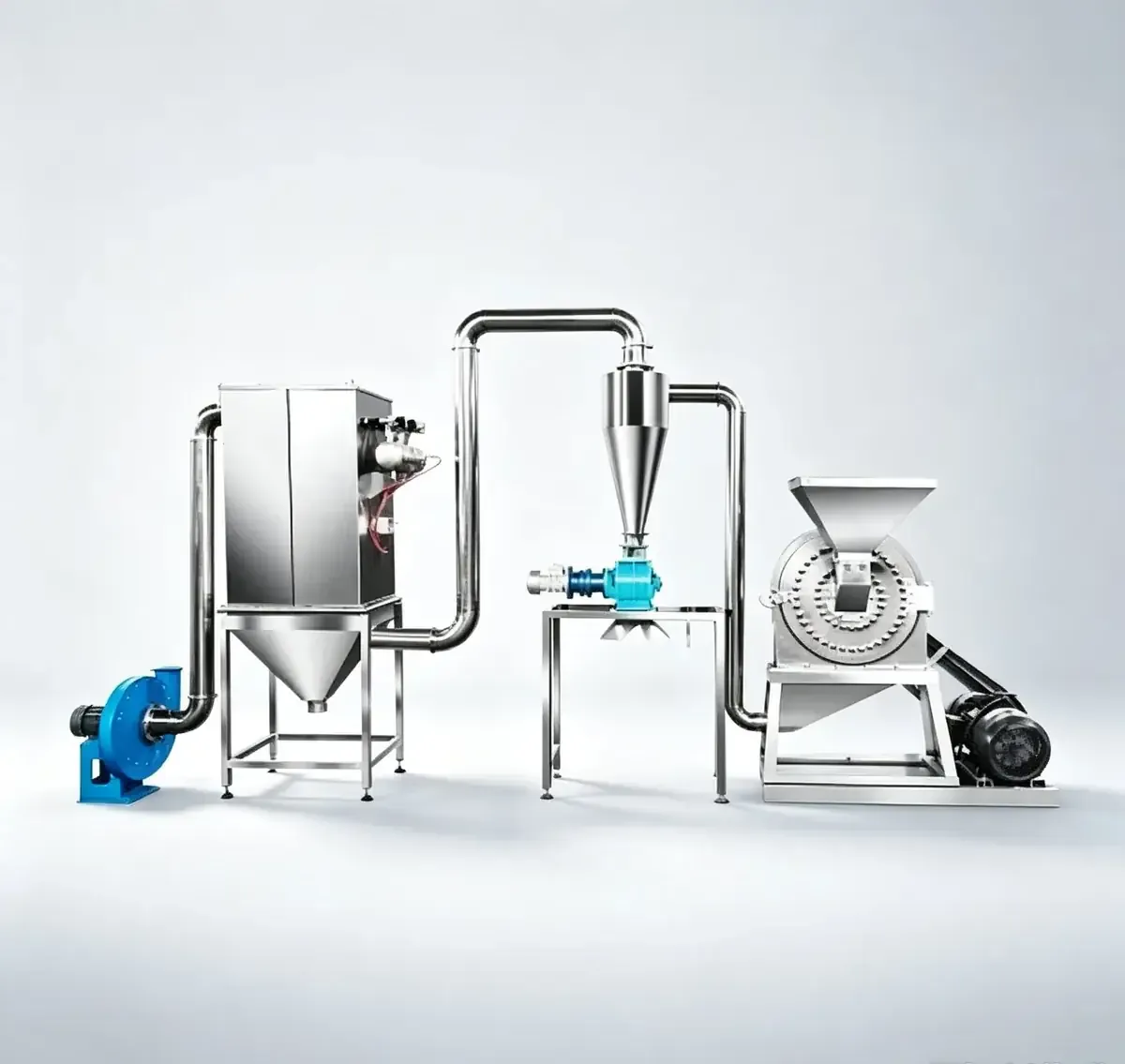
A typical industrial turmeric powder process can be arranged as: Dried Turmeric → Cleaning → Moisture Control → Pre-Crushing → Grinding → Screening → Dust Collection → Finished Powder → Packaging. The exact process can vary according to turmeric form, moisture content, feed size, production capacity, required powder fineness, product specifications and factory layout. A small producer may only need a grinder and screen, while a larger factory may require a complete automated processing line.
Turmeric is processed into powder for a variety of applications, including food seasoning, spice blends, curry products, sauces, instant food ingredients, beverage ingredients, food manufacturing and industrial ingredient processing. Different applications may require different particle-size specifications. For example, a seasoning manufacturer may require a different powder specification from a manufacturer using turmeric as an ingredient in a formulated product. The finished-product requirement should therefore be defined before selecting the grinding equipment.
Industrial turmeric may arrive in different forms, including dried turmeric fingers, dried turmeric pieces, broken turmeric and pre-cut turmeric. The raw material should be evaluated before processing. Important parameters include moisture, size, hardness, fiber content, foreign matter and oil content. These characteristics can affect grinding performance.

Before grinding, unwanted material should be removed from the raw turmeric. Possible foreign materials include stones, soil, dust, plant debris and metal particles. Depending on the raw material, the cleaning process may use vibrating screens, air separation, magnetic separation or other sorting equipment. Cleaning is particularly important when the final product is intended for food processing.
Moisture has a significant effect on grinding. If turmeric contains excessive moisture, the material may stick inside the grinder, block the screen, reduce grinding efficiency, produce inconsistent powder and increase cleaning requirements. If the turmeric is too dry, its grinding behavior can also change. There is therefore no single moisture value that should be applied to every turmeric-processing application. The appropriate condition should be determined from the actual raw material and finished-product requirements.
Dried turmeric pieces can be relatively large. A crusher can be used to reduce the feed size before fine grinding. The process can be: Dried Turmeric → Pre-Crusher → Smaller Turmeric Pieces → Fine Grinder. Pre-crushing helps prepare large pieces for the main grinding stage. Whether a separate crusher is necessary depends on the incoming material and selected grinder.
Grinding is the main size-reduction stage. Different grinding technologies can be considered depending on the final product.
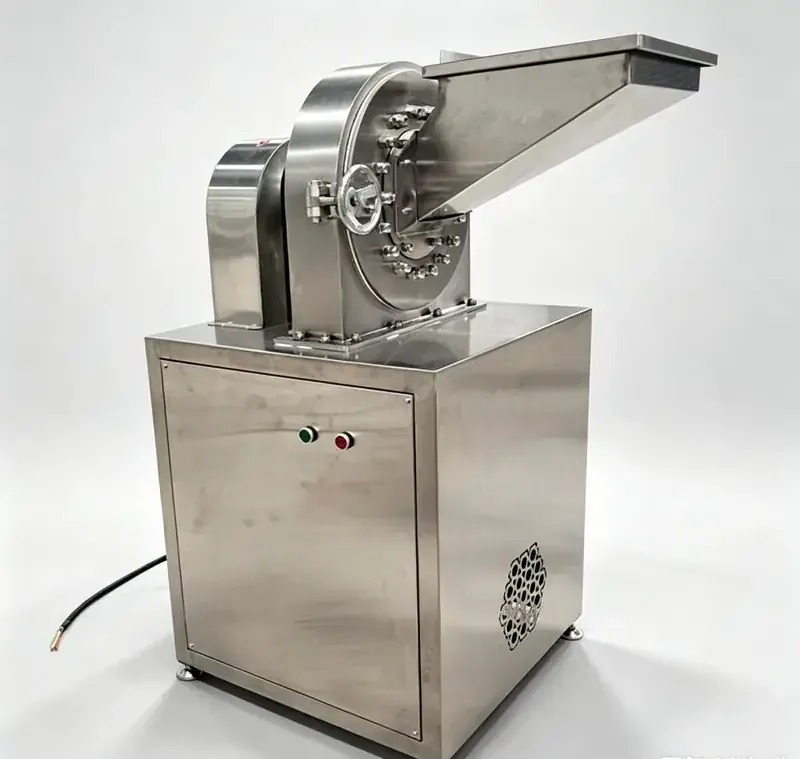
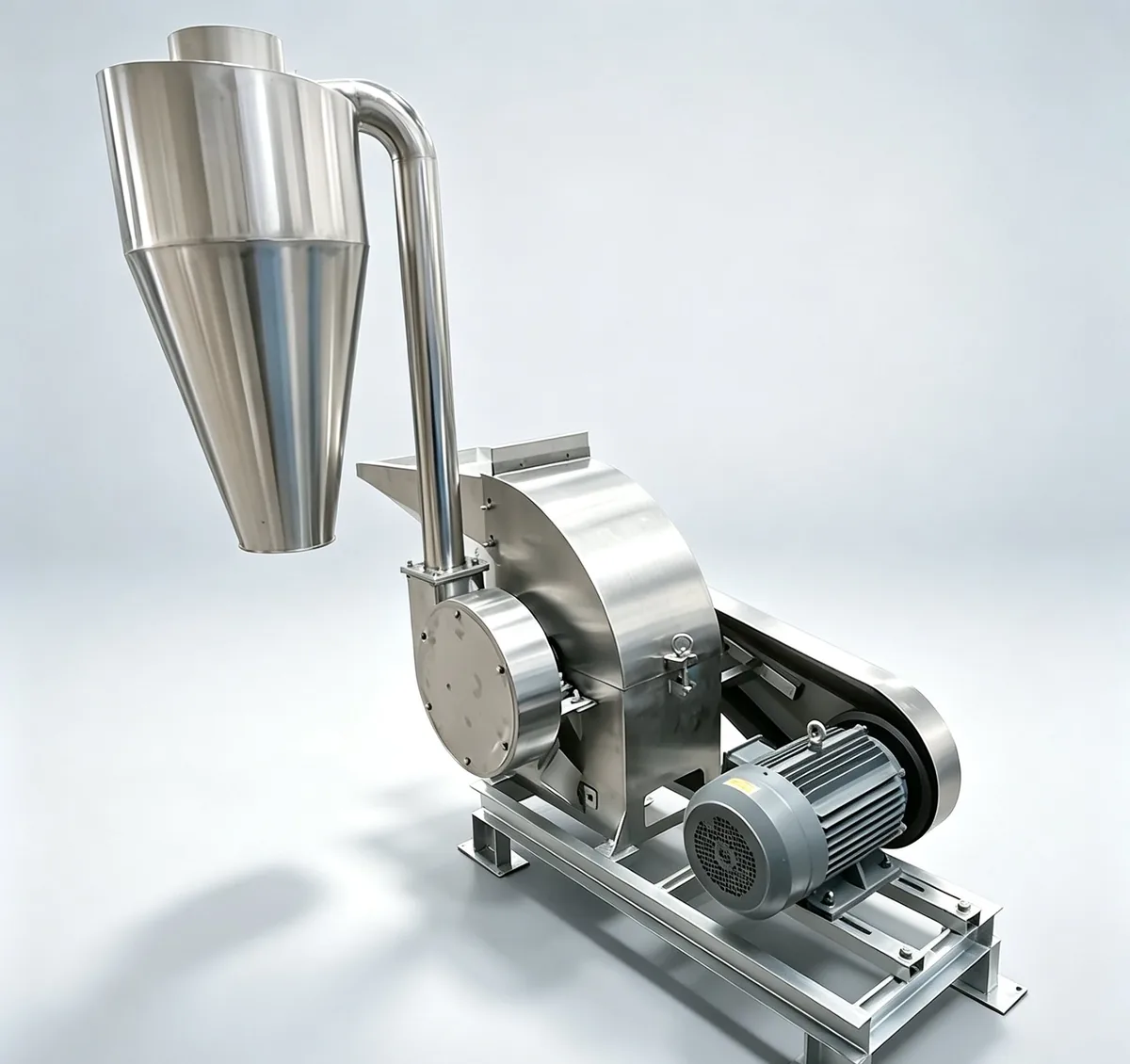
Hammer Mill – A hammer mill uses high-speed rotating hammers to reduce material through impact. It can be suitable for dried turmeric and other agricultural materials. Potential advantages include robust construction, high throughput potential, flexible size reduction and suitability for continuous processing. The final particle size depends on the machine configuration, screen and operating conditions. Read more: Hammer Mill Working Principle.
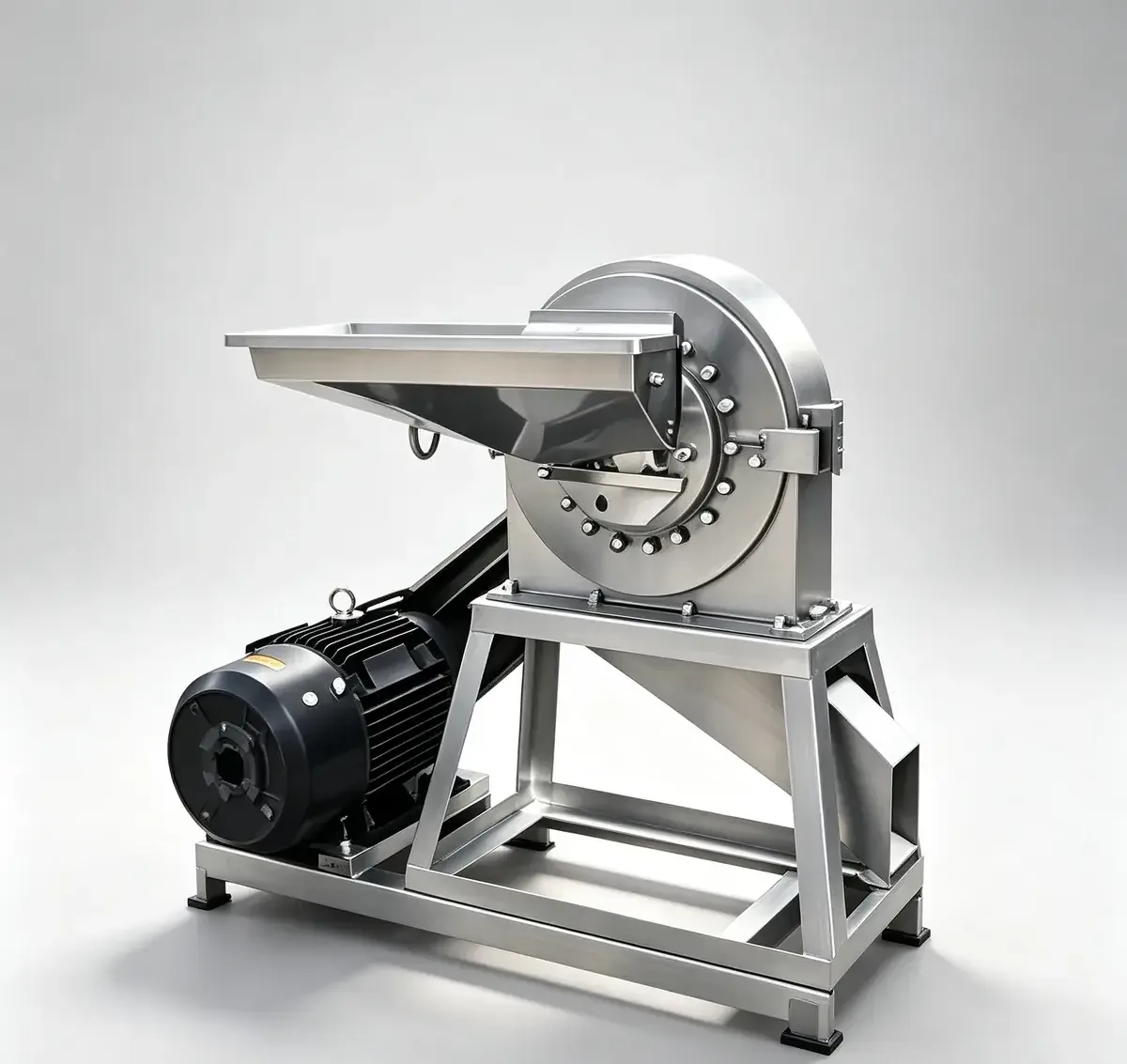
Pin Mill – A pin mill uses high-speed pins to create impact and shear forces. It may be considered when finer turmeric powder is required. The actual grinding performance depends on feed material, moisture, feed rate, rotor speed, machine configuration and target particle size. Related article: Hammer Mill vs Pin Mill.
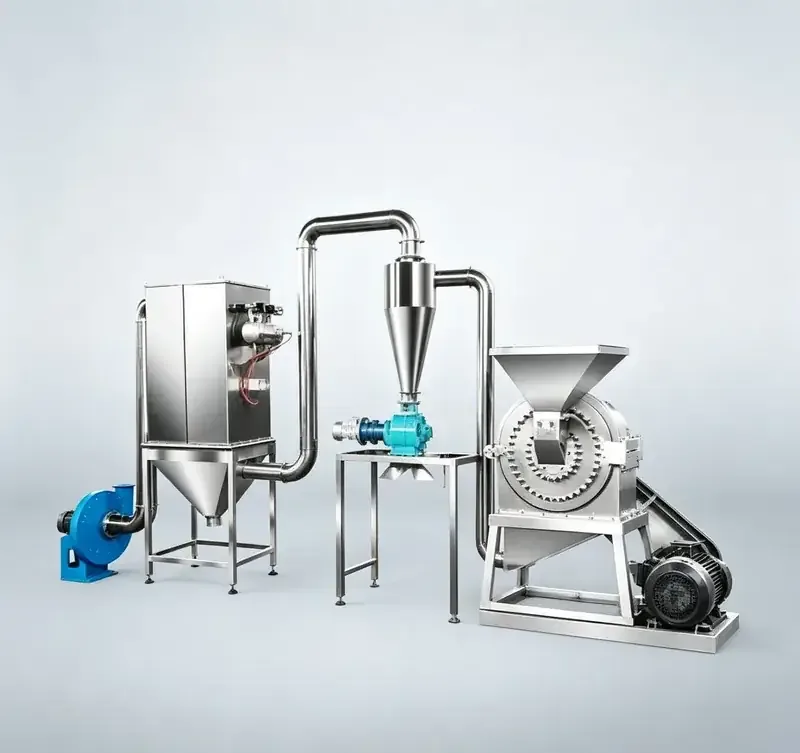
There is no single grinding machine that is best for every turmeric application. The selection should be based on Turmeric + Capacity + Moisture + Target Particle Size.
The final configuration should be determined from the actual material and product requirements. For broader background, see our guide to industrial spice grinding machines and the spice powder production line.
Particle size is one of the most important specifications when selecting a turmeric grinding machine. Customers may specify the powder using mesh, microns or particle-size distribution. A general process can be visualized as: Turmeric → Coarse Powder → Medium Powder → Fine Powder → Very Fine Powder. The word "fine" alone is not sufficient for equipment selection. A buyer should specify an actual measurable requirement, for example a target mesh size with a defined passing percentage, or a specified micron range.
There is no universal mesh size for turmeric powder. The appropriate specification depends on the application. A food manufacturer may require one particle-size range, while a spice-blending or ingredient manufacturer may require another. Mesh should therefore be treated as part of the product specification rather than simply a machine specification. When requesting a quotation, specify the required mesh plus acceptable particle-size distribution rather than simply saying "I need fine turmeric powder."
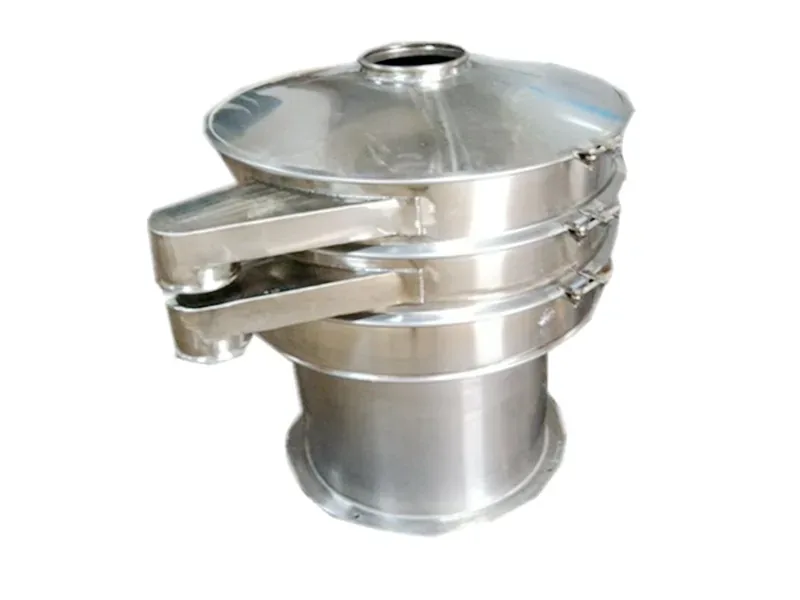
After grinding, the powder can be passed through a vibrating screen. The screen separates particles according to the required specification. A simplified process is: Ground Turmeric → Vibrating Screen → Qualified Powder (to Storage) + Oversized Material (to Re-Grinding). Whether the oversized material is returned to the grinder depends on the process design. Screen selection should consider capacity, required fineness, material characteristics, cleaning requirements and product specifications.
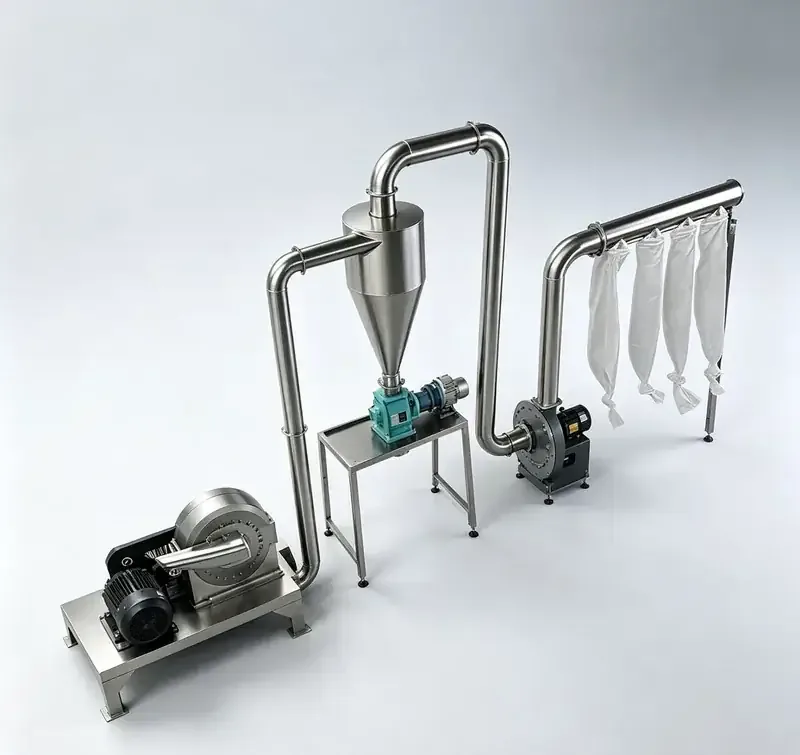
Turmeric grinding generates fine powder. A dust collection system can therefore be an important part of an industrial turmeric processing line. A typical system may include a cyclone separator, bag dust collector, filter, exhaust fan and ducting. The system can help reduce airborne powder, recover product, improve housekeeping, reduce powder loss and support a cleaner processing environment. The dust collection system should be designed together with the grinder and conveying system.
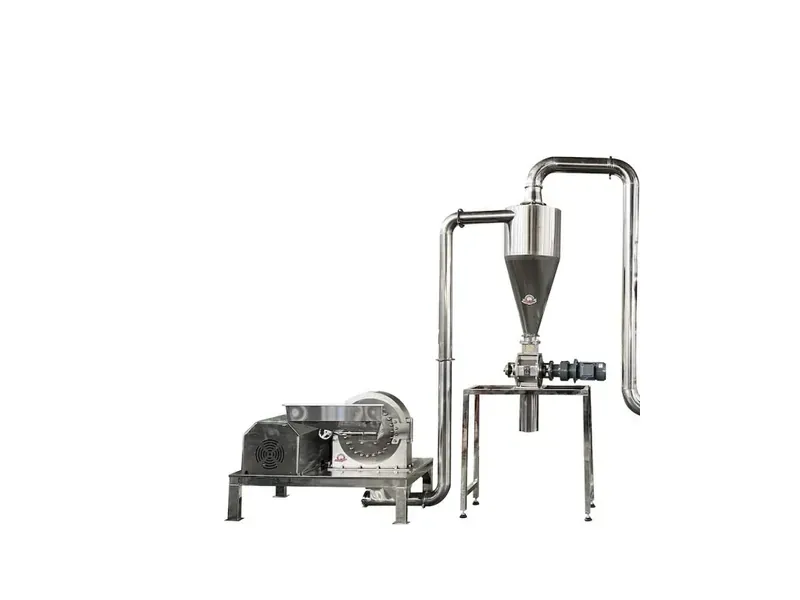
Grinding generates heat. Temperature can be influenced by rotor speed, feed rate, turmeric moisture, grinding time, target fineness, airflow and machine configuration. For turmeric, manufacturers may pay particular attention to maintaining the desired characteristics of the finished powder. Depending on the application, the processing system may need to be evaluated for product temperature, color, aroma and powder characteristics. There is no universal machine temperature specification that applies to every turmeric application. Material testing is therefore useful when temperature is a critical product parameter.
In some applications, yes. For relatively coarse or medium-fine turmeric powder, a single grinding stage may be sufficient. For finer specifications, multiple stages can be used: Dried Turmeric → Pre-Crushing → Primary Grinding → Screening → Fine Grinding → Final Screening → Finished Turmeric Powder. A multi-stage process may provide better control over the final particle size, but additional processing stages also increase equipment investment, floor space, energy consumption and maintenance. The goal should therefore be to design the simplest process capable of meeting the product specification.
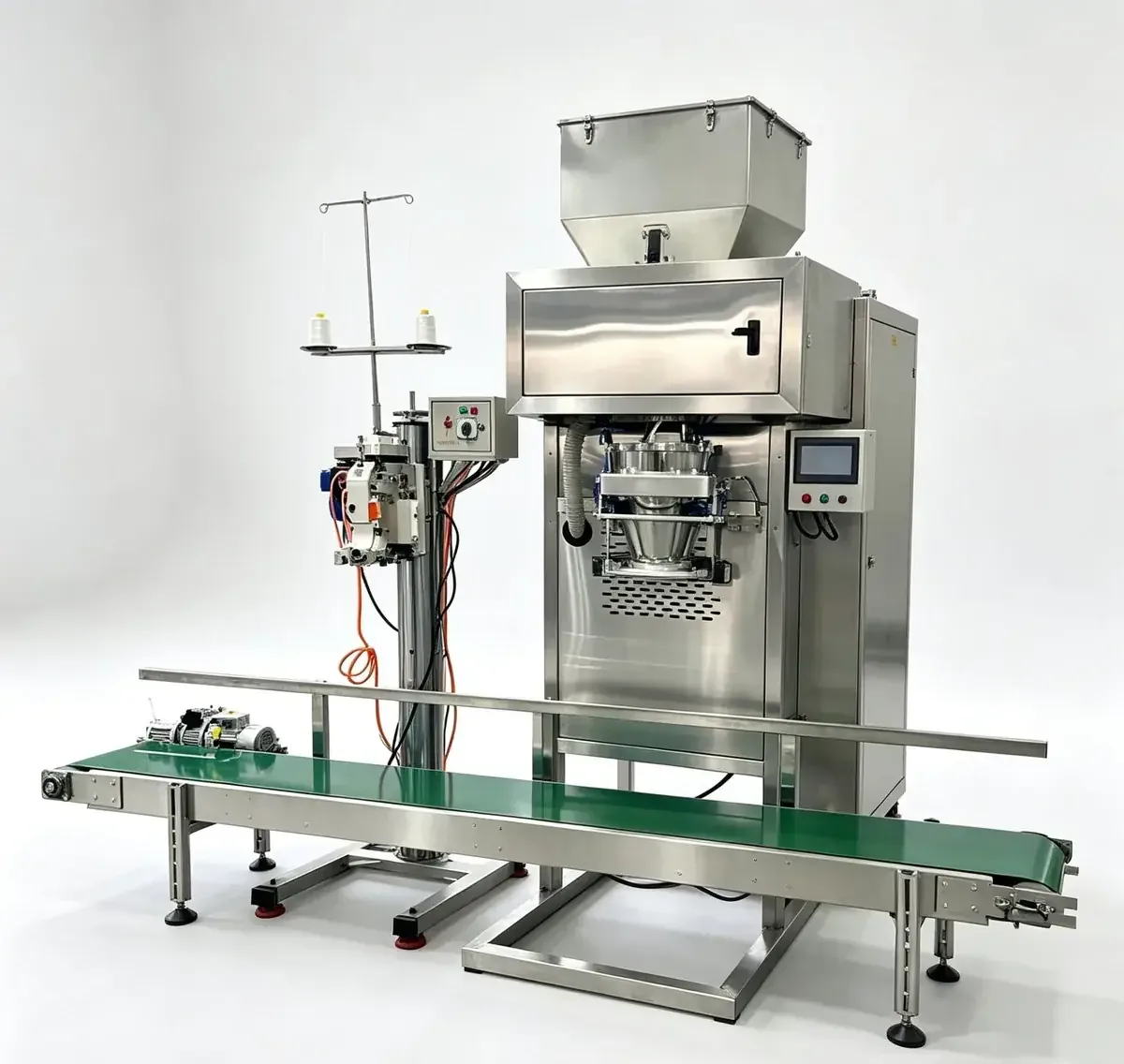
For larger industrial applications, the complete process may look like: Raw Turmeric → Automatic Feeding → Cleaning → Pre-Crushing → Hammer Mill → Cyclone Separator → Fine Grinding → Vibrating Screen → Finished Powder Hopper → Automatic Packaging. Depending on the application, additional equipment can be integrated, such as a magnetic separator, additional screen, powder conveyor, storage hopper, automatic weighing and automatic packaging. The system should be configured according to actual production requirements. See a related chili powder production line example for comparison.
A small turmeric-processing operation may not require a complete automated production line. A basic system could be: Turmeric → Manual Feeding → Grinding → Screening → Packaging. This configuration may be suitable for smaller production volumes. The advantage is a simpler process and lower equipment complexity.
For a larger factory, an integrated system may provide better process coordination: Raw Material Storage → Automatic Feeding → Cleaning → Pre-Crushing → Primary Grinding → Fine Grinding → Dust Collection → Screening → Powder Storage → Automatic Packaging. This configuration can reduce manual handling between processing stages.
Automation can be applied to different parts of the production process, including automatic feeding, grinder control, conveyor control, screen operation, dust collector operation, powder-level monitoring, automatic weighing and packaging. The appropriate level of automation depends on production capacity, labor availability, investment level, factory requirements and production management. A fully automated line is not always necessary.
For food-processing applications, equipment construction materials should be carefully considered. Product-contact components may use stainless steel such as SUS304, depending on the application. Potential benefits include corrosion resistance, easy cleaning, hygienic surfaces and compatibility with food-processing environments. The appropriate material grade should be selected according to the product, cleaning process and applicable requirements.
Capacity is usually expressed as kg/h, tons/day or tons/month. However, capacity should always be linked to the finished particle size. For example, "500 kg/h at the specified turmeric powder fineness" is more useful than "500 kg/h maximum capacity". Actual throughput can vary according to turmeric variety, moisture, feed size, target fineness and grinder configuration. Catalogue capacity should not be treated as guaranteed capacity for every application.
Turmeric grinding equipment can vary significantly in price. Important factors include machine capacity, grinding technology, stainless steel specification, dust collection, screening, conveying, automation and packaging. A standalone grinder and a fully integrated turmeric powder production line are very different investments. When comparing suppliers, compare capacity + particle size + construction + complete configuration rather than machine price alone.
A practical process can follow these steps.
Consider a hypothetical project requiring dried turmeric at 500 kg/h, continuous production, fine powder, SUS304 product-contact components and automatic packaging. A possible process configuration could be: Dried Turmeric → Automatic Feeder → Cleaner → Pre-Crusher → Hammer Mill → Cyclone Separator → Fine Grinding → Vibrating Screen → Powder Hopper → Automatic Packing. This is a conceptual process example; the actual machine models, quantities and configuration should be determined after evaluating the customer's turmeric and production requirements.
When contacting a grinding-equipment manufacturer, provide:
You can also provide raw-material photos, a raw-material sample, a finished powder sample, an existing factory layout, production target and packaging requirements.
PURSYS provides powder-processing equipment and integrated processing solutions for food and agricultural materials. A turmeric powder system can be configured with automatic feeding machines, crushers, hammer mills, fine grinding equipment, cyclone separators, bag dust collectors, vibrating screens, conveying systems, powder hoppers and automatic packaging machines. The equipment configuration should be developed around Material + Capacity + Particle Size + Process Requirements rather than applying one standard machine to every turmeric-processing project. For a broader perspective, see how chili powder is made and the chili powder production line as related references.
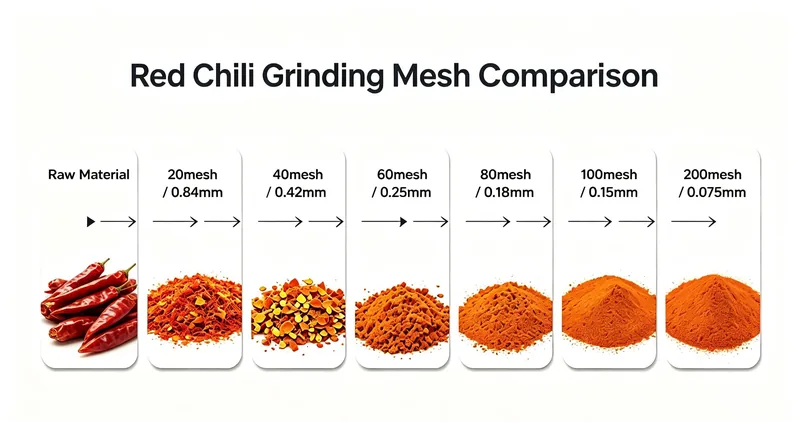
A successful turmeric powder processing system should begin with the raw material and finished-product requirements. The most important parameters are turmeric type, moisture content, feed size, production capacity, final particle size, product temperature, dust collection, hygiene requirements and automation level. A simple application may only require grinding and screening, while a larger factory may need a complete processing line with feeding, cleaning, pre-crushing, grinding, dust collection, screening, conveying, storage and packaging. The best equipment configuration should be determined by the actual turmeric and production requirements. Material testing is especially useful when capacity, fineness or product temperature is critical.
Need a turmeric powder processing solution? Tell PURSYS your turmeric type + required capacity + target particle size. Explore our turmeric grinding machine, industrial pin mill, vibrating screen and the full range of PURSYS powder processing equipment, or get a quote.
Copyright © Zhengzhou Pursys Machinery Co., Ltd. All Rights Reserved. | XML Sitemap | Site Map
Zhengzhou Pursys Machinery Co., Ltd.
+86 177 2975 3706
+8617729753706
No.21 South Huagong Road, Zhangcun, Gaocun Township, Xingyang City, Zhengzhou City, Henan Province, P.R.China